

Hannibal or Napoleon: what does the evidence say?
Hannibal Barca, the Carthaginian general of the Second Punic War, and Napoleon Bonaparte (1769 to 1821) never met: two thousand years lie between them. Both crossed the Alps into Italy, both won battles that are still studied, and both lost their last war to a coalition that outlasted them and died in exile. Napoleon himself set his name beside Hannibal's. Historians have not settled it. Dodge refused to compare them but called Hannibal alone and incomparable in his long struggle against fortune. Roberts calls Napoleon's record extraordinary, while Tulard writes that he did not understand national wars. This page sets out the evidence for each and leaves the final verdict to you.
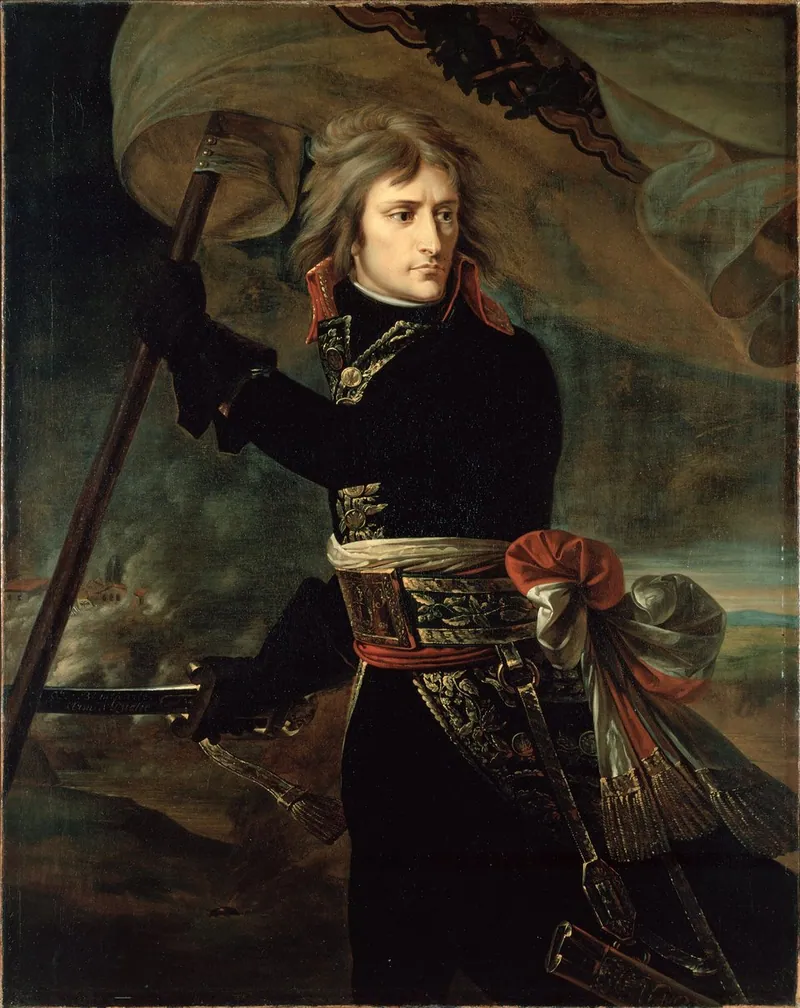
The link between them was drawn by Napoleon's own painter. In Jacques-Louis David's portrait of the First Consul crossing the Great St Bernard pass in May 1800, the rocks in the foreground carry three names, Hannibal, Charlemagne and Bonaparte, as the French culture ministry's catalogue of the Malmaison canvas records. The Fondation Napoléon calls the picture a masterpiece of propaganda that makes Bonaparte the equal of the greatest conquerors.1
This is not a ranking. Below you will find the two careers side by side, the ground where their stories cross, and six questions on which a general can be judged, from strategy to the way each faced defeat. Under each we give the strongest evidence for Hannibal and the strongest for Napoleon, with the weak points of each, and the writers and historians who argue each case. At the end the decision is yours.
Side by side
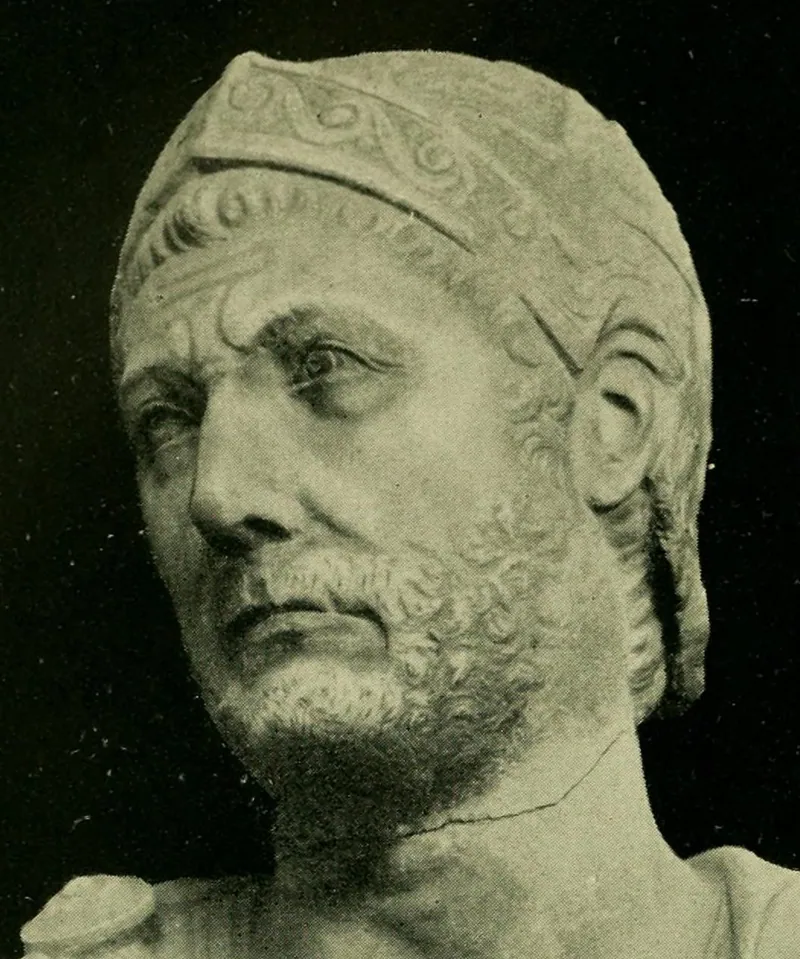
- Lived
- Born in the 240s BC, in 249 by Mommsen's reckoning, died in the 180s
- 15 August 1769 to 5 May 1821
- Origin
- Carthage, son of the general Hamilcar Barca
- Ajaccio, Corsica, second child of the Bonaparte family
- Crossed the Alps
- 218 BC, fifteen days in the passes
- May 1800, the Great St Bernard
- Years in command
- In Italy from 218 to 203 BC, Zama 202
- 1796 to 1815
- Head of state
- Elected chief magistrate of Carthage after the war
- First Consul 1799, emperor 1804
- Campaigns counted
- Seventeen, by Napoleon's count
- Sixty battles, seven lost, by Andrew Roberts's count
- Death
- In exile in Bithynia, by his own hand
- In exile on St Helena, 1821
Hannibal's life and offices from Polybius, Livy, Plutarch and Mommsen, Napoleon's from Jean Tulard's chronology. The counts are claims by the authors named, not a tally we can check, so we give no win and loss totals of our own.2
Where their stories meet: the Alps and Italy
They never met. What links them is the same mountain barrier, the same plain of the Po beyond it, and a habit Napoleon shared with many soldiers of reading Hannibal's war as a lesson. Hannibal's first two victories, at the Ticinus and the Trebia, were won in the plain of the Po, and so was Bonaparte's at Marengo, after he too had come down from the Alps.
Hannibal crosses, 218 BC
Polybius, the Greek historian who says he crossed the Alps himself to see the ground, gives Hannibal's own figures. The march from New Carthage in Spain took five months, the crossing of the Alps fifteen days, and he came down into the plain of the Po with 12,000 African and 8,000 Spanish foot and not more than 6,000 horse. He had started from the Rhone with 38,000 foot and more than 8,000 horse and lost about half his whole force in the passes, and the survivors, Polybius writes, looked more like beasts than men.3

Bonaparte crosses, 1800
On 20 May 1800, Jean Tulard's chronology records, Bonaparte crossed the Great St Bernard, and on 14 June he won at Marengo. The American soldier and historian Theodore Ayrault Dodge, comparing the great captains in 1889, would not let the two crossings be set side by side. Napoleon's crossing, he wrote, could no more be compared to Hannibal's great achievement than a Pullman excursion to a terrible march across the plains. It was merely an incident deftly woven into a splendid plan of campaign.4
David's painting made the comparison anyway. The Fondation Napoléon notes that Bonaparte actually crossed the pass in a plain grey frock coat, not the cloak flying in the wind, and that the canvas makes him the equal of Hannibal and Charlemagne, whose names are cut into the rocks in the foreground.5

Napoleon reads Hannibal
In the maxims later collected from his sayings, Hannibal is one of the seven commanders whose campaigns an officer should read again and again. Alexander, Hannibal and Caesar, the maxims say, with Gustavus Adolphus, Turenne and Frederick, all acted on the same principles: to keep their forces united, to leave no weak part unguarded and to seize important points with speed. In his commentary on Caesar's wars, dictated on St Helena, Napoleon wrote that fortune deserted Pompey only in his sixteenth campaign and Hannibal only in his seventeenth.6
Strategy: the plan for a whole war
The case for Hannibal
Hannibal carried the war to Italy, where Rome least expected it. Polybius saw one will behind the whole of it: of all that befell both Romans and Carthaginians, he wrote, the cause was one man and one mind, Hannibal, who ran the Italian campaign himself and the Spanish one through his brothers.7
In 217 BC he took his army through the marshes of the Arno, four days and three nights in water, to turn the flank of the consul Flaminius and cut him off from Rome. Dodge calls it the conception of turning the enemy's strategic flank as clearly carried out as ever Napoleon did it, and compares the choice of the marsh route with Napoleon's choice of the Great St Bernard in 1800.8
Theodor Mommsen saw the logic behind the invasion. Hannibal could only hope to win, he wrote, through political rather than military successes, by loosening and finally breaking up Rome's Italian alliance. His military genius told with its full weight only while he kept foiling his opponents with unexpected moves, and he was undone if the war became stationary.9
The weak point is that Rome never broke, and the war did become stationary. When the Romans besieged Capua, his chief ally in Italy, in 211 BC, Mommsen describes how Hannibal marched on Rome itself, the last expedient of his inventive genius, to draw the besiegers away. The Romans did not lift the siege, and Capua fell.10
The British strategist Basil Liddell Hart, who championed Hannibal's conqueror Scipio, thought historians had enhanced Hannibal's fame at Scipio's expense and remarked that it was not difficult to guess why Napoleon left Scipio off his list of models.11
The case for Napoleon
In 1805 Napoleon won a campaign before its great battle. At Ulm on 20 October some 25,000 Austrian soldiers with 60 guns filed past him to surrender, the Fondation Napoléon's timeline records, and six weeks later came Austerlitz.12
The Prussian theorist Carl von Clausewitz held that in 1805, 1807 and 1809 Napoleon judged his opponents correctly. In 1812, he wrote, without a peace at Moscow there was nothing for Napoleon but to return, which meant a strategic defeat.13
Battlefield tactics
The case for Hannibal
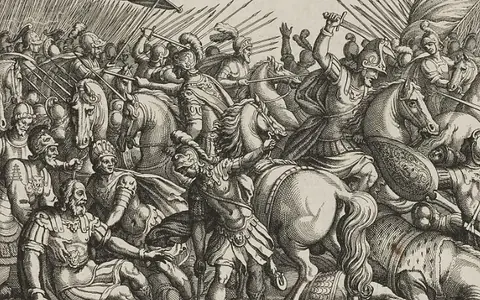
His first great victory, at the Trebia in December 218 BC, was built on a trap. Livy tells how Hannibal had his brother Mago choose a thousand horse and a thousand foot and hide them in a watercourse, then sent his Numidian cavalry to provoke the Romans across the river. When the Roman line passed the hidden force, Mago rose behind it and threw it into disorder.14
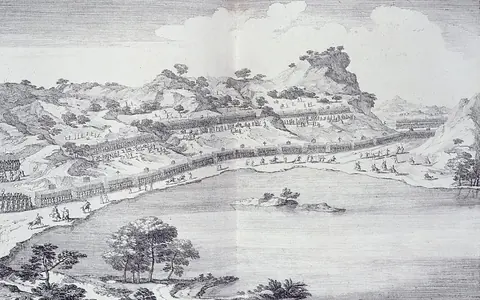
At Lake Trasimene in 217 BC he caught the Roman army on the march between the hills and the lake. Polybius writes that about fifteen thousand Romans fell in the valley, the consul Flaminius among them, slaughtered before they understood what was happening.15
At Cannae in 216 BC he encircled a Roman army much larger than his own. The ancient figures for the dead do not agree. Polybius says about seventy thousand Romans died and some ten thousand were captured, and drew the lesson that it is better to fight with half as many infantry and an overwhelming force of cavalry.16
Livy says forty thousand foot and two thousand seven hundred horse are said to have been slain.17

The case for Napoleon
At Austerlitz on 2 December 1805 the allies weakened their centre on the Pratzen heights to press an attack on the French right. Napoleon saw it as the morning mist cleared and sent Soult to take the heights, which he did in half an hour. The Fondation Napoléon calls the result a crushing victory.18
Dodge found the rule behind his victories: except in 1796 and 1814, Napoleon always had more men than the enemy on the field at the proper time.19
The historian Andrew Roberts, quoted in the Kirkus review of his biography, counts sixty battles and seven defeats, and calls that an extraordinary record for any general of any age.20
Jean Tulard, author of the Dictionnaire Napoléon, is cooler. Napoleon's effects built on surprise stopped working once his enemies had learned the lesson, he writes, and his idea of war was more poker than chess.21
Far from home
The case for Hannibal
Hannibal fought in Italy from 218 to 203 BC. Polybius marvels that in sixteen years of constant war with Rome he never broke up his forces and dismissed them from the field, but held together a large army of Africans, Spaniards, Ligurians, Celts and others, free of mutiny against him or among themselves, like a good ship's captain.22
Dodge set this beside every other captain he studied. Of all the generals the world has seen, he wrote, Hannibal fought against the greatest odds.23
The case for Napoleon
Napoleon made speed a law. One of his maxims says that the strength of an army, like power in mechanics, is mass multiplied by rapidity, and that a rapid march raises an army's morale and increases its means of victory.24
Dodge gives the Rivoli campaign of January 1797 as the proof: men who had fought at San Michele on the 13th marched all night, won at Rivoli on the 14th and forced Provera's surrender at Mantua on the 15th. Napoleon, he concluded, could rightfully boast to have equalled Caesar in speed of foot.25
The system broke in Russia. Clausewitz, using the French officer Chambray's figures, puts the centre that crossed the Niemen on 24 June 1812 at 301,000 men, and reckons that by Smolensk it had lost 105,000, of whom only about 10,000 fell in action.26
Clausewitz carried the count further. Three weeks after Smolensk, at the time of Borodino, the loss amounted to 144,000 including the casualties of the battle, and eight days later, at Moscow, to 198,000.27
J. Holland Rose gives the whole Grand Army as 600,000, plus 50,000 Austrians and Prussians, and says only 20,000 famished men recrossed the bridge at Kovno in December.28
Leading men
The case for Hannibal
Polybius tells how Hannibal, at nine years old, stood at the altar while his father Hamilcar sacrificed before leaving for Spain, and swore never to be the friend of the Romans. Livy has him bound by an oath to be an enemy of the Roman people as soon as he could. The army he led was a mixture of peoples held together, in Polybius's words, by his personal command.29
Livy, no friend of Carthage, gives the most famous portrait. No toil could exhaust his body or subdue his mind, he wrote. Hannibal ate and drank only what nature required, was often seen sleeping on the ground in a soldier's cloak among the sentries, dressed no better than his equals and was the first to advance into battle and the last to leave it. Livy set against these virtues what he called excessive vices: inhuman cruelty, more than Punic perfidy, and no respect for oaths or the gods.30
The case for Napoleon
When Napoleon came back from Elba in 1815, the National Army Museum writes, his army was made of veterans who had rallied to his cause, and Wellington accepted that Napoleon's presence on a battlefield made a huge difference to the morale and performance of his troops.31
His marshals were less constant. In April 1814, after Paris had fallen, Tulard records, Napoleon abdicated under pressure from them.32
Dodge saw the flaw early. Even in 1796, he wrote, Napoleon underrated his adversary, and in time the habit became a strong factor in his failures. He showed the great qualities of a commander in full up to 1808, came close to being at his best the greatest of the captains, and did not show the same moral power afterwards.33
Facing defeat
The case for Hannibal
At Zama in 202 BC Scipio beat him. Polybius still wrote that Hannibal had done in the battle and before it all that could be done by a good general of long experience, starting by trying to end the war through a meeting with Scipio, knowing how much the unexpected plays in war.34
Theodor Mommsen praised the magnanimous submission of Hannibal to what was inevitable after Zama.35
Elected to the chief magistracy of Carthage, which Livy calls the praetorship, he took on the powerful judges who ruled the city. He ended his life in exile in Bithynia. Plutarch gives the versions of his death, and says that according to Livy he took poison.36
The case for Napoleon
Napoleon had met a check he could not break long before. In Syria in 1799 he besieged Acre and lost nearly five thousand men killed, wounded or struck down by plague, J. Holland Rose writes, and Acre could not be termed anything but a reverse.37
The road to defeat ran through Russia and Spain. At Borodino in 1812, the Fondation Napoléon writes, the Russians lost 45,000 dead, wounded or missing and the French between 28,000 and 35,000.38
Jomini called the invasion of Spain in 1808 a cunning and wanton attack that threatened the existence of the Spanish nation and was fatal to its author.39
Napoleon's last battle was Waterloo on 18 June 1815. The National Army Museum writes that he had 72,000 men and 246 guns against Wellington's 68,000 and 156, with 48,000 Prussians coming up, and lost nearly 40,000 men killed, wounded or captured.40
He abdicated on 22 June and died on St Helena on 5 May 1821, Tulard's chronology records.41
Dodge drew the harshest contrast of his book here. In his successes, he wrote, Napoleon is equally brilliant and more titanic than Hannibal, but in his failures he falls so far below this great pattern of patient, never-yielding resistance to adversity as to be lost. Napoleon at Waterloo, he added, was not as great as Napoleon at Austerlitz.42
What came after
The case for Hannibal
Hannibal left no state behind. Carthage made peace on Rome's terms, and he died a fugitive. What he left was a model of how to fight. Napoleon put his campaigns on the short list every officer should study, as a model of principles that do not change.43
The case for Napoleon
The Civil Code of 2,281 articles was promulgated on 21 March 1804, the Fondation Napoléon records, and on St Helena Napoleon is quoted as saying that his true glory was not forty battles won, since Waterloo would wipe out their memory, but his Civil Code, which nothing would efface.44
Tulard thought the administrator perhaps superior to the general.45
Jomini, the Swiss military writer, summed up the double legacy of his career. Napoleon, he wrote, seemed sent into the world to teach generals and statesmen what to avoid: his victories show what activity, boldness and skill can do, and his disasters what prudence could have prevented.46
How historians have judged them
The oldest verdict on Hannibal is his own, as Livy and Plutarch report it. Asked by Scipio at Ephesus to name the greatest generals, he named Alexander, then Pyrrhus, then himself, and said that had he beaten Scipio he would have put himself first.47
Dodge compared the two directly and refused to blur the difference. Nor can we compare Napoleon with Hannibal, he wrote: Napoleon carries us to the highest plane of genius, power and success, and then declines, while Hannibal in a persistent, unswerving struggle of many years against the frowns of fortune stands alone and incomparable.48
Mommsen saw the same quality and blamed the record for hiding it. His contemporaries tried to stain his character, he wrote, the Romans charging him with cruelty and the Carthaginians with covetousness, but though anger and envy and meanness have written his history, they have not been able to mar the pure and noble image it presents.49
The case against Hannibal is made by those who look at the war as a whole. Liddell Hart argued that Scipio, not Hannibal, deserved the higher place. For Napoleon, Roberts calls the record extraordinary, while Tulard writes that he did not understand national wars and that the administrator may have outshone the general.50
Battles on the site
Every battle page on Echoes of Battle where one of the two men commanded, with the guides that set them in context. Hannibal's crossing of the Alps and Napoleon's Marengo, Ulm and Wagram have no page of their own yet.
 Hannibal in command · 219 BCSiege of Saguntum
 Hannibal in command · 218 BCBattle of the Ticinus
 Hannibal in command · 218 BCBattle of the Trebia
 Hannibal in command · 217 BCBattle of Lake Trasimene
 Hannibal in command · 216 BCBattle of Cannae
 Hannibal in command · 202 BCBattle of Zama
 Napoleon in command · 1796Battle of Montenotte
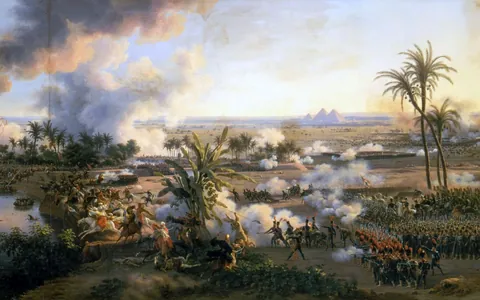 Napoleon in command · 1798Battle of the Pyramids
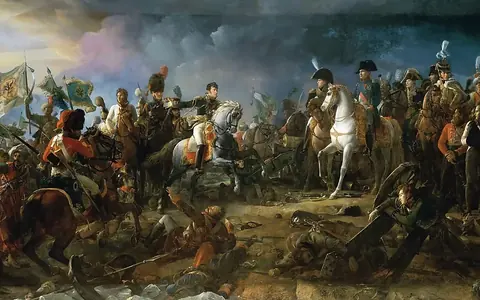 Napoleon in command · 1805Battle of Austerlitz
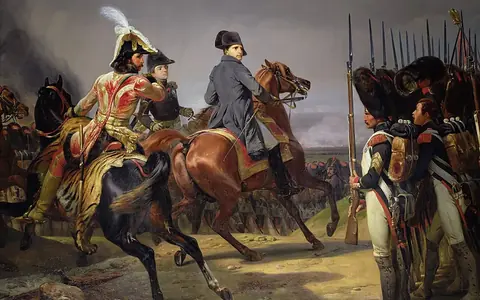 Napoleon in command · 1806Jena-Auerstedt
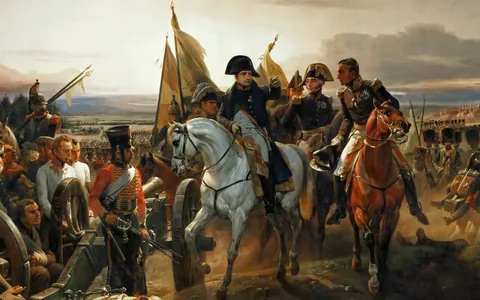 Napoleon in command · 1807Battle of Friedland
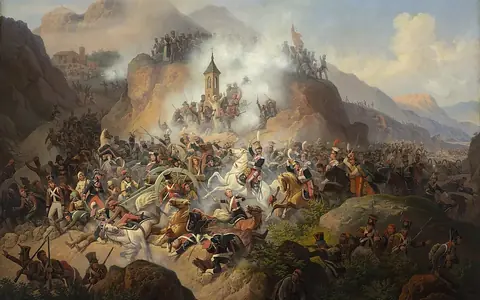 Napoleon in command · 1808Battle of Somosierra
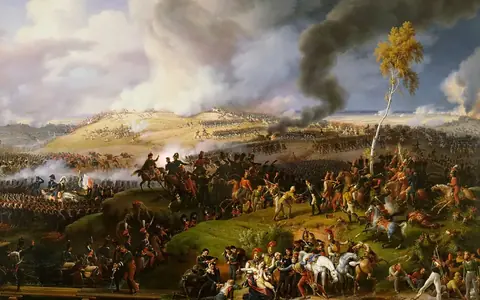 Napoleon in command · 1812Battle of Borodino
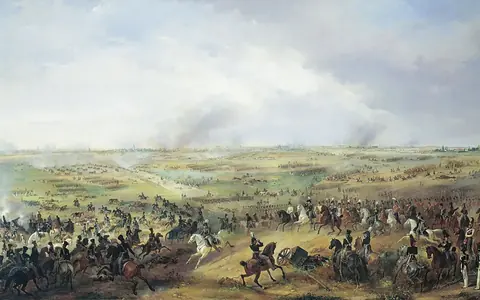 Napoleon in command · 1813Battle of Leipzig
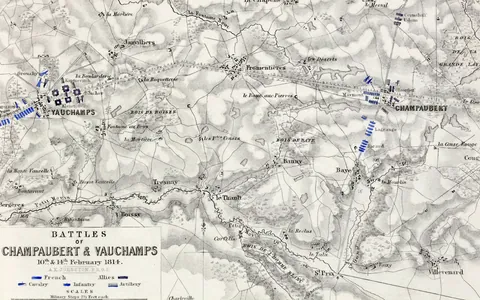 Napoleon in command · 1814Battle of Champaubert
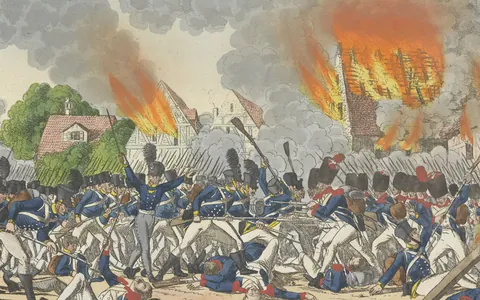 Napoleon in command · 1815Battle of Ligny
 Napoleon in command · 1815Battle of Waterloo
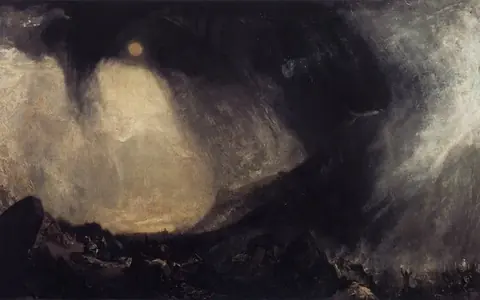 CommanderHannibal Barca
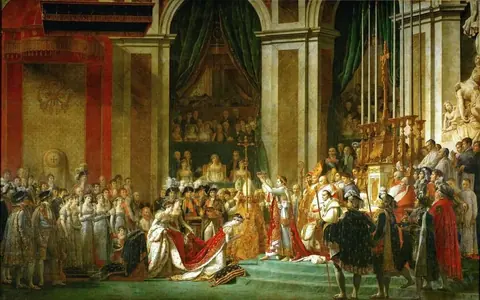 CommanderNapoleon Bonaparte
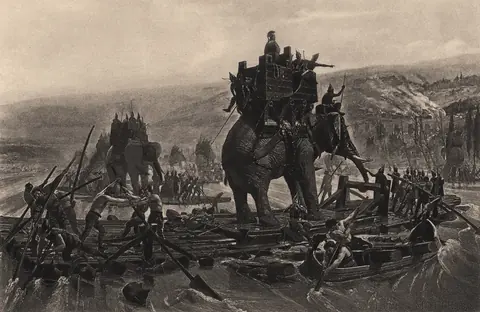 Guide · 264 to 146 BCThe Punic Wars
 Guide · 1803 to 1815The Napoleonic Wars
RankingThe Greatest Commanders of Carthage
For the wider field, see 14 June in history, the day of Marengo, Napoleon's invasion of Russia, Hannibal vs Scipio and the greatest military commanders in history.
Your verdict
We do not pick a winner. Here are the two cases at their strongest, and the questions that decide which one you find more convincing.
For Hannibal
- The Alps crossed at the cost of half his army, and the war carried into Italy
- Trasimene and Cannae, an ambush and an encirclement still studied
- Fifteen years in enemy country with a mixed army that never mutinied
- Fought against the greatest odds, by Dodge's account
- Accepted the peace after Zama, then led Carthage as its chief magistrate
For Napoleon
- Twenty years of command and sixty battles, by Roberts's count
- Ulm and Austerlitz, a campaign won by manoeuvre and a battle won by one blow
- More men at the decisive point, by Dodge's rule
- Soldiers who rallied to him again after his first fall
- The Civil Code, which he valued above forty victories
Questions to weigh before you decide:
- Is a march that cost half the army a greater feat than a crossing that was well planned and led to victory at Marengo?
- Should Napoleon's own comparison of himself with Hannibal, in David's painting, make us more sceptical or less?
- Who did more with less: Hannibal fifteen years in enemy country, or Napoleon facing all of Europe?
- Does losing the last war cancel earlier brilliance, for either man?
- Dodge praised Hannibal's resistance to adversity above all. Is the way a general loses as important as the way he wins?
- How much should the head-of-state role, and the Civil Code, count in a comparison of generals?




