

What is the military history of Hungary?
It is the story of the wars fought by the Magyars and the Kingdom of Hungary from 895: the raids ended at Lechfeld in 955, the Mongol disaster of 1241, Hunyadi’s defense of Belgrade in 1456, the defeat at Mohács in 1526, the Ottoman wars, the risings of Rákóczi and 1848, two world wars and the 1956 revolution.1
Few countries have fought so long on a frontier. Hungary lay between the steppe and the Holy Roman Empire, then between the Ottoman sultans and the Habsburg emperors, then between Germany and the Soviet Union. This guide follows its wars era by era and names the state that fought each one, from the Magyar raiders to the revolutionaries of 1956, giving defeats the same weight as victories and the Ottomans, Habsburgs and neighboring peoples their own reasons. Start with our battle guides to the Battle of Nicopolis (1396), the Battle of Mohács (1526), the Battle of Vienna (1683), the Brusilov Offensive (1916) and the Hungarian Revolution of 1956, and read the related hubs on Austria, the Ottoman Empire and the Great Turkish War.
Which states does the military history of Hungary cover?
The Magyars, led by Árpád, crossed the Carpathians in 895 and took the plain of the middle Danube. Árpád’s descendant Stephen I was crowned king in the year 1000, and the Kingdom of Hungary then lasted as an independent state until the disaster at Mohács in 1526.2
After Mohács the kingdom was divided between the Habsburgs, the Ottoman Empire and the Principality of Transylvania, and after 1699 the whole country came under Habsburg rule. The Compromise of 1867 gave Hungary its own government inside Austria-Hungary. After 1918 came a kingdom without a king under the regent Miklós Horthy, from 1949 the communist Hungarian People’s Republic, and from 1989 the Republic of Hungary.3
The Magyar raids and the Battle of Lechfeld (955)
From their new homeland the Magyar horsemen raided deep into central Europe for half a century. In August 955 a large Magyar army besieged Augsburg, and the German king Otto I, with troops raised from all over Germany, met it on the Lechfeld outside the city and won a crushing victory. The Magyars never raided Germany again.4
The defeat helped turn raiders into settled neighbors. Árpád’s great-grandson Géza restored the authority of the ruling family, and his son Stephen, baptized a Christian, defeated his pagan rivals, was crowned king in 1000 and spread Christianity across the country.5
The Mongol invasion and the Battle of Mohi (1241)
In 1241 the Mongols under Batu Khan and his general Subutai broke through the Carpathian passes. In April King Béla IV’s army camped by the Sajó River near Mohi. The Mongols attacked across a bridge while a second force forded the river and came at the Hungarians from behind; the camp was encircled, the army was destroyed and Béla escaped.6
The Mongols then held the Hungarian plain, burned Pest and crossed the Danube in the winter. Britannica’s biography of Béla describes three-quarters of the kingdom left in ruins, and the king spent the rest of his reign rebuilding it.7
Hunyadi, Varna and the siege of Belgrade (1456)
The next threat came from the south. In 1396 King Sigismund of Hungary led a crusade of Hungarian, French and other knights against the Ottoman sultan Bayezid I. At Nicopolis on the Danube, on 25 September, the French knights charged ahead of their Hungarian allies and the crusading army was destroyed; Sigismund was among the few leaders who escaped.8
In 1440 the Hungarian diet elected the Polish king Władysław III as its king, and he gave János Hunyadi, a noble from Transylvania, command of Belgrade and of the southern border. In 1444, in breach of a truce, the king and Hunyadi led a crusade toward the Black Sea. At Varna on 10 November Sultan Murad II won, and Władysław was killed charging the sultan’s guard; Hunyadi escaped.9
Elected governor of Hungary in 1446, Hunyadi faced Mehmed II, the conqueror of Constantinople, who besieged Belgrade in 1456. Hunyadi relieved the fortress in July with his own troops and thousands of crusaders, many of them untrained peasants recruited by the Franciscan friar John of Capistrano. Britannica and EBSCO’s research starter both judge that no major Ottoman offensive struck Hungary for some seventy years afterward. Hunyadi died of plague within weeks, and his son Matthias was later elected king.10

The Battle of Mohács (1526) and the partition of Hungary
Süleyman the Magnificent took Belgrade in 1521 and invaded Hungary in 1526. On 29 August, on the marshy plain of Mohács, King Louis II met him with about 25,000 men; the Ottoman army was far larger (EBSCO’s research starter puts it at about 100,000, the World of the Habsburgs at 60,000). Ottoman cavalry and guns broke the Hungarian charge, the army was destroyed, and Louis was killed or drowned while fleeing.11
Mohács ended the independent medieval kingdom. Two rival kings were elected: the Transylvanian magnate John Zápolya, backed by the sultan, and Ferdinand of Habsburg, Louis’s brother-in-law. After Süleyman’s campaigns of 1541 and 1543 Hungary was split into three: Royal Hungary under the Habsburgs in the north and west, Ottoman Hungary around Buda, and the Principality of Transylvania under Ottoman overlordship. The partition lasted until the Treaty of Karlowitz in 1699.12
The border fortresses carried the war for the next generations. In the autumn of 1552 István Dobó held the castle of Eger with about 2,000 soldiers and threw back every Ottoman assault until the besiegers gave up. In 1566 Süleyman’s last campaign came to Szigetvár, defended by Miklós Zrínyi. The old sultan died in his camp before the fortress fell, and Zrínyi was killed leading a final sortie.13

The Long War, Transylvania and the expulsion of the Ottomans
War between the emperor and the sultan flared again on the frontier in 1591 and became open war in 1593. In this Long War, which Hungarians call the Fifteen Years’ War, the brutality of the imperial commander Giorgio Basta in Transylvania drove István Bocskay, once a Habsburg supporter, into revolt, and his hajdú soldiers drove the imperial forces out. Bocskay then mediated the Peace of Zsitvatorok of November 1606, which kept the frontier as it was but ended the emperor’s yearly tribute to the sultan.14
The Principality of Transylvania, an Ottoman vassal, followed a policy of its own. In 1656 Prince George II Rákóczi joined Charles X Gustav of Sweden in attacking Poland, hoping for the Polish crown. In 1657 Polish troops and the Crimean Tatars, sent on Ottoman orders, drove his army back; beaten at Czarny Ostrów, he signed a capitulation in July, and the Transylvanian diet deposed him on the sultan’s orders.15
The Ottoman siege of Vienna in 1683 opened the way to liberation. A relief army led by the Polish king John III Sobieski and Charles of Lorraine broke the siege at the Battle of Vienna on 12 September. Imperial and allied armies then cleared central Hungary, Eugene of Savoy destroyed the Ottoman army at Zenta in 1697, and by the Treaty of Karlowitz in January 1699 the sultan gave up nearly all of Hungary. Britannica adds that the emperor, not Hungary, was the victor, since the advancing armies ravaged the country as badly as the retreating Ottomans. Our hub on the Great Turkish War follows that war battle by battle.16
Rákóczi’s War of Independence (1703 to 1711)
Habsburg rule soon provoked a new rising. In the summer of 1703 Ferenc II Rákóczi took command of the kuruc rebels, and a nationwide war of independence broke out. Britannica calls it a nearly successful national rising of all Hungary. The help Rákóczi hoped for from France never came, his armies suffered several heavy defeats, and in 1711 the war ended with the Peace of Szatmár.17
The Hungarian Revolution and War of Independence of 1848 to 1849
The revolutions of 1848 reached Pest on 15 March, when young radicals around the poet Sándor Petőfi rose without bloodshed. Pushed by Lajos Kossuth, the Diet passed the April Laws, which the king approved on 11 April: they ended the serfdom of the peasants and gave Hungary its own government under Lajos Batthyány.18
The war that followed was also a civil war. Croats, Serbs and Romanians of the kingdom opposed the new Hungarian government, and in September 1848 the Croatian ban Josip Jelačić invaded Hungary on Vienna’s orders. An improvised national army drove him back, and Kossuth took the lead of the defense.19
Austrian armies invaded in December and took Buda-Pest, but Artúr Görgey’s spring offensive of 1849 drove them almost out of the country. On 14 April 1849 the Diet deposed the Habsburg dynasty and declared Hungary independent, and in May the Hungarians retook Buda.20
The young emperor Franz Joseph then asked Tsar Nicholas I for help. Russian armies invaded, and on 13 August Görgey surrendered to the Russians at Világos. Austrian courts-martial followed: on 6 October 1849, 13 Hungarian generals were executed at Arad, remembered ever since as the martyrs of Arad.21
Józef Bem and the Polish Legion in Hungary
Hungary’s war drew in Polish exiles. For them, as the Hungarian historian István Kovács puts it, Austria was also one of the powers that had partitioned Poland. Józef Bem, an artillery officer who had fought in Napoleon’s Russian campaign and in the Polish rising of 1830 to 1831, commanded the defense of revolutionary Vienna in the autumn of 1848. He then offered his services to Kossuth and in November took command in Transylvania.22
With a small army Bem drove the Austrians out of most of Transylvania within a few months; Britannica singles out his stand at the bridge of Piski in February 1849. When the Russians invaded he beat their columns more than once, but on 31 July 1849 his army was destroyed at Segesvár, where Petőfi, who served under him, disappeared in the fighting.23
Another Polish general, Henryk Dembiński, commanded Hungarian armies in the north and, after the Russians attacked, the whole army; at Temesvár on 9 August 1849 he handed command to Bem, whose defeat there sealed the fate of the revolution. A Polish Legion under Józef Wysocki, formed in November 1848, fought to the end and crossed into the Ottoman Empire on 20 August 1849. The Hungarian historian István Kovács counts more than 4,000 Poles in the Hungarian ranks, and the literary historian Jerzy Snopek about 4,500.24
Bem escaped to the Ottoman Empire, became a Muslim and, as Murad Pasha, served the sultan in Aleppo, where he died in 1850; in 1929 his ashes were brought home to Tarnów. To Hungarians he remained “Father Bem”, and his statue in Budapest still draws joint Polish and Hungarian ceremonies. Read more in our profile of Józef Bem and our hub on the military history of Poland.25

Austria-Hungary in World War I and the Treaty of Trianon
The Compromise of 1867 gave Hungary full self-government inside the Dual Monarchy of Austria-Hungary, while the army and foreign policy stayed common to both halves under the emperor and king. In World War I Hungarian soldiers therefore served in the joint army of Austria-Hungary; see our hub on the Eastern Front of World War I.26
In June 1916 the Russian offensive of Aleksei Brusilov destroyed whole Austro-Hungarian armies, a defeat from which, in Britannica’s judgment, the empire never recovered, and Romania entered the war hoping to win Transylvania. In October 1917 Austro-Hungarian and German divisions broke the Italian front at Caporetto and drove the Italians back to the Piave.27
A year later the monarchy fell apart. In the last days of October 1918 national councils took power across its lands, an armistice was signed on 3 November, and Hungary broke away from Austria as an independent state.28
The peace treaty that Hungary signed at the Trianon Palace near Paris on 4 June 1920 left it with about a third of the old kingdom’s territory; Britannica counts the loss of two-thirds of its inhabitants, the European Network Remembrance and Solidarity almost 60 percent. About a third of all Hungarian speakers now lived in Romania, Czechoslovakia and Yugoslavia, and the treaty is remembered in Hungary as a national trauma. For the kingdom’s other nationalities, whose national councils had broken with the monarchy in 1918, the same settlement meant independence or union with their own national states.29

Hungary in World War II and the siege of Budapest
Between the wars Hungary sought to undo Trianon. With German and Italian backing it regained southern Slovakia in November 1938, Subcarpathian Rus in 1939 and northern Transylvania in 1940, and in 1941 it occupied lands in Yugoslavia. When Germany attacked Poland in September 1939, Hungary refused to let German troops cross its territory and took in thousands of Polish soldiers and civilian refugees.30
In June 1941 Hungary joined the German war against the Soviet Union. In January 1943 its Second Army was shattered on the Don near Voronezh after a Soviet breakthrough, losing much of its manpower and almost all its equipment. Regent Horthy’s government began to look for a way out, and on 19 March 1944 Germany occupied its ally.31
Under the occupation the Holocaust reached Hungary’s Jews with full force. Between 15 May and 9 July 1944 Hungarian gendarmes and German deportation experts deported about 430,000 Jews, almost all to Auschwitz-Birkenau, where most were murdered on arrival (USHMM gives about 437,000 deportees, Yad Vashem about 430,000), until Horthy halted the deportations in early July. In all, about 550,000 Jews under Hungarian rule were killed in the Holocaust.32
On 15 October 1944 Horthy announced a ceasefire with the Soviet Union. The Germans forced him to give way to Ferenc Szálasi of the Arrow Cross Party, whose militias murdered thousands of Jews in Budapest while the country fought on beside Germany. Soviet forces encircled the capital at the end of 1944; Pest fell in January, the defenders of Buda made a last stand around the castle, and the fighting ended on 13 February 1945 (see Operation Konrad III). By April all of Hungary was in Soviet hands.33
The Hungarian Revolution of 1956
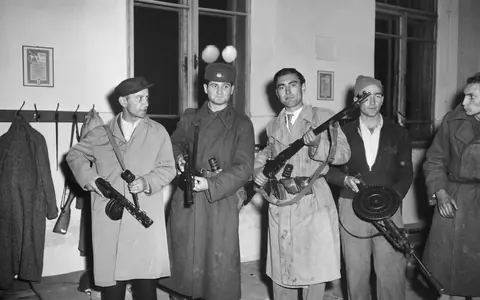
Soviet troops stayed after the war, and in 1949 the communists proclaimed the Hungarian People’s Republic. On 23 October 1956 students in Budapest marched in sympathy with the reformers in Poland, gathering at the statue of Józef Bem. That evening shooting began, and the next day Soviet troops entered the city at the request of the party leader Ernő Gerő; armed insurgents fought them and the state security police, the ÁVH.34
Imre Nagy became prime minister, a ceasefire came on 28 October and Soviet troops left Budapest. On 1 November Nagy announced Hungary’s withdrawal from the Warsaw Pact and asked the United Nations to recognize its neutrality. On 4 November Soviet tanks returned in strength, and resistance ended by 11 November.35
Britannica counts about 2,500 Hungarians and 700 Soviet soldiers killed; ENRS gives at least 2,500 insurgents killed and 20,000 wounded. About 200,000 Hungarians fled abroad, and Nagy was executed in 1958. In Poland people queued at blood banks to give blood for the Hungarians. Our article on the Hungarian Revolution of 1956 tells the story day by day.36
Famous Hungarian military commanders
Árpád led the Magyars into the Carpathian Basin. János Hunyadi saved Belgrade in 1456 and governed the kingdom. István Dobó held Eger in 1552, and Miklós Zrínyi died in the last sortie from Szigetvár in 1566. István Bocskay won Transylvania with his hajdú soldiers, and Ferenc II Rákóczi led the war of independence of 1703 to 1711. In 1848 and 1849 Artúr Görgey won the spring campaign and the Polish generals Józef Bem and Henryk Dembiński commanded Hungarian armies. Admiral Miklós Horthy ruled as regent from 1920 to 1944.37
Major battles in Hungarian history, era by era
Every battle we have written up in which the Kingdom of Hungary, the Principality of Transylvania, Austria-Hungary or Hungary took part, grouped by era and in date order:
The Middle Ages 476 to 1500 · 2
- 1278Battle on the Marchfeld, 1278King Rudolf I of Habsburg and Hungary vs Kingdom of Bohemia
On 26 August 1278 Rudolf of Habsburg and the Hungarians beat Ottokar II of Bohemia on the Marchfeld; Ottokar was killed and Austria passed to the Habsburgs.
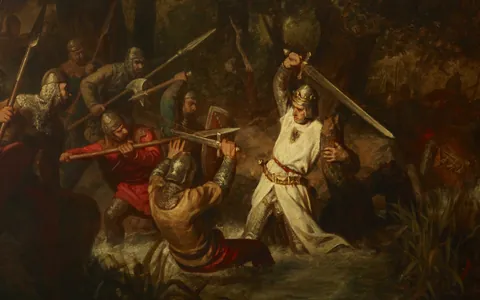
- 1396The Battle of Nicopolis, 1396Crusader coalition (Hungary, France, Burgundy) vs Ottoman Empire
How Sultan Bayezid I destroyed a Franco-Hungarian crusade on the Danube and confirmed Ottoman power in the Balkans.
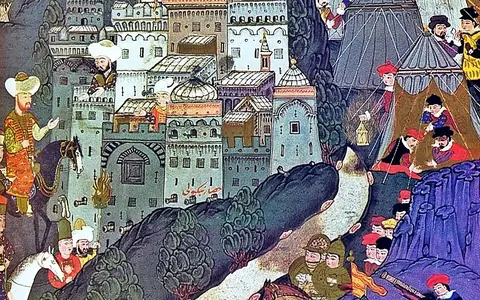
The early modern era 1492 to 1789 · 3
- 1526Battle of Mohács, 1526Ottoman Empire vs Kingdom of Hungary
How Suleiman the Magnificent destroyed the kingdom of Hungary at Mohács in 1526 in under two hours.
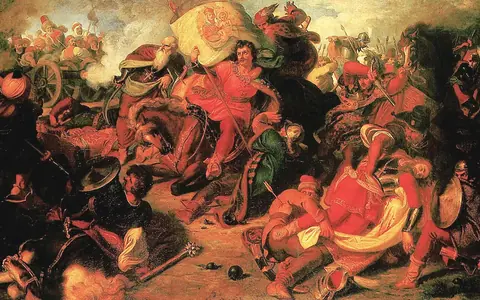
- 1619Battle of Humenné, 1619Lisowczycy (Polish light horse in Habsburg service) vs Transylvania
In November 1619 Polish Lisowczyk horsemen routed Rákóczi's Transylvanians near Humenné, and Bethlen lifted his siege of Vienna: the first relief of Vienna.
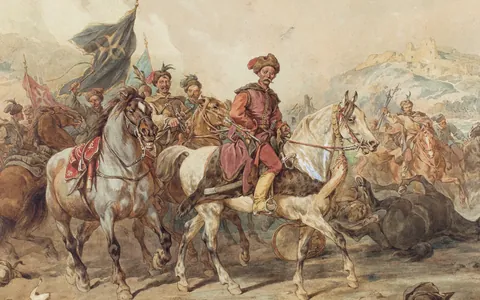
- 1657Battle of Czarny Ostrów, 1657Polish-Lithuanian Commonwealth vs Principality of Transylvania and allies
On 20 July 1657 Polish armies caught George II Rákóczi of Transylvania at Czarny Ostrów in Podolia and forced him to capitulate and leave Poland.
World War I 1914 to 1919 · 4
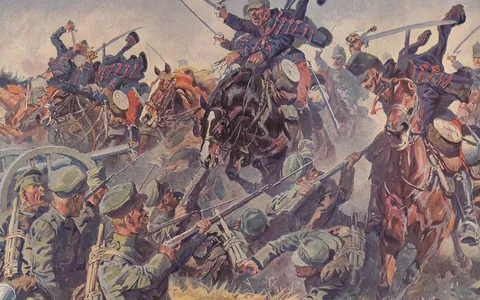
- 1914Battle of Kraśnik, 1914Austria-Hungary (First Army) vs Russian Empire (Fourth Army)
From 23 to 25 August 1914 Dankl's Austro-Hungarian First Army met the Russian Fourth Army south of Kraśnik and drove it back toward Lublin, Austria-Hungary's first victory.
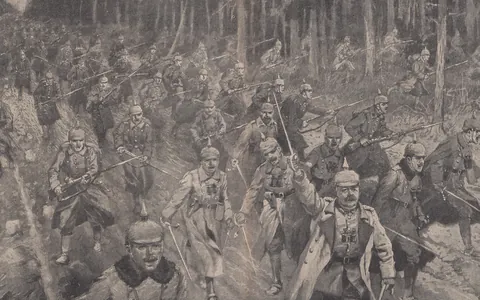
- 1914Battle of Łódź, 1914German Empire and Austria-Hungary vs Russian Empire
From 11 November to 6 December 1914 German and Russian armies fought a vast battle of maneuver around Łódź that cost some 200,000 lives and was then almost forgotten.
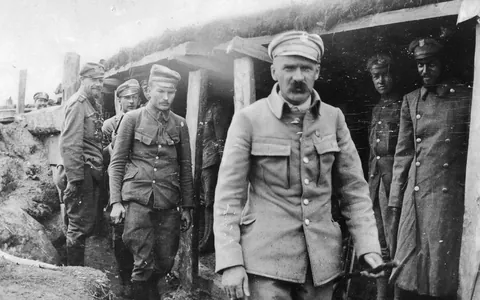
- 1916The Brusilov Offensive, 1916Russian Empire vs Austria-Hungary and Germany
From 4 June 1916 General Brusilov's armies broke the Austro-Hungarian front in Volhynia and Galicia. It was Russia's greatest success of the war, and one of its costliest.
- 1917Battle of Caporetto, 1917Austria-Hungary and Germany vs Kingdom of Italy
On 24 October 1917 German and Austro-Hungarian troops broke the Italian front at Caporetto and drove Italy's army back to the Piave. What happened and what it cost.
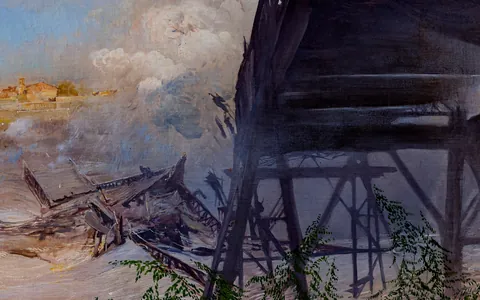
World War II 1939 to 1945 · 1
- 1945Operation Konrad III, 1945Germany and Hungary vs Soviet Union
On 18 January 1945 German panzers struck from Lake Balaton to relieve encircled Budapest. They reached the Danube in 27 hours and retook Székesfehérvár, but stalled about 25 km short of the city.
Since 1945 1
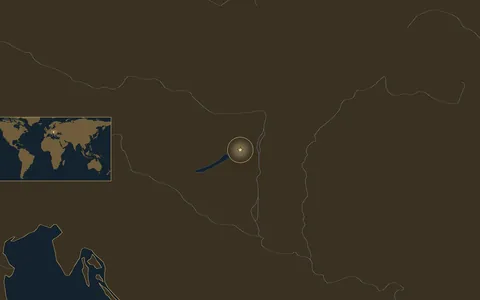
- 1956Hungarian Revolution of 1956Hungarian revolutionaries (and the Nagy government from 28 October) vs Soviet Union and Hungarian state security (ÁVH)
How a student march on 23 October 1956 became a national revolt, why the Soviets invaded Hungary on 4 November, and how many died in the fighting.
Timeline of Hungarian military history
- 895The Magyars under Árpád cross the Carpathians.38
- 955Otto I defeats the Magyars at Lechfeld.39
- 1000Stephen I is crowned king.40
- 1241The Mongols destroy Béla IV’s army at Mohi.41
- 1396
- 1444Władysław III, king of Poland and Hungary, falls at Varna.43
- 1456Hunyadi relieves Belgrade.44
- 1526
- 1552István Dobó holds Eger.46
- 1566Szigetvár falls; Süleyman and Zrínyi die.47
- 1606Peace of Zsitvatorok ends the Long War.48
- 1683
- 1699Treaty of Karlowitz.50
- 1703 to 1711Rákóczi’s War of Independence.51
- 1849Independence declared on 14 April; Görgey surrenders at Világos on 13 August.52
- 1916The Brusilov Offensive breaks the Austro-Hungarian front.53
- 1920Hungary signs the Treaty of Trianon on 4 June.54
- 1943The Second Army is shattered on the Don.55
- 1944German occupation on 19 March; deportations of Jews from 15 May to 9 July.56
- 1945The siege of Budapest ends on 13 February.57
- 1956Revolution from 23 October; Soviet intervention on 4 November.58
Memory and further reading
Hungary remembers its wars in poems and paintings. The defense of Szigetvár became part of the national memory through an epic by Zrínyi’s great-grandson and namesake, and the generals executed at Arad became national martyrs. Bem’s statue in Budapest, where the revolution of 1956 began, is still a place of joint Polish and Hungarian commemoration.59
For the other sides of these wars, see our hubs on Austria, the Ottoman Empire and Poland, and the war hubs on the Great Turkish War and the Eastern Front of World War I.
Notes
A number in the text points to a note; each note names the works that paragraph draws on, listed in full under Sources.
- EBSCO Research Starters, “Battle of Lechfeld”; Encyclopaedia Britannica, “History of Hungary”; EBSCO Research Starters, “Battle of Sajó River”; Encyclopaedia Britannica, “János Hunyadi”; EBSCO Research Starters, “Battle of Mohács”; The World of the Habsburgs, “The Hungarian war of independence 1848/49”; Encyclopaedia Britannica, “Hungarian Revolution”. ↩
- Encyclopaedia Britannica, “History of Hungary”; EBSCO Research Starters, “Árpád”; EBSCO Research Starters, “Stephen I”; Encyclopaedia Britannica, “Stephen I”. ↩
- EBSCO Research Starters, “Battle of Mohács”; EBSCO Research Starters, “Treaty of Karlowitz”; Encyclopaedia Britannica, “Austria-Hungary”; Encyclopaedia Britannica, “History of Hungary”; United States Holocaust Memorial Museum, “The Holocaust in Hungary”; Encyclopaedia Britannica, “Hungarian Revolution”; Encyclopaedia Britannica, “History of Hungary”. ↩
- EBSCO Research Starters, “Battle of Lechfeld”; Encyclopaedia Britannica, “Battle of Lechfeld”; EBSCO Research Starters, “Otto I Defeats the Magyars”; Encyclopaedia Britannica, “History of Hungary”. ↩
- Encyclopaedia Britannica, “History of Hungary”; EBSCO Research Starters, “Stephen I”; Encyclopaedia Britannica, “Stephen I”. ↩
- Encyclopaedia Britannica, “Battle of Mohi”; EBSCO Research Starters, “Battle of Sajó River”. ↩
- Encyclopaedia Britannica, “Battle of Mohi”; EBSCO Research Starters, “Battle of Sajó River”; Encyclopaedia Britannica, “Béla IV”. ↩
- Encyclopaedia Britannica, “Battle of Nicopolis”; EBSCO Research Starters, “Battle of Nicopolis”. ↩
- Encyclopaedia Britannica, “Battle of Varna”; EBSCO Research Starters, “János Hunyadi”; Encyclopaedia Britannica, “János Hunyadi”. ↩
- Encyclopaedia Britannica, “János Hunyadi”; EBSCO Research Starters, “János Hunyadi”. ↩
- Encyclopaedia Britannica, “Battle of Mohács”; EBSCO Research Starters, “Battle of Mohács”; The World of the Habsburgs, “A new great power in south-east Europe”. ↩
- EBSCO Research Starters, “Battle of Mohács”; Encyclopaedia Britannica, “Battle of Mohács”; Encyclopaedia Britannica, “Süleyman the Magnificent”; EBSCO Research Starters, “Süleyman the Magnificent”; Encyclopaedia Britannica, “History of Hungary”. ↩
- Encyclopaedia Britannica, “István Dobó”; Hungarian Ministry of Defence, For the Homeland Unto Death; Hungarian Ministry of Defence, For the Homeland Unto Death; Encyclopaedia Britannica, “Süleyman the Magnificent”; Encyclopaedia Britannica, “Miklós Zrínyi”. ↩
- Encyclopaedia Britannica, “History of Hungary”; EBSCO Research Starters, “Treaty of Zsitvatorok”; Encyclopaedia Britannica, “István Bocskay”. ↩
- Encyclopaedia Britannica, “György Rákóczi II”; Polish History Museum, “Kapitulacja Jerzego II Rakoczego”. ↩
- The World of the Habsburgs, “Leopold I”; Encyclopaedia Britannica, “History of Hungary”; EBSCO Research Starters, “Treaty of Karlowitz”; Encyclopaedia Britannica, “Eugene of Savoy”. ↩
- Encyclopaedia Britannica, “Ferenc Rákóczi II”; Hungarian National Museum, “The period of Rákóczi’s War of Independence”; Encyclopaedia Britannica, “History of Hungary”. ↩
- Hungarian National Museum, “The 1848 to 1849 Revolution and War of Independence”; Encyclopaedia Britannica, “History of Hungary”; Encyclopedia of 1848 Revolutions, “April Laws, Hungarian”. ↩
- Encyclopaedia Britannica, “History of Hungary”; The World of the Habsburgs, “The Hungarian war of independence 1848/49”; Encyclopedia of 1848 Revolutions, “Romanians and Serbs in 1848”. ↩
- Encyclopaedia Britannica, “Artúr Görgey”; Encyclopedia of 1848 Revolutions, “Artúr Görgey”; Encyclopaedia Britannica, “History of Hungary”; The World of the Habsburgs, “The Hungarian war of independence 1848/49”; Encyclopaedia Britannica, “Lajos Kossuth”. ↩
- The World of the Habsburgs, “The Hungarian war of independence 1848/49”; Encyclopaedia Britannica, “History of Hungary”; Encyclopedia of 1848 Revolutions, “Artúr Görgey”; The World of the Habsburgs, “From neo-absolutism to Compromise”; Encyclopaedia Britannica, “Arad”. ↩
- Encyclopaedia Britannica, “Józef Zachariasz Bem”; Encyclopedia of 1848 Revolutions, “Bem, Józef Zachariasz”; Dzieje.pl, “Książka o Polakach walczących o wolność Węgier w latach 1848 do 1849”; Dzieje.pl, “Uroczystości ku czci gen. Józefa Bema na Bemowie”. ↩
- Encyclopaedia Britannica, “Józef Zachariasz Bem”; Encyclopedia of 1848 Revolutions, “Bem, Józef Zachariasz”; Encyclopaedia Britannica, “Sándor Petőfi”; Hungarian National Museum, “The 1848 to 1849 Revolution and War of Independence”. ↩
- Encyclopaedia Britannica, “Henryk Dembiński”; Encyclopedia of 1848 Revolutions, “Dembinski, Henryk”; Encyclopedia of 1848 Revolutions, “Józef Wysocki”; Dzieje.pl, “Książka o Polakach walczących o wolność Węgier w latach 1848 do 1849”; Dzieje.pl, “Polsko-węgierska uroczystość pod pomnikiem Bema w Budapeszcie”. ↩
- Encyclopaedia Britannica, “Józef Zachariasz Bem”; Encyclopedia of 1848 Revolutions, “Bem, Józef Zachariasz”; Dzieje.pl, “Uroczystości ku czci gen. Józefa Bema na Bemowie”; Dzieje.pl, “Polsko-węgierska uroczystość pod pomnikiem Bema w Budapeszcie”; European Network Remembrance and Solidarity, “The Hungarian Revolution 1956”. ↩
- Encyclopaedia Britannica, “Austria-Hungary”; Encyclopaedia Britannica, “History of Hungary”; Encyclopaedia Britannica, “Hungary”. ↩
- Encyclopaedia Britannica, “Brusilov Offensive”; The World of the Habsburgs, “Russia’s ‘Last Gasp’”; Encyclopaedia Britannica, “Battle of Caporetto”; EBSCO Research Starters, “Battle of Caporetto”. ↩
- The World of the Habsburgs, “The last days of the Monarchy”; Encyclopaedia Britannica, “Hungary”; Encyclopaedia Britannica, “Austria-Hungary”. ↩
- Encyclopaedia Britannica, “Treaty of Trianon”; European Network Remembrance and Solidarity, “Treaty of Trianon”; EBSCO Research Starters, “Treaty of Trianon”; Encyclopaedia Britannica, “History of Hungary”; Encyclopaedia Britannica, “History of Hungary”; The World of the Habsburgs, “The last days of the Monarchy”; Encyclopaedia Britannica, “Austria-Hungary”. ↩
- Encyclopaedia Britannica, “History of Hungary”; United States Holocaust Memorial Museum, “The Holocaust in Hungary”; Kazimierz Stasierski, Przegląd Historyczny. ↩
- Encyclopaedia Britannica, “History of Hungary”; Yad Vashem, “Historical Background”; Hungarian Ministry of Defence, “Once There Was an Army”. ↩
- United States Holocaust Memorial Museum, “The Holocaust in Hungary”; Yad Vashem, “Historical Background”; Encyclopaedia Britannica, “History of Hungary”. ↩
- Encyclopaedia Britannica, “History of Hungary”; United States Holocaust Memorial Museum, “The Holocaust in Hungary”; Yad Vashem, “Historical Background”; Radio Free Europe/Radio Liberty, “Budapest 1945”. ↩
- Encyclopaedia Britannica, “Hungarian Revolution”; European Network Remembrance and Solidarity, “The Hungarian Revolution 1956”; Institute of National Remembrance, “Pójdziemy za Polakami. Polacy i Węgrzy w 1956 roku”; Dzieje.pl, “Powstanie węgierskie 1956”. ↩
- Encyclopaedia Britannica, “Hungarian Revolution”; Encyclopaedia Britannica, “History of Hungary”; European Network Remembrance and Solidarity, “The Hungarian Revolution 1956”. ↩
- Encyclopaedia Britannica, “Hungarian Revolution”; European Network Remembrance and Solidarity, “The Hungarian Revolution 1956”; Institute of National Remembrance, “Pójdziemy za Polakami. Polacy i Węgrzy w 1956 roku”; Dzieje.pl, “Powstanie węgierskie 1956”. ↩
- EBSCO Research Starters, “Árpád”; Encyclopaedia Britannica, “János Hunyadi”; EBSCO Research Starters, “János Hunyadi”; Encyclopaedia Britannica, “István Dobó”; Hungarian Ministry of Defence, For the Homeland Unto Death; Hungarian Ministry of Defence, For the Homeland Unto Death; Encyclopaedia Britannica, “István Bocskay”; EBSCO Research Starters, “Treaty of Zsitvatorok”; Encyclopaedia Britannica, “Ferenc Rákóczi II”; Hungarian National Museum, “The period of Rákóczi’s War of Independence”; Encyclopaedia Britannica, “Artúr Görgey”; Encyclopedia of 1848 Revolutions, “Artúr Görgey”; Encyclopaedia Britannica, “Józef Zachariasz Bem”; Encyclopaedia Britannica, “Henryk Dembiński”; United States Holocaust Memorial Museum, “The Holocaust in Hungary”; Encyclopaedia Britannica, “History of Hungary”. ↩
- Encyclopaedia Britannica, “History of Hungary”; EBSCO Research Starters, “Árpád”. ↩
- EBSCO Research Starters, “Battle of Lechfeld”; Encyclopaedia Britannica, “Battle of Lechfeld”. ↩
- EBSCO Research Starters, “Stephen I”; Encyclopaedia Britannica, “Stephen I”. ↩
- Encyclopaedia Britannica, “Battle of Mohi”; EBSCO Research Starters, “Battle of Sajó River”. ↩
- Encyclopaedia Britannica, “Battle of Nicopolis”; EBSCO Research Starters, “Battle of Nicopolis”. ↩
- Encyclopaedia Britannica, “Battle of Varna”; EBSCO Research Starters, “János Hunyadi”. ↩
- Encyclopaedia Britannica, “János Hunyadi”; EBSCO Research Starters, “János Hunyadi”. ↩
- Encyclopaedia Britannica, “Battle of Mohács”; EBSCO Research Starters, “Battle of Mohács”. ↩
- Encyclopaedia Britannica, “István Dobó”; Hungarian Ministry of Defence, For the Homeland Unto Death. ↩
- Hungarian Ministry of Defence, For the Homeland Unto Death; Encyclopaedia Britannica, “Süleyman the Magnificent”. ↩
- Encyclopaedia Britannica, “History of Hungary”; EBSCO Research Starters, “Treaty of Zsitvatorok”. ↩
- The World of the Habsburgs, “Leopold I”; Encyclopaedia Britannica, “History of Hungary”. ↩
- EBSCO Research Starters, “Treaty of Karlowitz”; Encyclopaedia Britannica, “History of Hungary”. ↩
- Encyclopaedia Britannica, “Ferenc Rákóczi II”; Hungarian National Museum, “The period of Rákóczi’s War of Independence”. ↩
- The World of the Habsburgs, “The Hungarian war of independence 1848/49”; Encyclopaedia Britannica, “History of Hungary”. ↩
- Encyclopaedia Britannica, “Brusilov Offensive”; The World of the Habsburgs, “Russia’s ‘Last Gasp’”. ↩
- Encyclopaedia Britannica, “Treaty of Trianon”; European Network Remembrance and Solidarity, “Treaty of Trianon”. ↩
- Encyclopaedia Britannica, “History of Hungary”; Hungarian Ministry of Defence, “Once There Was an Army”. ↩
- United States Holocaust Memorial Museum, “The Holocaust in Hungary”; Yad Vashem, “Historical Background”. ↩
- Radio Free Europe/Radio Liberty, “Budapest 1945”; United States Holocaust Memorial Museum, “The Holocaust in Hungary”. ↩
- Encyclopaedia Britannica, “Hungarian Revolution”; European Network Remembrance and Solidarity, “The Hungarian Revolution 1956”. ↩
- Hungarian Ministry of Defence, For the Homeland Unto Death; Encyclopaedia Britannica, “Miklós Zrínyi”; The World of the Habsburgs, “From neo-absolutism to Compromise”; Encyclopaedia Britannica, “Arad”; Dzieje.pl, “Polsko-węgierska uroczystość pod pomnikiem Bema w Budapeszcie”; European Network Remembrance and Solidarity, “The Hungarian Revolution 1956”. ↩
Sources
- EBSCO Research Starters (Herbert Luft), “Battle of Lechfeld”.
- Encyclopaedia Britannica, “History of Hungary”.
- EBSCO Research Starters, “Battle of Sajó River”.
- Encyclopaedia Britannica (Lajos Elekes), “János Hunyadi”.
- EBSCO Research Starters (Ralph L. Langenheim), “Battle of Mohács”.
- The World of the Habsburgs (Schloss Schönbrunn Kultur- und Betriebsges.) (Martin Mutschlechner), “The Hungarian war of independence 1848/49”.
- Encyclopaedia Britannica, “Hungarian Revolution”.
- EBSCO Research Starters, “Árpád”.
- EBSCO Research Starters, “Stephen I”.
- Encyclopaedia Britannica, “Stephen I”.
- EBSCO Research Starters, “Treaty of Karlowitz”.
- Encyclopaedia Britannica, “Austria-Hungary”.
- Encyclopaedia Britannica, “History of Hungary: Revolution, counterrevolution, and the regency, 1918 to 1945”.
- United States Holocaust Memorial Museum, Holocaust Encyclopedia, “The Holocaust in Hungary”.
- Encyclopaedia Britannica, “History of Hungary: Hungary in the Soviet orbit”.
- Encyclopaedia Britannica, “Battle of Lechfeld”.
- EBSCO Research Starters, “Otto I Defeats the Magyars”.
- Encyclopaedia Britannica (Charles Phillips), “Battle of Mohi”.
- Encyclopaedia Britannica, “Béla IV”.
- Encyclopaedia Britannica, “Battle of Nicopolis”.
- EBSCO Research Starters, “Battle of Nicopolis”.
- Encyclopaedia Britannica (Tony Bunting), “Battle of Varna”.
- EBSCO Research Starters, “János Hunyadi”.
- Encyclopaedia Britannica (Tony Bunting), “Battle of Mohács”.
- The World of the Habsburgs (Schloss Schönbrunn Kultur- und Betriebsges.), “A new great power in south-east Europe: the Ottoman Empire”.
- Encyclopaedia Britannica, “Süleyman the Magnificent”.
- EBSCO Research Starters, “Süleyman the Magnificent”.
- Encyclopaedia Britannica, “History of Hungary: The period of partition”.
- Encyclopaedia Britannica, “István Dobó”.
- Hungarian Ministry of Defence, honvedelem.hu (from Zrínyi Média, For the Homeland Unto Death: 1100 Years), “The Unsuccessful Ottoman Siege of Eger, September 4 to October 18, 1552”.
- Hungarian Ministry of Defence, honvedelem.hu (from Zrínyi Média, For the Homeland Unto Death: 1100 Years), “The Siege of Szigetvár, August to September 1566”.
- Encyclopaedia Britannica, “Miklós Zrínyi”.
- EBSCO Research Starters, “Treaty of Zsitvatorok”.
- Encyclopaedia Britannica, “István Bocskay”.
- Encyclopaedia Britannica, “György Rákóczi II”.
- Polish History Museum, calendar of events, “Kapitulacja Jerzego II Rakoczego” (in Polish).
- The World of the Habsburgs (Schloss Schönbrunn Kultur- und Betriebsges.) (Martin Mutschlechner), “Leopold I: Problems with Hungary and the Turks”.
- Encyclopaedia Britannica, “Eugene of Savoy”.
- Encyclopaedia Britannica, “Ferenc Rákóczi II”.
- Hungarian National Museum, permanent exhibition, “The period of Rákóczi’s War of Independence”.
- Hungarian National Museum, permanent exhibition, “The 1848 to 1849 Revolution and War of Independence”.
- Encyclopedia of 1848 Revolutions, ed. James Chastain (Ohio University), “April Laws, Hungarian”.
- Encyclopedia of 1848 Revolutions, ed. James Chastain (Ohio University), “Romanians and Serbs in 1848”.
- Encyclopaedia Britannica, “Artúr Görgey”.
- Encyclopedia of 1848 Revolutions, ed. James Chastain (Ohio University), “Artúr Görgey”.
- Encyclopaedia Britannica, “Lajos Kossuth”.
- The World of the Habsburgs (Schloss Schönbrunn Kultur- und Betriebsges.), “From neo-absolutism to Compromise”.
- Encyclopaedia Britannica, “Arad”.
- Encyclopaedia Britannica, “Józef Zachariasz Bem”.
- Encyclopedia of 1848 Revolutions, ed. James Chastain (Ohio University), “Bem, Józef Zachariasz”.
- Dzieje.pl (Polish History Museum and Polish Press Agency), “Książka o Polakach walczących o wolność Węgier w latach 1848 do 1849” (in Polish).
- Dzieje.pl (Polish History Museum and Polish Press Agency), “Uroczystości ku czci gen. Józefa Bema na Bemowie” (in Polish).
- Encyclopaedia Britannica, “Sándor Petőfi”.
- Encyclopaedia Britannica, “Henryk Dembiński”.
- Encyclopedia of 1848 Revolutions, ed. James Chastain (Ohio University), “Dembinski, Henryk”.
- Encyclopedia of 1848 Revolutions, ed. James Chastain (Ohio University), “Józef Wysocki”.
- Dzieje.pl (Polish History Museum and Polish Press Agency), “Polsko-węgierska uroczystość pod pomnikiem Bema w Budapeszcie” (in Polish).
- European Network Remembrance and Solidarity (Katarzyna Ścierańska), “The Hungarian Revolution 1956”.
- Encyclopaedia Britannica, “Hungary: World War I”.
- Encyclopaedia Britannica (John Swift), “Brusilov Offensive”.
- The World of the Habsburgs (Schloss Schönbrunn Kultur- und Betriebsges.) (Hannes Leidinger), “Russia’s ‘Last Gasp’”.
- Encyclopaedia Britannica, “Battle of Caporetto”.
- EBSCO Research Starters, “Battle of Caporetto”.
- The World of the Habsburgs (Schloss Schönbrunn Kultur- und Betriebsges.), “The last days of the Monarchy”.
- Encyclopaedia Britannica, “Treaty of Trianon”.
- European Network Remembrance and Solidarity, “Treaty of Trianon”.
- EBSCO Research Starters (Jim Greene), “Treaty of Trianon”.
- Kazimierz Stasierski, Przegląd Historyczny 52, no. 2 (1961), “Polscy uchodźcy na Węgrzech w latach 1939 do 1945” (in Polish).
- Yad Vashem, “Historical Background: The Jews of Hungary During the Holocaust”.
- Hungarian Ministry of Defence, honvedelem.hu, “Once There Was an Army”.
- Radio Free Europe/Radio Liberty, “Budapest 1945: The Broken Heart of Europe”.
- Institute of National Remembrance (IPN), Przystanek Historia, “Pójdziemy za Polakami. Polacy i Węgrzy w 1956 roku” (in Polish).
- Dzieje.pl (Polish History Museum and Polish Press Agency), “Powstanie węgierskie 1956” (in Polish).






