

What were the Northern Wars and who won?
The Northern Wars were the wars that Sweden, Denmark, Poland-Lithuania and Russia fought for the Baltic and northeastern Europe between 1558 and 1721. Sweden gained most in the 17th century, but it lost the last of them, the Great Northern War, and Russia came out as the winner and the leading Baltic power.1
For more than a century and a half the lands around the Baltic Sea were fought over again and again. Sweden, Denmark-Norway, Poland-Lithuania and Russia fought one war after another for Livonia, for Ingria and for the ports of the Baltic coast, and the historian Robert Frost gathers them under one name, the Northern Wars, running from the Livonian War of 1558 to the Treaty of Nystad in 1721.2
This guide takes the wars one by one, explains why the same war can carry two different numbers, and links our articles on the battles fought in them, from the Battle of Kircholm and the Battle of Warsaw to Narva and Poltava.3
What were the Northern Wars?
The Northern Wars are a series of wars fought for control of the Baltic and of northeastern Europe between 1558 and 1721. Sweden, Denmark, Poland-Lithuania and Russia took part in them in changing alliances, and in Frost’s account the series begins with the Livonian War and ends with the Great Northern War.4
The name is a convenience of historians rather than a label used at the time, and a review of Frost’s book calls it a term that is not well established at all. It is still a useful one, because the same states, the same coasts and often the same quarrels return from one war to the next.5
The numbering of the wars causes the most confusion. Britannica calls the war of 1655 to 1660 the First Northern War and the war of 1700 to 1721 the Second Northern War, adding that the second is also known as the Great Northern War. Polish historians call the war of 1655 to 1660, which Poles remember as the Deluge, the second northern war (II wojna północna), and the war of 1700 to 1721 the Great Northern War (wielka wojna północna). On this site we follow that second usage: the Second Northern War means 1655 to 1660 and the Great Northern War means 1700 to 1721.6
Causes of the Northern Wars
The first prize was Livonia, the land of today’s Latvia and Estonia with the port of Riga. In the Livonian War of 1558 to 1583 Russia fought Poland, Lithuania and Sweden for it and lost, and the struggle for the eastern Baltic coast that began there runs through every later war in the series.7
Dynastic rivalry added a second cause. The Polish kings of the Vasa house claimed the Swedish crown, and John Casimir gave up that claim only at the Treaty of Oliva in 1660.8
The third cause was the old rivalry between Sweden and Denmark-Norway. The two Scandinavian kingdoms fought each other in 1563 to 1570, 1611 to 1613, 1643 to 1645, 1657 to 1660 and 1675 to 1679, and Sweden made its great gains in two of those rounds, at Brömsebro in 1645 and in the wars of 1657 to 1660, which left Skåne in Swedish hands.9
The wars one by one, 1558 to 1660
The Livonian War (1558 to 1583). Russia fought Poland, Lithuania and Sweden for Livonia for a quarter of a century and in the end lost the war.10
The Northern Seven Years’ War (1563 to 1570). Sweden fought Denmark, Lübeck and Poland. The Peace of Stettin in 1570 left the borders as they had been, and Sweden had to pay a large ransom to get the fortress of Älvsborg back from the Danes.11
The Polish-Swedish wars (1600 to 1629). From 1600 Poland-Lithuania and Sweden fought on and off for Livonia and for the Swedish crown. In September 1605 Jan Karol Chodkiewicz beat a much larger Swedish army under Charles IX at Kircholm near Riga, but the war went on, and at the Truce of Altmark in 1629 Sweden kept most of Livonia and its ports. Our guide to the Polish-Swedish War of 1600 to 1629 follows it battle by battle, from Kircholm to Oliwa and Trzciana.12
The Ingrian War (1610 to 1617). Sweden fought Russia for the lands around the Gulf of Finland. At the Treaty of Stolbovo in 1617 Russia gave Sweden Ingria and Kexholm and was cut off from the Baltic Sea.13
The Kalmar War (1611 to 1613). Denmark-Norway under Christian IV declared war on Sweden in 1611. The peace signed at Knäred in 1613 made Sweden pay Denmark a war indemnity.14
The Torstenson War (1643 to 1645). Sweden fought Denmark-Norway for two years. At the Peace of Brömsebro in 1645 Denmark ceded Gotland, Ösel, Jämtland and Härjedalen and handed Halland to Sweden for thirty years.15

The Second Northern War (1655 to 1660). Charles X Gustav of Sweden invaded Poland-Lithuania in 1655, and Russia, Denmark, Austria and later Brandenburg fought against Sweden. Swedish and Brandenburg troops won the three-day Battle of Warsaw from 28 to 30 July 1656. The Treaty of Oliva of 3 May 1660 ended the war with Poland, and the Treaty of Copenhagen of 27 May 1660 returned Bornholm and Trondheim to Denmark-Norway while Skåne stayed Swedish. Read more in our guides to the Second Northern War and the Swedish Deluge.16
The last wars, 1675 to 1721
The Scanian War (1675 to 1679). Sweden fought Denmark and Brandenburg, and Britannica treats the war as part of the wider Dutch War of Louis XIV. The Danes were badly beaten at Lund in December 1676, and the peace of 1679 restored the borders of before the war.17
The Great Northern War (1700 to 1721). In 1700 Russia, Denmark-Norway and Saxony-Poland attacked Sweden together. Charles XII beat a much larger Russian army at Narva in November 1700, but on 8 July 1709 (27 June in the Russian calendar) Peter the Great defeated him decisively at Poltava. At the Treaty of Nystad in 1721 Sweden ceded Livonia, Estonia, Ingria and part of Karelia to Russia. Our guide to the Great Northern War covers the war from Narva to Nystad.18

Who won the Northern Wars?
Over the whole series Russia came out the winner. In Frost’s reading the wars for the Baltic ended with Russia as the dominant power of northeastern Europe, and Britannica and the Norwegian national encyclopedia both describe the Great Northern War as the end of Sweden’s time as a great power and the start of Russia’s as the leading power of the Baltic region.19
For most of the 17th century the winner had looked like Sweden. It took Ingria from Russia, most of Livonia from Poland-Lithuania and Skåne and other provinces from Denmark, and its age of greatness, which Swedes call stormaktstiden, ended only with the death of Charles XII in 1718.20
Major battles of the Northern Wars
Below, in date order, are our articles on the battles of these wars. The wars of 1655 to 1660 and of 1700 to 1721 also have their own guides, the Second Northern War and the Great Northern War.
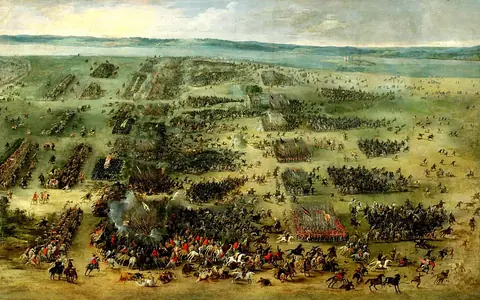
- 1605Battle of Kircholm, 1605Polish-Lithuanian Commonwealth vs Sweden
How ~3,600 Polish-Lithuanian troops and their winged hussars annihilated a Swedish army three times their size at Kircholm in 1605.
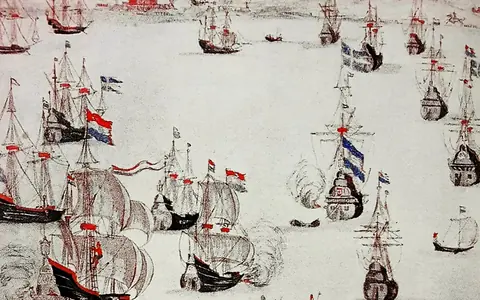
- 1627The Battle of Oliwa, 1627Polish-Lithuanian Commonwealth vs Sweden
The Commonwealth's small navy breaks the Swedish blockade of Gdańsk.
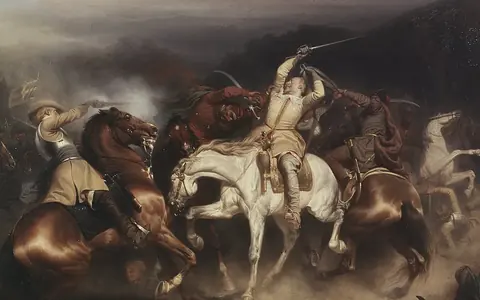
- 1629The Battle of Trzciana, 1629Polish-Lithuanian Commonwealth and the Holy Roman Empire vs Sweden
The day the hussars almost captured the Swedish king.
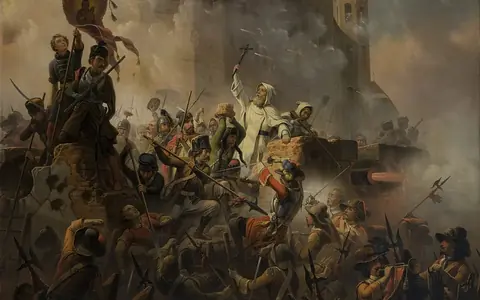
- 1655The Siege of Jasna Góra, 1655Polish-Lithuanian Commonwealth (garrison of Jasna Góra) vs Sweden
A small garrison of monks and soldiers turned back the Swedes.
- 1656Battle of Warsaw, 1656Swedish Empire and Brandenburg vs Polish-Lithuanian Commonwealth and Crimean Khanate
Who won the Battle of Warsaw in 1656? Charles X Gustav and the Great Elector beat John Casimir in three days of fighting, yet it changed little. See why.
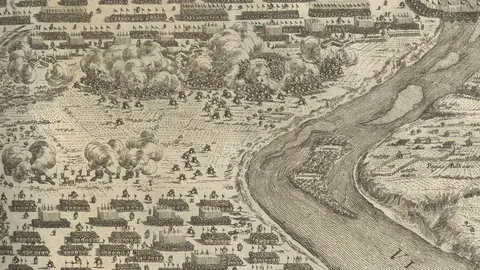
- 1656Battle of Filipów, 1656Grand Duchy of Lithuania vs Sweden and Brandenburg
On 22 October 1656 a Swedish and Brandenburg army caught Hetman Gosiewski's Lithuanian division at Filipów, two weeks after his victory at Prostki.
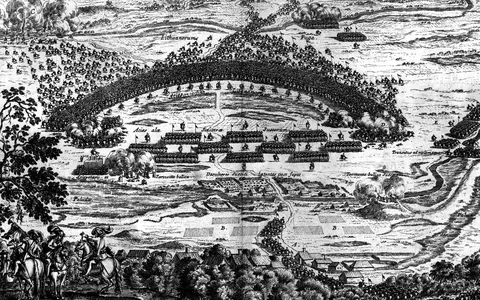
- 1657Battle of Czarny Ostrów, 1657Polish-Lithuanian Commonwealth vs Principality of Transylvania and allies
On 20 July 1657 Polish armies caught George II Rákóczi of Transylvania at Czarny Ostrów in Podolia and forced him to capitulate and leave Poland.
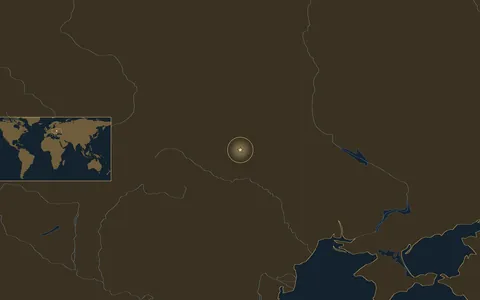
- 1658Siege of Kolding, 1658Polish-Lithuanian Commonwealth (allied with Denmark) vs Sweden
At Christmas 1658 Czarniecki's Polish cavalry, sent to help Denmark against Sweden, stormed the Swedish-held castle of Kolding at the third attempt.
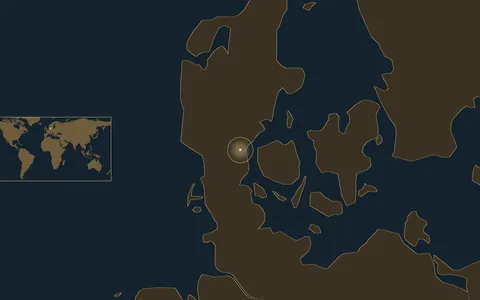
- 1659Battle of Nyborg, 1659Denmark and its allies vs Sweden
On 14 November 1659 Danish, Dutch, Polish and Brandenburg troops beat the Swedes outside Nyborg, and some 3,000 Swedes surrendered after a naval bombardment.
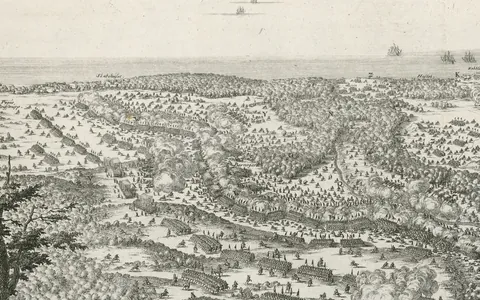
- 1700Battle of Narva, 1700Swedish Empire vs Tsardom of Russia
How Charles XII and a small Swedish army routed a much larger Russian force at Narva in 1700.
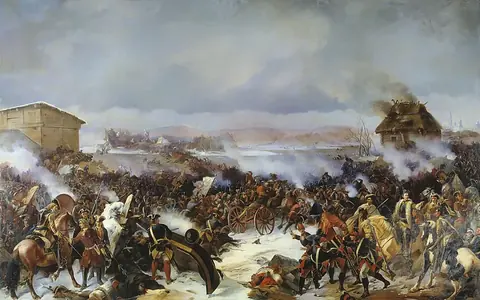
- 1702The Battle of Kliszów, 1702: Charles XII Routs Augustus IIKingdom of Sweden vs Electorate of Saxony and the Polish Crown army
On 19 July 1702 Charles XII of Sweden beat the Saxon and Polish army of Augustus II at Kliszów: the flank march, the failed hussar charge and the rout.
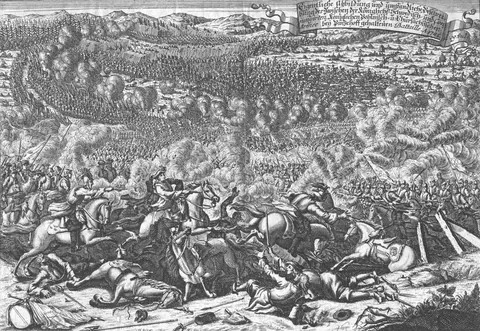
- 1708Battle of Lesnaya, 1708Tsardom of Russia vs Swedish Empire
On 9 October 1708 Peter the Great caught Lewenhaupt's Swedish corps and its supply train at Lesnaya. The march, the battle, the disputed numbers and why Peter called it the mother of Poltava.
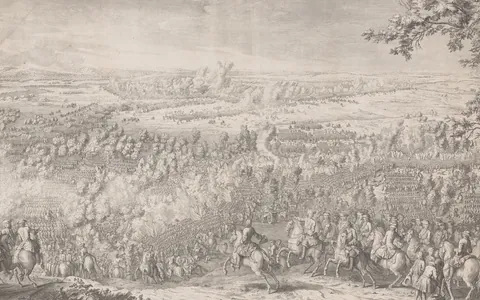
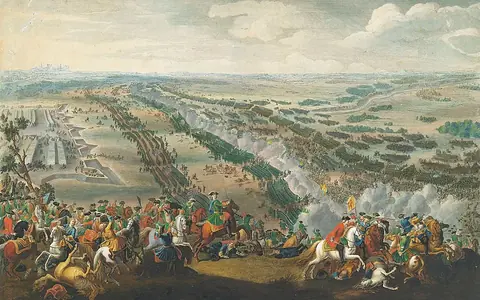
- 1709Battle of Poltava, 1709Tsardom of Russia (Peter I) vs Swedish Empire (Charles XII)
A summer dawn in Ukraine, a starving Swedish army, and the battle that broke Charles XII and made Peter the Great master of the north.
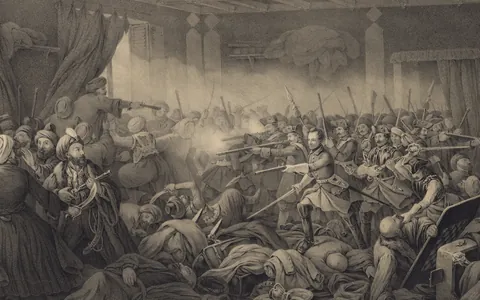
- 1713The Skirmish at Bender, 1713Ottoman Empire vs Charles XII of Sweden
On 1 February 1713, after years as the Sultan's guest, Charles XII of Sweden and a few dozen men fought off Ottoman troops in his house near Bender until it was set on fire.
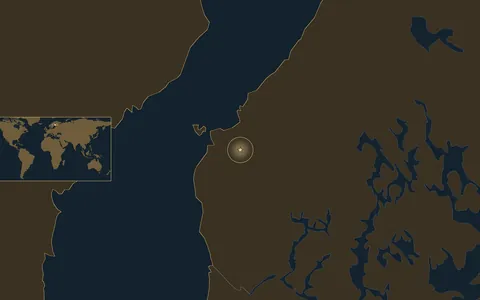
- 1714Battle of Napue, 1714Swedish Empire (mostly Finnish troops) vs Tsardom of Russia
In February 1714 Prince Golitsyn marched an army on skis and sledges across snowbound Finland and turned Armfelt's flank at Napue. In two hours the last Swedish army in Finland was gone, and the Great Wrath began.
Timeline of the Northern Wars
- 1558The Livonian War begins: Russia, Poland, Lithuania and Sweden fight for Livonia.21
- 1570The Peace of Stettin ends the Northern Seven Years’ War between Sweden and Denmark.22
- 1605Battle of Kircholm: Chodkiewicz defeats a much larger Swedish army near Riga.23
- 1613The Peace of Knäred ends the Kalmar War.24
- 1617The Treaty of Stolbovo gives Sweden Ingria and cuts Russia off from the Baltic.25
- 1629The Truce of Altmark leaves Sweden most of Livonia.26
- 1645The Peace of Brömsebro: Denmark cedes Gotland and Ösel to Sweden.27
- 1655Charles X Gustav invades Poland-Lithuania and the Second Northern War begins.28
- 1656Battle of Warsaw, 28 to 30 July: a Swedish and Brandenburg victory.29
- 1660The Treaties of Oliva and Copenhagen end the Second Northern War.30
- 1676The Danes are beaten at Lund in the Scanian War.31
- 1700
- 1709Battle of Poltava: the decisive Russian victory over Charles XII.33
- 1721The Treaty of Nystad gives Livonia, Estonia, Ingria and part of Karelia to Russia.34
Where to read next
For the commanders, read our profiles of Jan Karol Chodkiewicz, Gustavus Adolphus, Stanisław Koniecpolski and Stefan Czarniecki. For the states that fought these wars, see the military histories of Sweden, Poland and Russia.
Notes
A number in the text points to a note. Each note names the works that paragraph draws on, listed in full under Sources.
- Robert I. Frost, The Northern Wars. Reviews in History, The Northern Wars. Encyclopaedia Britannica, “Battle of Poltava”. ↩
- Robert I. Frost, The Northern Wars. Reviews in History, The Northern Wars. ↩
- Robert I. Frost, The Northern Wars. Encyclopaedia Britannica, “Second Northern War”. ↩
- Robert I. Frost, The Northern Wars. Reviews in History, The Northern Wars. ↩
- Reviews in History, The Northern Wars. Robert I. Frost, The Northern Wars. ↩
- Encyclopaedia Britannica, “First Northern War”. Encyclopaedia Britannica, “Second Northern War”. Zintegrowana Platforma Edukacyjna, “Szwedzki najazd na Rzeczpospolitą”. Dzieje.pl, article on the northern wars. Zintegrowana Platforma Edukacyjna, “Czasy saskie”. ↩
- Encyclopaedia Britannica, “Livonian War”. Zintegrowana Platforma Edukacyjna, “Walka o dominium maris Baltici”. ↩
- Zintegrowana Platforma Edukacyjna, “Wojny ze Szwecją w I połowie XVII wieku”. Encyclopaedia Britannica, “Treaty of Oliva”. Zintegrowana Platforma Edukacyjna, “Szwedzki najazd na Rzeczpospolitą”. ↩
- Lex, “Den Nordiske Syvårskrig”. Lex, “Kalmarkrigen”. Lex, “Torstenssonfejden”. Lex, “Karl Gustav-krigene”. Lex, “Den Skånske Krig”. ↩
- Encyclopaedia Britannica, “Livonian War”. Zintegrowana Platforma Edukacyjna, “Walka o dominium maris Baltici”. ↩
- Encyclopaedia Britannica, “Peace of Stettin”. Lex, “Den Nordiske Syvårskrig”. ↩
- Zintegrowana Platforma Edukacyjna, “Wojny ze Szwecją w I połowie XVII wieku”. Encyclopaedia Britannica, “Sweden”. Encyclopaedia Britannica, “Jan Karol Chodkiewicz”. Dzieje.pl, calendar of dates, 1605. Dzieje.pl, calendar of dates, 1629. ↩
- Encyclopaedia Britannica, “Treaty of Stolbovo”. Store norske leksikon, “Freden i Stolbova”. ↩
- Lex, “Kalmarkrigen”. Store norske leksikon, “Kalmarkrigen”. ↩
- Lex, “Torstenssonfejden”. Store norske leksikon, “Hannibalfeiden”. ↩
- Encyclopaedia Britannica, “First Northern War”. Zintegrowana Platforma Edukacyjna, “Szwedzki najazd na Rzeczpospolitą”. Encyclopaedia Britannica, “Battle of Warsaw”. Dzieje.pl, calendar of dates, 1656. Encyclopaedia Britannica, “Treaty of Oliva”. Lex, “Karl Gustav-krigene”. ↩
- Encyclopaedia Britannica, “Scanian War”. Lex, “Den Skånske Krig”. Store norske leksikon, “Gyldenløvefeiden”. ↩
- Encyclopaedia Britannica, “Second Northern War”. Store norske leksikon, “Den store nordiske krig”. Encyclopaedia Britannica, “Battle of Poltava”. Store norske leksikon, “Slaget ved Poltava”. Lex, “Freden i Nystad”. ↩
- Robert I. Frost, The Northern Wars. Encyclopaedia Britannica, “Battle of Poltava”. Store norske leksikon, “Den store nordiske krig”. ↩
- Encyclopaedia Britannica, “Treaty of Stolbovo”. Encyclopaedia Britannica, “Sweden”. Lex, “Karl Gustav-krigene”. Encyclopaedia Britannica, “Sweden”. Lex, “Stormagtstiden”. ↩
- Encyclopaedia Britannica, “Livonian War”. Zintegrowana Platforma Edukacyjna, “Walka o dominium maris Baltici”. ↩
- Encyclopaedia Britannica, “Peace of Stettin”. Lex, “Den Nordiske Syvårskrig”. ↩
- Encyclopaedia Britannica, “Jan Karol Chodkiewicz”. Dzieje.pl, calendar of dates, 1605. ↩
- Lex, “Kalmarkrigen”. Store norske leksikon, “Kalmarkrigen”. ↩
- Encyclopaedia Britannica, “Treaty of Stolbovo”. Store norske leksikon, “Freden i Stolbova”. ↩
- Encyclopaedia Britannica, “Sweden”. Dzieje.pl, calendar of dates, 1629. ↩
- Lex, “Torstenssonfejden”. Store norske leksikon, “Hannibalfeiden”. ↩
- Encyclopaedia Britannica, “First Northern War”. Zintegrowana Platforma Edukacyjna, “Szwedzki najazd na Rzeczpospolitą”. ↩
- Encyclopaedia Britannica, “Battle of Warsaw”. Dzieje.pl, calendar of dates, 1656. ↩
- Encyclopaedia Britannica, “Treaty of Oliva”. Lex, “Karl Gustav-krigene”. ↩
- Encyclopaedia Britannica, “Scanian War”. Lex, “Den Skånske Krig”. ↩
- Encyclopaedia Britannica, “Second Northern War”. Store norske leksikon, “Den store nordiske krig”. ↩
- Encyclopaedia Britannica, “Battle of Poltava”. Store norske leksikon, “Slaget ved Poltava”. ↩
- Encyclopaedia Britannica, “Second Northern War”. Lex, “Freden i Nystad”. ↩
Sources
- Robert I. Frost, The Northern Wars: War, State and Society in Northeastern Europe, 1558 to 1721 (Routledge).
- Reviews in History (Institute of Historical Research), review of Frost, The Northern Wars.
- Encyclopaedia Britannica, “Battle of Poltava”.
- Encyclopaedia Britannica, “Second Northern War”.
- Encyclopaedia Britannica, “First Northern War”.
- Zintegrowana Platforma Edukacyjna (Polish Ministry of Education), “Szwedzki najazd na Rzeczpospolitą”.
- Dzieje.pl (Muzeum Historii Polski and Polish Press Agency), article on the northern wars.
- Zintegrowana Platforma Edukacyjna, “Czasy saskie: Rzeczpospolita Wettynów”.
- Encyclopaedia Britannica, “Livonian War”.
- Zintegrowana Platforma Edukacyjna, “Walka o dominium maris Baltici”.
- Zintegrowana Platforma Edukacyjna, “Wojny ze Szwecją w I połowie XVII wieku”.
- Encyclopaedia Britannica, “Treaty of Oliva”.
- Lex (Danish national encyclopedia), “Den Nordiske Syvårskrig”.
- Lex, “Kalmarkrigen”.
- Lex, “Torstenssonfejden”.
- Lex, “Karl Gustav-krigene”.
- Lex, “Den Skånske Krig”.
- Encyclopaedia Britannica, “Peace of Stettin”.
- Encyclopaedia Britannica, “Sweden: The reign of Gustav II Adolf”.
- Encyclopaedia Britannica, “Jan Karol Chodkiewicz”.
- Dzieje.pl, calendar of dates, 1605.
- Dzieje.pl, calendar of dates, 1629.
- Encyclopaedia Britannica, “Treaty of Stolbovo”.
- Store norske leksikon, “Freden i Stolbova”.
- Store norske leksikon, “Kalmarkrigen”.
- Store norske leksikon, “Hannibalfeiden”.
- Encyclopaedia Britannica, “Battle of Warsaw” (1656).
- Dzieje.pl, calendar of dates, 1656.
- Encyclopaedia Britannica, “Scanian War”.
- Store norske leksikon, “Gyldenløvefeiden”.
- Store norske leksikon, “Den store nordiske krig”.
- Store norske leksikon, “Slaget ved Poltava”.
- Lex, “Freden i Nystad”.
- Encyclopaedia Britannica, “Sweden: The reign of Charles XII”.
- Lex, “Stormagtstiden”.






