

Napoleon or Caesar: what does the evidence say?
Napoleon Bonaparte (1769 to 1821) and Julius Caesar (100 to 44 BC, though some date his birth to 102) were soldiers who used their armies to take supreme power in their states. Caesar won every war he fought and was murdered at the height of his power. Napoleon won most of his battles but lost his last two wars and died in exile. Napoleon studied Caesar closely and even dictated a book on his wars. Dodge called them perhaps the two greatest men as soldiers, statesmen and law-givers. Roberts finds Napoleon's record extraordinary, while Tulard thinks the administrator outshone the general. This page sets out the evidence for each and leaves the final verdict to you.
No other pair on this site has a link quite like this one. In his last years on St Helena, Napoleon dictated to Marchand, a member of his household, a running commentary on Caesar's campaigns, published in Paris in 1836 as the Précis des guerres de César. Marchand writes in the preface that the notes on Caesar's Commentaries were dictated to him almost entirely during long sleepless nights. In them Napoleon praises Caesar, corrects him and sometimes condemns him, so on this page one of the two men is also a witness.1
This is not a ranking. Below you will find the two careers side by side, the places where their stories meet, and six questions on which a general can be judged, from strategy to what he left behind. Under each we give the strongest evidence for Napoleon and the strongest for Caesar, with the weak points of each, and the writers and historians who argue each case. At the end the decision is yours.
Side by side
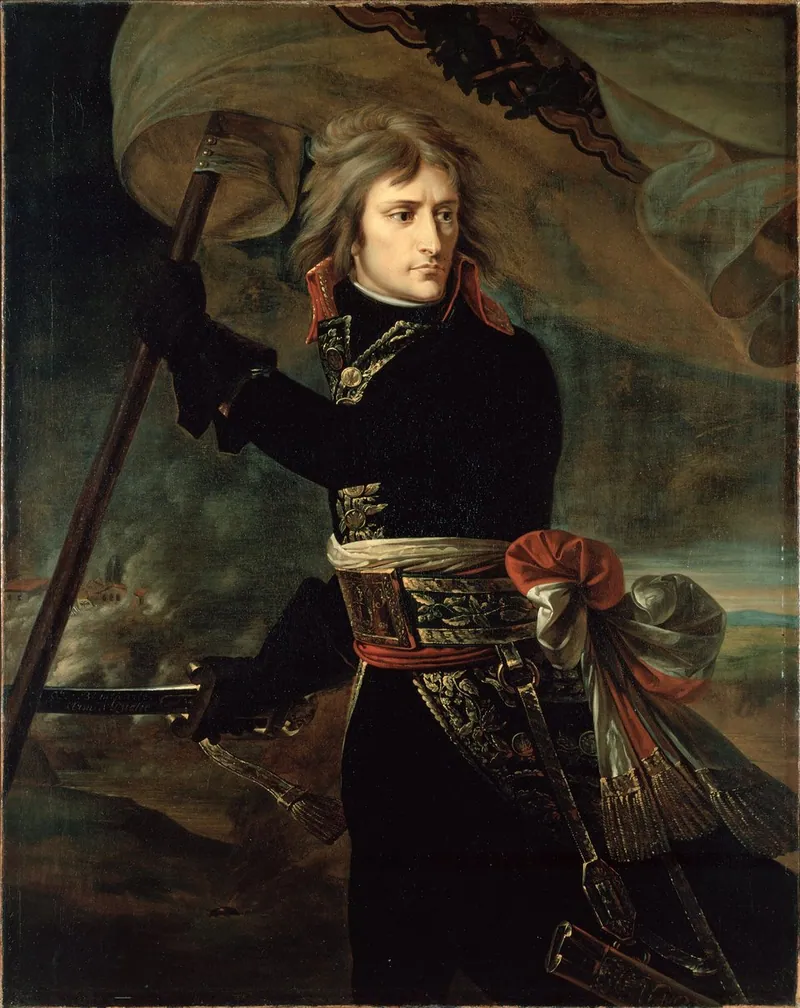
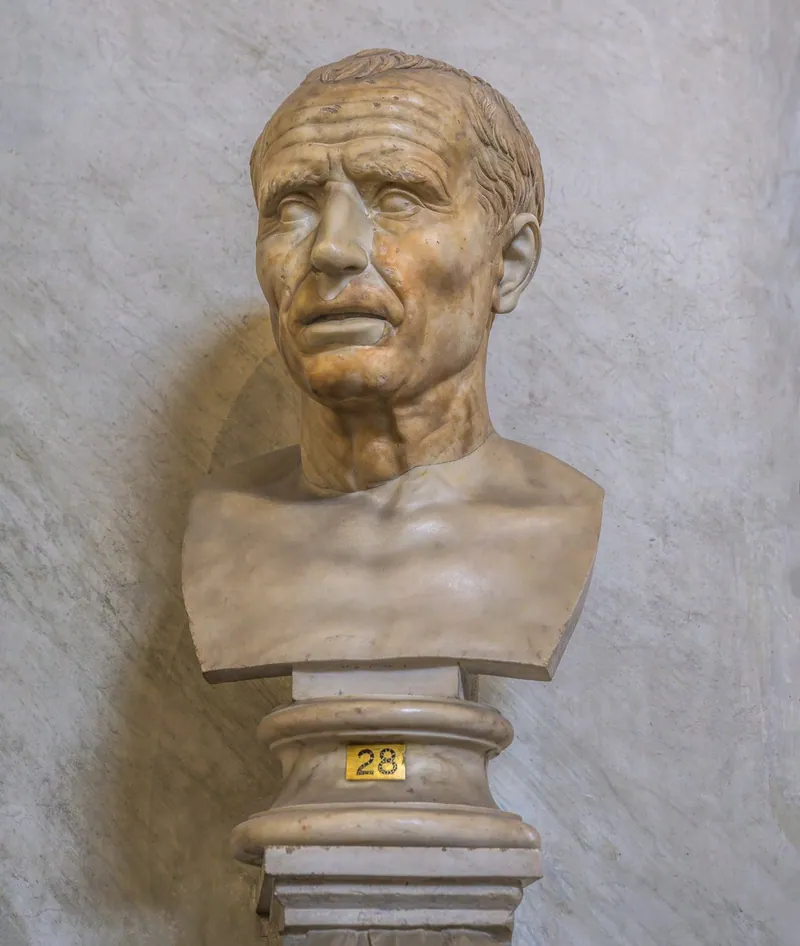
- Lived
- 15 August 1769 to 5 May 1821
- 100 to 44 BC (some date his birth to 102)
- Origin
- Ajaccio, Corsica, second child of the Bonaparte family
- Rome, the patrician family of the Julii
- First command
- The Army of Italy, March 1796, aged 26
- Further Spain after his praetorship, back in Rome in 60 BC
- Years in command
- 1796 to 1815
- Gaul 58 to 50, the civil war 49 to 45 BC
- Took power
- Coup of Brumaire, November 1799, emperor from 1804
- Crossed the Rubicon in January 49 BC, dictator afterwards
- Battles counted
- Sixty, seven of them lost, by Andrew Roberts's count. Forty won, by Napoleon's own
- Fifty pitched battles, says Pliny. Thirteen campaigns, three defeats, says Napoleon
- Battles named here
- Austerlitz, Ulm, Borodino, Leipzig, Waterloo
- Gergovia, Alesia, Dyrrachium, Pharsalus, Zela
- Death
- In exile on St Helena, 1821
- Killed in the Senate on 15 March 44 BC
Dates and offices from Jean Tulard's chronology for Napoleon and from Suetonius and the 1911 Britannica for Caesar. The battle counts are claims by the authors named, not a tally we can check, so we give no win and loss totals of our own.2
Where their stories meet
Eighteen centuries separate them, so they never met. What links them is Napoleon's reading of Caesar, the ground of Gaul on which both fought, and the road each took from command of an army to command of the state.
Napoleon reads Caesar
The Précis opens with Napoleon's own summary of Caesar's career. Caesar made eight campaigns in Gaul, he writes, with two landings in Britain and two crossings of the Rhine, and in the civil war he fought six great battles, four against Pompey's Roman legions and two against barbarians. In these thirteen campaigns, Napoleon counts, Caesar was beaten three times, at Dyrrachium, at Alexandria and in Africa, but these setbacks had no effect on the outcome of his wars, and his lieutenants' defeats were repaired by his own presence.3
Napoleon also put Caesar on the short list in the maxims later collected from his sayings. Alexander, Hannibal and Caesar, with Gustavus Adolphus, Turenne and Frederick, all acted upon the same principles: to keep their forces united, to leave no weak part unguarded and to seize important points with speed. An officer should read their campaigns again and again, because this is the only means of becoming a great captain.4
The same ground
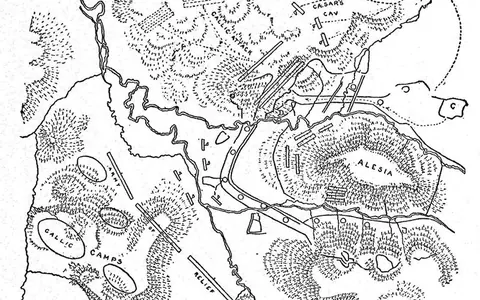
Caesar spent nine years conquering Gaul and turned it into a province paying 40,000,000 sesterces a year, Suetonius writes. Napoleon fought his last defensive campaign on the same soil in 1814, winning at Champaubert and Montmirail before Paris fell. Writing about Alesia, the Emperor of the French took the side of the defeated Gaul: so ended Vercingetorix, he wrote, the bold and generous defender of Gaul, and with him perished the liberty of Gaul.5

From the army to the state
In 49 BC Caesar led his army across the Rubicon into Italy with the words Suetonius records: the die is cast. In November 1799 Bonaparte, back from Egypt, took part in the coup of Brumaire and became one of three provisional consuls. On 18 May 1804 he was proclaimed Emperor of the French and on 2 December he was crowned in Notre-Dame. Theodore Ayrault Dodge, the American soldier who compared the great captains in 1889, wrote that of all of them Napoleon was nearer akin to Caesar.6

Strategy: the plan for a whole war
The case for Napoleon
In 1805 Napoleon won a campaign before its great battle. At Ulm on 20 October, the Fondation Napoléon's timeline records, some 25,000 Austrian soldiers with 60 guns filed past him to surrender after their general Mack had been cut off. Six weeks later came Austerlitz.7
The Prussian theorist Carl von Clausewitz held that in 1805, 1807 and 1809 Napoleon judged his opponents correctly, and refused to call those campaigns imprudent just because 1812 ended in disaster.8
The weak point is 1812. Clausewitz wrote that without a peace at Moscow there was nothing for Napoleon but to return, which meant a strategic defeat. The numbers depend on what is counted. Clausewitz puts the centre that crossed the Niemen on 24 June 1812 at 301,000 men, of whom 105,000 had been lost by Smolensk with little fighting.9
J. Holland Rose gives the whole Grand Army as 600,000 men, plus 50,000 Austrians and Prussians, and says only 20,000 famished survivors staggered back across the bridge at Kovno in December.10
Most of the loss came before the great battles. Clausewitz, using the figures of the French officer Chambray, reckoned that only about 10,000 of the 105,000 lost by Smolensk fell in action, so that sickness and straggling had cost a third of the army within fifty-two days. By the time of Borodino three weeks later the loss stood at 144,000, and at Moscow at 198,000.11
The case for Caesar
In the civil war Caesar faced enemies spread across the Roman world and beat them one group at a time. Dodge noted that it took him only sixty days to master all Italy, and called the campaign that followed, from Spain to Epirus and Africa, the best example in history of the proper use of central lines on a gigantic scale, an idea often credited to Napoleon himself. 12
Napoleon was also his sharpest critic. Caesar's manoeuvres at Dyrrachium, he wrote, were extremely rash, and he was punished for them. How could he hope to hold a line of siege works six leagues long round an army that was master of the sea and held a central position? After immense labour he failed, was beaten, lost the best of his troops and had to withdraw.13
Yet the same critic thought Caesar's last plan within reach. Of the war against the Parthians he was preparing when he was killed, Napoleon wrote that the mountains, marshes and deserts on the way were not beyond Caesar's genius: a flotilla on the Euphrates and Tigris and camels carrying water skins would have overcome them, and he would probably have carried the Roman eagle to the banks of the Indus, if fortune, which had favoured him for thirteen campaigns, had stayed constant.14
Battlefield tactics
The case for Napoleon
At Austerlitz on 2 December 1805, the Fondation Napoléon's timeline records, the allies weakened their centre on the Pratzen heights to press the attack on Telnitz and Sokolnitz. Napoleon saw it as the morning mist cleared and sent Soult to take the heights, which he did in half an hour. The timeline calls the result a crushing victory.15
The historian Andrew Roberts, quoted in the Kirkus review of his biography, counts sixty battles and seven defeats, and calls that an extraordinary record for any general of any age.16
Jean Tulard, author of the Dictionnaire Napoléon, is less admiring: Napoleon, he writes, did not understand national wars, his effects built on surprise stopped working once his enemies had learned the lesson, and his idea of war was more poker than chess.17
His last battle is the hardest case. At Waterloo on 18 June 1815, the National Army Museum writes, he had 72,000 men and 246 guns against Wellington's 68,000 and 156, with 48,000 Prussians coming up, and he lost nearly 40,000 men.18
Dodge put it bluntly: Napoleon at Waterloo was not as great as Napoleon at Austerlitz. Whether failing health or waning character caused his indecision, he wrote, the fact itself was beyond doubt.19
The case for Caesar
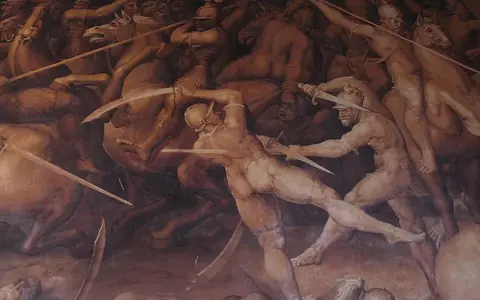
At Pharsalus in 48 BC Caesar's 22,000 foot faced 45,000, and his 1,000 horse faced 7,000, by the figures Plutarch gives.20
Appian writes that when Pompey's best horsemen massed to ride round Caesar's right, Caesar hid 3,000 of his bravest foot soldiers there with orders to rise and thrust their spears at the riders' faces. The charge broke.21
He could also lose. At Gergovia in 52 BC, by his own account, his troops were driven off the hill with the loss of forty-six centurions and nearly seven hundred men, and next day he told them he required discipline and self-restraint no less than courage.22
Napoleon read his figures with a soldier's suspicion. He doubted that Vercingetorix really shut 80,000 men inside Alesia, a town of modest size with food for thirty days, and asked why the Gaul had not sent three quarters of his infantry away with his cavalry.23
Speed
The case for Napoleon
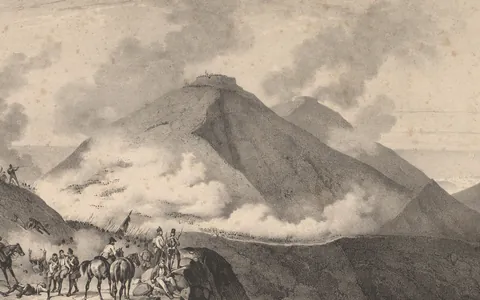
Napoleon took command of the Army of Italy on 2 March 1796. Tulard's chronology records victories at Montenotte on 12 April and Mondovi on 21 April and an armistice with Piedmont at Cherasco on 28 April, all within a month of the first battle. One of his maxims makes speed a law: the strength of an army, like power in mechanics, is mass multiplied by rapidity, and a rapid march raises an army's morale. Press on, it ends.24
Dodge describes the Rivoli campaign of January 1797: men who had fought at San Michele on the 13th marched all night to Rivoli, won there on the 14th and then marched some thirty miles to Mantua to force Provera's surrender on the 15th. Napoleon, Dodge concluded, could rightfully boast to have equalled Caesar in speed of foot.25
The case for Caesar
Suetonius says Caesar covered a hundred miles a day in a hired carriage with little baggage, often arriving before the messengers sent to announce him. Plutarch adds that on his first journey from Rome to Gaul he reached the Rhone in seven days.26
In 47 BC he beat Pharnaces II at Zela within five days of arriving and four hours after first sighting him, and reported it to Rome in three words: came, saw, conquered.27
Leading men
The case for Napoleon
Napoleon's hold over his soldiers outlived his first fall. When he came back from Elba in 1815, the National Army Museum writes, his army was made of veterans who had rallied to his cause, and Wellington himself accepted that Napoleon's presence on a battlefield made a huge difference to the morale of his troops.28
Dodge notes that Napoleon, unlike the self-taught Caesar, got his training in the best school in France.29
His generals were another matter. Tulard's chronology records that on 4 April 1814, after Paris had fallen, Napoleon abdicated under pressure from his marshals.30
The case for Caesar
Suetonius says Caesar called his men comrades rather than soldiers, valued them only for their courage, and that in the long civil war not one of them deserted, while many who were captured refused to save their lives by fighting against him. When the civil war began, he adds, every centurion offered to equip a horseman from his own savings.31
Appian adds the other side: Caesar's soldiers fought with the greatest ferocity but were often disobedient and mutinous because of the hardness of their tasks, and they mourned him after his death. Velleius Paterculus says that in the speed of his campaigns and his endurance of danger Caesar was a match for Alexander.32
The price of conquest
The case for Napoleon
Napoleon's wars cost hundreds of thousands of lives, and the sources do not soften it. At Borodino in September 1812, the Fondation Napoléon writes, the Russians lost 45,000 dead, wounded or missing and Napoleon between 28,000 and 35,000.33
The Swiss military writer Antoine-Henri Jomini called the invasion of Spain in 1808 a cunning and wanton attack that threatened the existence of the Spanish nation and was fatal to its author.34
Jomini also weighed the motive. A war of invasion without good reason, like that of Genghis Khan, he called a crime against humanity. Napoleon, he wrote, loved war and its chances, but was also a victim of the necessity of succeeding or yielding to England. Clausewitz, writing of 1812, still called him the conqueror of the world.35
The case for Caesar
For Gaul the ancient figures are enormous and do not agree. Plutarch writes of a million killed and a million captured in less than ten years. Pliny counts 1,192,000 killed outside the civil wars and refuses to set it down as glory, calling it an outrage upon mankind. Velleius puts the dead at more than four hundred thousand, with more taken prisoner.36
The harshest judge of Caesar's conduct in Gaul was Napoleon. Of the Veneti, whose senate Caesar put to death in 56 BC, he wrote that Caesar had violated the law of nations and abused his victory in a manner so atrocious that it was neither just nor politic. Of the Usipetes and Tencteri, attacked while their envoys were held, he wrote that the conduct was against the law of nations and that Cato openly reproached him for it. Of the hands cut off at Uxellodunum: Caesar was clement towards his own in the civil war, but cruel and often ferocious towards the Gauls.37
The historian Kurt Raaflaub notes that Caesar now stands accused of genocide. Without excusing him, he reads the Gallic war against the customs of ancient imperial warfare and sets the brutal conqueror beside the clement victor who made clemency one of a ruler's cardinal virtues.38
What came after
The case for Napoleon
The Civil Code of 2,281 articles was promulgated on 21 March 1804 and took the name Code Napoléon in 1807, the Fondation Napoléon records. On St Helena, it quotes him, Napoleon said that his true glory was not to have won forty battles, since Waterloo would wipe out their memory, but his Civil Code, which nothing would efface.39
Tulard goes further: the administrator, he writes, was perhaps superior to the general, and he imposed administrative ideas that announced a new age.40

His empire did not survive him. After Leipzig in October 1813, the collapse of Napoleonic Germany in Tulard's words, came the fall of Paris and the first abdication. After Waterloo he abdicated a second time on 22 June 1815 and died on St Helena on 5 May 1821.41
The case for Caesar
Caesar reformed the calendar, setting the Roman year by the sun, as the Egyptians reckoned it, and Appian notes that his adopted son hunted down every one of his killers. That heir became Augustus, the first emperor.42
Dodge called Caesar the most useful man of antiquity, and added that Napoleon came near to being the most useful man of modern times.43
The 1911 Britannica, in Henry Stuart Jones's entry, says historians have always recognised Caesar's commanding genius, and that their verdict on him has always been coloured by their political sympathies.44

How historians have judged them
Of all the judges of Caesar, the most direct is Napoleon, whose verdict runs through this page. Suetonius preserves an older Roman doubt, that of Asinius Pollio, who thought Caesar's Commentaries were put together carelessly and without strict regard for truth, too ready to believe what others told him and giving a distorted account of his own actions.45
Jomini set both men in one sentence: wars of conquest, unhappily, are often prosperous, as Alexander, Caesar and Napoleon during part of his career have fully proved. Of Napoleon alone he wrote that he seemed sent into the world to teach generals and statesmen what to avoid, his victories showing what activity, boldness and skill can do, and his disasters what prudence could have prevented.46
Dodge did not stop at praise. In the next breath he wrote that both sink below the other great captains in their motives, because neither ever lost sight of himself.47
Modern opinion is split in the same way. Roberts finds Napoleon's record extraordinary, while Tulard thinks the administrator outshone the general. For Caesar, the reviewer Josh Levithan found Adrian Goldsworthy masterful on military matters, but thought his biography made a better case for Roman culture than for the peculiar greatness of Caesar.48
Battles on the site
Every battle page on Echoes of Battle where one of the two men commanded, with the guides that set them in context. Caesar's Gergovia, Dyrrachium, Thapsus and Munda and Napoleon's Ulm, Marengo and Wagram have no page of their own yet.
 Caesar in command · 52 BCBattle of Alesia
 Caesar in command · 48 BCBattle of Dyrrachium
 Caesar in command · 48 BCBattle of Pharsalus
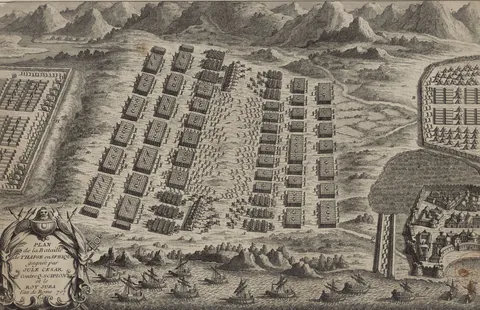 Caesar in command · 46 BCBattle of Thapsus
 Napoleon in command · 1796Battle of Montenotte
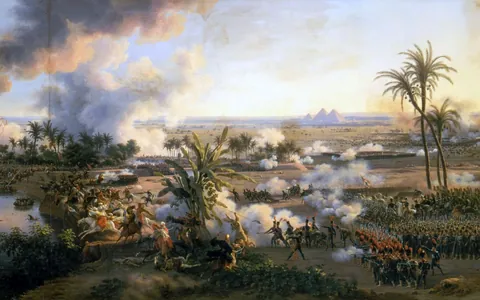 Napoleon in command · 1798Battle of the Pyramids
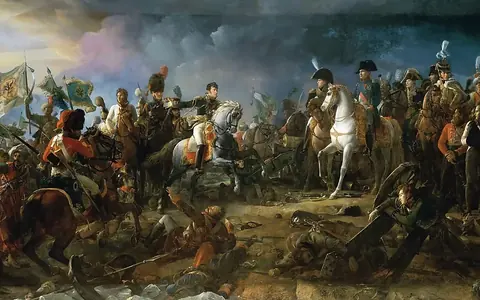 Napoleon in command · 1805Battle of Austerlitz
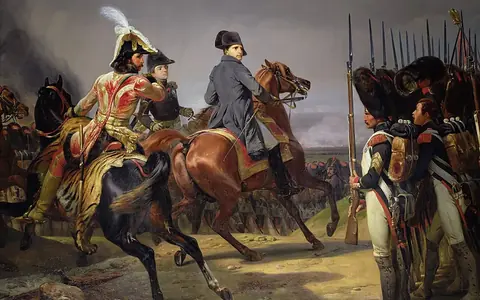 Napoleon in command · 1806Jena-Auerstedt
 Napoleon in command · 1806Battle of Czarnowo
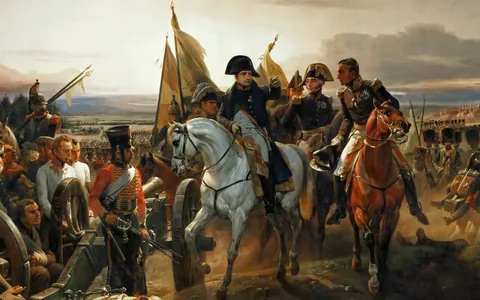 Napoleon in command · 1807Battle of Friedland
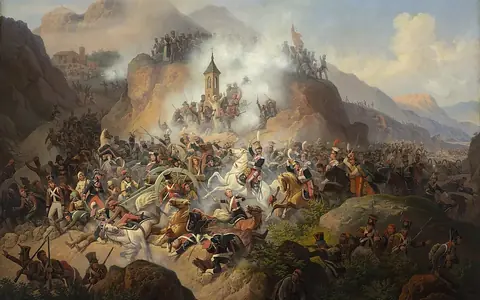 Napoleon in command · 1808Battle of Somosierra
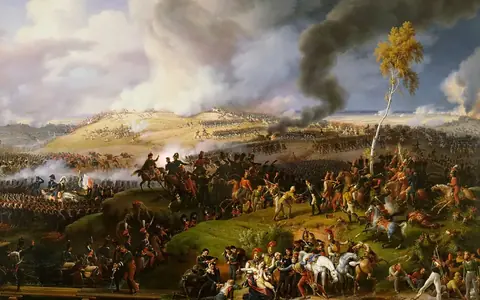 Napoleon in command · 1812Battle of Borodino
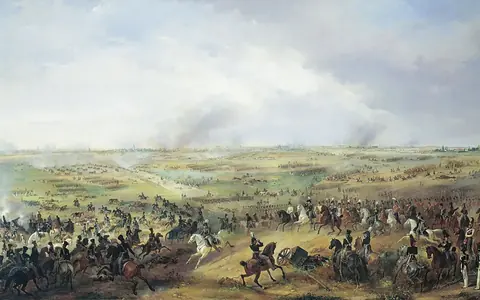 Napoleon in command · 1813Battle of Leipzig
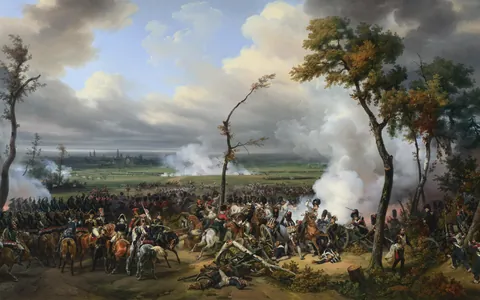 Napoleon in command · 1813Battle of Hanau
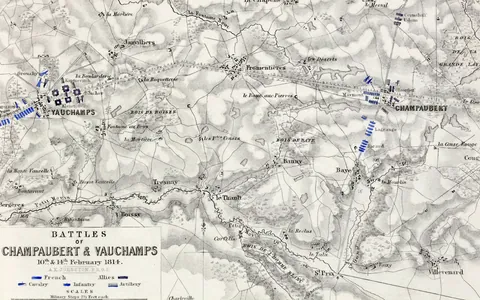 Napoleon in command · 1814Battle of Champaubert
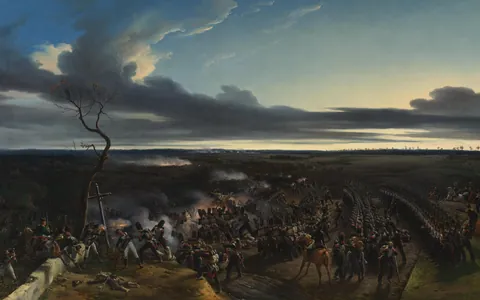 Napoleon in command · 1814Battle of Montmirail
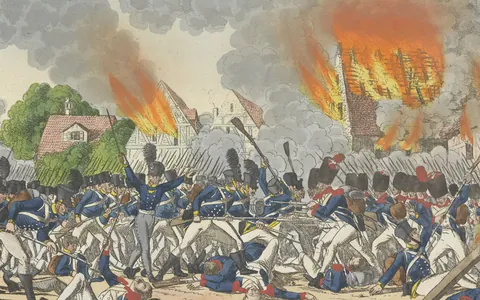 Napoleon in command · 1815Battle of Ligny
 Napoleon in command · 1815Battle of Waterloo
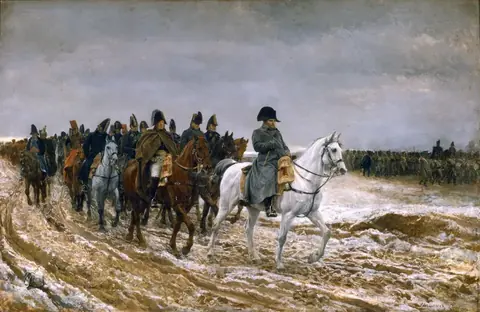
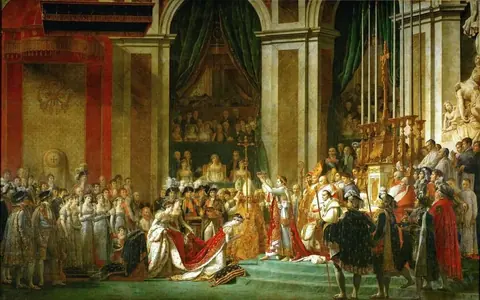 CommanderNapoleon Bonaparte
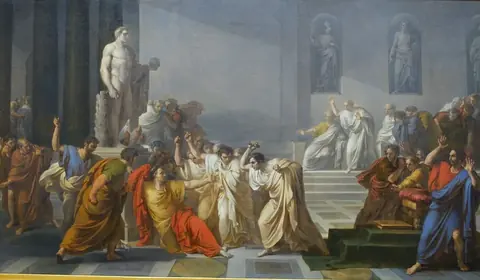
 CommanderJulius Caesar
 Guide · 1803 to 1815The Napoleonic Wars
 Guide · 88 BC to AD 324The Roman Civil Wars
RankingThe Greatest Battles of France
QuizHow Well Do You Know Napoleonic Battles?
For the wider field, see Napoleon's invasion of Russia, the greatest Napoleonic battles, the greatest commanders of ancient Rome and Pompey vs Caesar.
Your verdict
We do not pick a winner. Here are the two cases at their strongest, and the questions that decide which one you find more convincing.
For Napoleon
- Ulm won by manoeuvre, Austerlitz by one blow at the Pratzen heights
- Victories over the regular armies of Austria, Prussia and Russia
- Speed that Dodge set equal to Caesar's
- Soldiers who rallied to him again after his first fall
- The Civil Code of 1804, which he valued above forty victories
For Caesar
- Won every war he fought, in Napoleon's own count beaten only three times in thirteen campaigns
- Alesia and Pharsalus, a double siege ring and a smaller army beating a larger one
- Built his career and his army from a private start
- An army in which, Suetonius says, not one man deserted
- A political change that outlived him, carried on by Augustus
Questions to weigh before you decide:
- Napoleon studied Caesar and judged him in writing. Does the student's verdict count for more than ours?
- Is it fairer to set Pharsalus beside Austerlitz, or the whole Gallic War beside the campaigns of 1805 to 1807?
- Caesar never lost a war, Napoleon lost his last two. Is that the right measure, given the size of the coalitions Napoleon faced?
- Both shaped their own record, Caesar in his Commentaries and Napoleon on St Helena. Whose self-portrait do you trust less?
- How much should the conduct Napoleon himself called atrocious in Gaul, or the cost of 1812, weigh against each man?
- Which lasted longer: the end of the Roman Republic, or the Civil Code?





