

What is the military history of Japan?
It is the history of Japan's wars from the rise of the samurai in the 12th century through the Mongol invasions, the Sengoku civil wars, the invasions of Korea and Sekigahara in 1600, to the Meiji army, victory over Russia in 1905, defeat in World War II and today's Self-Defense Forces.1
Japan's soldiers have fought as the retainers of rival warrior clans, as the armies of a unified shogunate and as the conscript forces of an empire that ruled much of East Asia before its total defeat in 1945. This page follows those wars era by era, names the state that fought each of them and tells the wars with Korea, China, Russia and the United States from both sides. Among the best-known battles on this site are the Battle of Sekigahara (1600), the Battle of Tsushima (1905), the attack on Pearl Harbor (1941), the Battle of Midway (1942) and the Battle of Okinawa (1945).2
What counts as Japan in military history
For most of its history Japan was ruled in the emperor's name by warrior governments. The first, the Kamakura shogunate, was founded after the Gempei War of 1180 to 1185, and warrior rule lasted some seven centuries. In the Sengoku period, roughly 1467 to 1600, the Ashikaga shogunate lost its authority and the country was divided among warring daimyo, the feudal lords who fought for supremacy.3
Oda Nobunaga began the unification of Japan and Toyotomi Hideyoshi completed it in 1590; Tokugawa Ieyasu, the victor of Sekigahara, founded the shogunate that governed Japan until 1868. The Meiji Restoration of that year overthrew the shogunate and restored direct imperial rule, and the Empire of Japan that it created ended when the postwar constitution came into force in 1947.4
On this site Japan counts for every battle fought by the Japanese warrior clans, shogunates and the Toyotomi regime, and by the Empire of Japan, including civil wars such as Sekigahara in which both armies were Japanese.

Who were the samurai?
The samurai, or bushi, first appear in records of the 10th century as warriors who rose through their skill in archery, swordsmanship and horsemanship, and they dominated Japanese politics from the 12th century until the 19th.5
Their road to power ran through the Gempei War between the Taira and Minamoto clans. Minamoto Yoritomo raised a revolt in 1180, and in 1185 the Minamoto destroyed the Taira in the sea battle of Dannoura, where the child emperor Antoku drowned. Yoritomo became shogun in 1192 and ruled from Kamakura, and the Kamakura shogunate lasted until 1333.6
The ideal of loyalty to one's lord was formalized as bushido only in the long peace of the Edo period, centuries after the samurai first rode to war. The class lost its privileges when the new imperial government abolished feudalism in 1871.7
How did Japan defeat the Mongol invasions?
The Mongol emperor Kublai Khan twice sent invasion fleets against Japan, in 1274 and in 1281, with armies made up largely of Chinese and Korean troops. Both times the main point of attack was Hakata Bay in northern Kyushu, and both times the Kamakura shogunate repelled the invasion.8
Typhoons wrecked the invading fleets on both occasions. The Japanese saw the storm of 1281 as a gift from the gods and called it kamikaze, the divine wind, the word later given to the suicide pilots of World War II.9
The Sengoku period and the unification of Japan
Firearms changed the wars of the Sengoku period. Portuguese sailors brought the musket to Japan in the early 1540s, and within a decade or two Japanese smiths were making matchlocks in large numbers.10
Oda Nobunaga used them to begin the military unification of the country. At the Battle of Nagashino in 1575 his relieving army, firing from behind wooden palisades, defeated the cavalry of the Takeda clan, and the battle is often called the first modern battle in Japan because of his use of firearms.11
In 1582 Nobunaga died after an attack by his own vassal, Akechi Mitsuhide. Toyotomi Hideyoshi, born a peasant, defeated Akechi, took over the work of unification and had brought most of Japan under his rule by 1590. His sword hunts disarmed the peasants and fixed the line between warriors and farmers.12
Why did Japan invade Korea in 1592?
Hideyoshi meant Korea as the road to China, which he hoped to conquer, and he also wanted to keep his own vassals busy abroad. His battle-hardened armies, equipped with firearms, landed in 1592, but his Britannica biographer Tadachika Kuwata judges Japan's forces entirely inadequate for an undertaking of that size.13
The Korean side decided the war at sea. Admiral Yi Sun-sin, whose fleet was ready when the Japanese came, won a run of victories off the southern coast, Hansan Island among them, that cut the Japanese armies in Korea off from supplies and reinforcements. A Ming Chinese army came to Korea's aid, and the invaders were driven back.14
After peace talks with China broke down, Hideyoshi invaded again in 1597. Yi, demoted on false charges, was restored to command of the few ships left and regained control of the sea, as at Myeongnyang. Hideyoshi died in 1598, the Japanese withdrew, and Yi was killed by a stray bullet off Noryang while pursuing the retreating fleet.15

What happened at the Battle of Sekigahara?
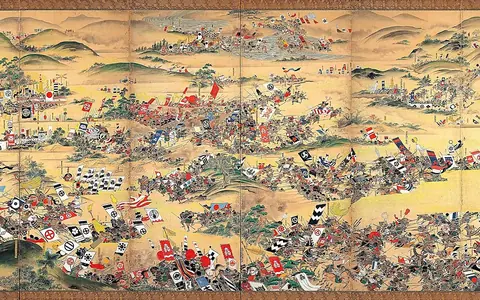
Hideyoshi left a young son, Hideyori, and a council of regents that included Tokugawa Ieyasu. On 21 October 1600, in a valley of central Honshu, Ieyasu's Eastern Army fought the Western Army of the Toyotomi loyalists, led by Ishida Mitsunari, and won within hours.16
The battle turned when Kobayakawa Hideaki attacked Mitsunari's army. The traditional account has him changing sides at about noon after a secret agreement with Ieyasu; a newer theory holds that he fought for the Eastern Army from the start, and the question is still debated.17
In 1603 the emperor named Ieyasu shogun. Ieyasu outlawed private armies, his successors kept the peace for more than 260 years, and the Tokugawa shogunate ruled Japan until 1868.18
How did the Meiji Restoration change Japan's military?
The long peace ended under Western pressure. Commodore Matthew Perry of the United States ended Japan's policy of isolation in 1854, and the unequal treaties that followed gave Western nations special privileges, showing how vulnerable Japan was to superior Western firepower.19
In 1868 young samurai from domains hostile to the Tokugawa overthrew the shogunate and restored direct rule under the young Emperor Meiji. The new government abolished the samurai estate and replaced it with a European-style conscript army, which the old warrior class scorned as an army of conscripted farmers.20
Former samurai rebelled several times in the 1870s. The last and largest rising, the Satsuma Rebellion of 1877, was led by Saigō Takamori, one of the heroes of the Restoration, and was put down by the new army; Saigō died in Kagoshima that September.21

The First Sino-Japanese War and the Russo-Japanese War
The two wars that made Japan a great power were fought over Korea. In 1894 and 1895 Japan defeated Qing China on land and at sea, and in the Treaty of Shimonoseki China recognized the independence of Korea and ceded Taiwan, the Pescadores and the Liaodong Peninsula. Russia, France and Germany then forced Japan to give back Liaodong in the Triple Intervention, and Russia took Port Arthur for itself.22
In 1904 Japan opened war with Russia by a surprise attack on the Russian squadron at Port Arthur, made before war had been declared. Japan won the major battles: Port Arthur surrendered in January 1905 after a siege, the Japanese army decisively defeated the Russians at Mukden, and in May 1905 the fleet of Admiral Togo Heihachiro destroyed the Russian Baltic Fleet at Tsushima. The victories were costly, and losses were high on both sides.23
President Theodore Roosevelt mediated the Treaty of Portsmouth, signed on 5 September 1905. Russia recognized Japan's dominant position in Korea and handed over its lease of the Liaodong Peninsula with Port Arthur and the southern half of Sakhalin, but Japan received no indemnity. It was the first defeat of a European great power by an Asian state in modern times, and in 1910 Japan annexed Korea.24

Japan in World War I and the war in China
As Britain's ally, Japan declared war on Germany in August 1914 and, alongside a small British force, took the German naval base at Tsingtao (Qingdao) in China after a siege of two months. At the peace of 1919 Japan kept the former German rights in Shandong, which it handed back to China in 1922, and took over Germany's islands in Micronesia.25
In September 1931 Japanese soldiers provoked an incident on the South Manchurian Railway near Mukden as a pretext, and the army occupied Manchuria; in 1932 Japan set up the puppet state of Manchukuo there. In July 1937 a clash at the Marco Polo Bridge near Beijing began a full-scale invasion of China.26
After they took the Chinese capital, Nanjing, on 13 December 1937, Japanese troops killed and raped on a mass scale for weeks. Estimates of the Chinese dead run into the hundreds of thousands and remain disputed. The army also forced women, most of them from Korea, into sexual slavery in military brothels; estimates of the number of these so-called comfort women run up to 200,000.27
Why did Japan attack Pearl Harbor?
The war in China set Japan against the United States, the main supplier of the oil and steel its army needed. When Japanese troops moved into French Indochina in 1941, the United States froze Japanese assets and cut Japan off from American oil.28
Japan's leaders chose war rather than give up their conquests. On 7 December 1941 Japanese carrier aircraft made a surprise attack on the US fleet at Pearl Harbor, and Japanese forces struck Dutch, British and American possessions across Southeast Asia and the Pacific in a southern advance meant to secure the region's resources.29
Why did Japan lose World War II?
The tide turned at Midway in June 1942, where American dive bombers destroyed the four large carriers Akagi, Kaga, Soryu and Hiryu, all of which had taken part in the attack on Pearl Harbor. The Japanese evacuated Guadalcanal in February 1943, and from then on Japan was on the defensive.30
At Leyte Gulf in October 1944 the Imperial Japanese Navy sent most of its remaining battleships, cruisers and carriers against the American landings in the Philippines and was beaten; the battle destroyed it as an effective fighting force.31
The American landings on Iwo Jima in February 1945 and on Okinawa in April brought the war to the doorstep of the home islands. On Okinawa somewhere between 70,000 and 90,000 Japanese soldiers died, and as many as 150,000 Okinawan civilians may have died with them. On Saipan and Okinawa many soldiers and civilians killed themselves rather than be captured.32
The United States dropped atomic bombs on Hiroshima on 6 August and on Nagasaki on 9 August 1945, and on 8 August the Soviet Union declared war and invaded Manchuria. Japan accepted the Allied terms on 14 August, Emperor Hirohito broadcast the surrender on 15 August, and the instrument of surrender was signed aboard USS Missouri in Tokyo Bay on 2 September 1945.33
The cost to Japan was enormous. Historian Yoshida Yutaka estimates about 3.1 million Japanese deaths in the war of 1937 to 1945, 2.3 million of them military, and argues that most of the soldiers died of disease and starvation rather than in combat; Britannica counts some 2 million Japanese killed by military action, nearly 700,000 of them civilians, and hundreds of thousands more dead of disease or starvation. Whether the atomic bombs were needed to force the surrender is still debated by historians.34

Does Japan have an army today?
Under the Allied occupation the Imperial Army and Navy were disbanded and Japan was disarmed. In Article 9 of the new constitution, in force from 3 May 1947, the Japanese people renounce war as a sovereign right, and land, sea and air forces are never to be maintained.35
In 1954 Japan nonetheless set up the Ground, Maritime and Air Self-Defense Forces. Its governments read Article 9 as allowing the minimum force necessary for self-defense, and Japanese still debate whether the article was imposed by the occupation or chosen by Japanese leaders shocked by the war.36
Famous Japanese commanders
Oda Nobunaga began the unification of Japan and won at Nagashino with massed firearms; Toyotomi Hideyoshi completed it and sent his armies into Korea; Tokugawa Ieyasu won at Sekigahara and founded the last shogunate. Saigō Takamori helped to overthrow the Tokugawa and then led the last great samurai rebellion. Admiral Togo Heihachiro commanded the main fleet against Russia, and Admiral Isoroku Yamamoto, commander in chief of the Combined Fleet, was at sea with the main body at Midway. Their great opponents included the Korean admiral Yi Sun-sin and the Americans Chester Nimitz and Douglas MacArthur. Our ranking of the greatest commanders of feudal Japan covers the samurai era in more depth.37
Major battles in Japanese history, era by era
Every battle we have written up in which Japanese clans, the Toyotomi regime or the Empire of Japan took part, from Nagashino and the invasions of Korea to Tsushima, Midway and Okinawa, grouped by era and in date order:
The early modern era 1492 to 1789 · 5
- 1575Battle of Nagashino, 1575Oda-Tokugawa alliance vs Takeda clan
How Oda Nobunaga's massed gunners behind palisades shattered the Takeda cavalry at Nagashino in 1575.
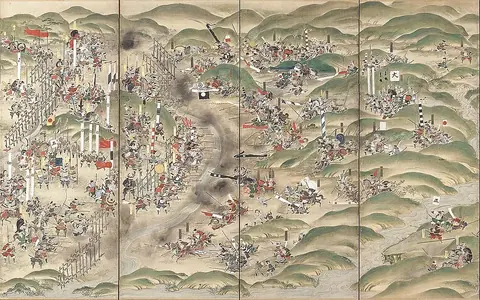
- 1592Battle of Hansan Island, 1592Joseon Korea vs Japan (Toyotomi regime)
In August 1592 Admiral Yi Sun-sin lured a Japanese squadron out of a narrow strait near Tongyeong and destroyed it off Hansan Island in a crane-wing formation.
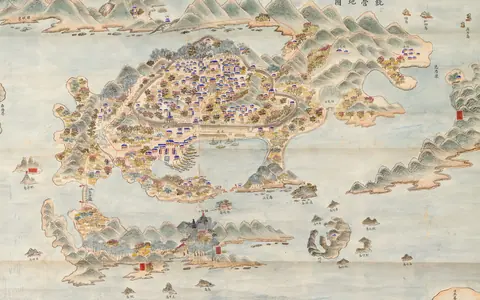
- 1597Battle of Myeongnyang, 1597Joseon Korea vs Japan (Toyotomi regime)
In 1597 Admiral Yi Sun-sin, freshly released from prison, held the Myeongnyang strait with 13 ships against a far larger Japanese fleet. What really happened?
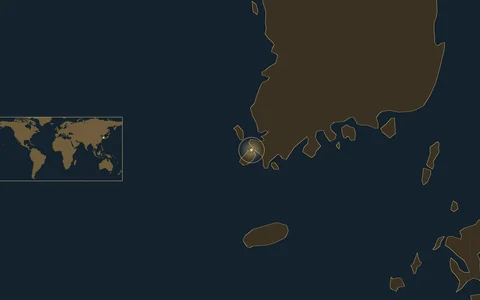
- 1598Battle of Noryang, 1598Joseon Korea and Ming China vs Japan (Toyotomi regime)
In December 1598 Joseon and Ming fleets under Yi Sun-sin and Chen Lin fought Japan's fleet in the Noryang strait. Yi fell, and the Imjin War came to an end.
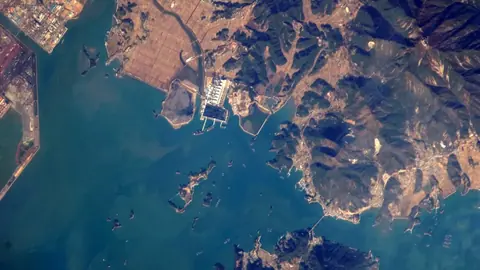
- 1600The Battle of Sekigahara, 1600Eastern Army (Tokugawa) vs Western Army (Ishida)
Two coalitions of samurai, a valley in the fog, and one betrayal that decided Japan for 250 years.
The industrial age 1815 to 1914 · 5
- 1904Battle of Chemulpo Bay, 1904Empire of Japan vs Russian Empire
On 9 February 1904 the Russian cruiser Varyag and gunboat Korietz sailed out of neutral Chemulpo to fight a Japanese squadron. Beaten in an hour, they came back and were scuttled.
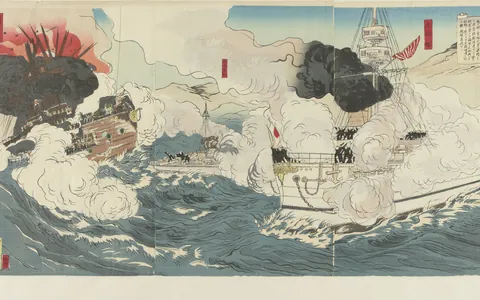
- 1904Battle of the Yellow Sea, 1904Empire of Japan (Combined Fleet) vs Russian Empire (Port Arthur squadron)
On 10 August 1904 Togo's fleet caught the Russian squadron escaping from Port Arthur; a hit on the Tsesarevich's bridge killed Admiral Vitgeft and broke the Russian line.
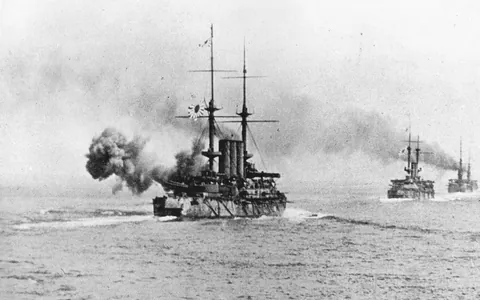
- 1904Battle of Liaoyang, 1904Empire of Japan (Manchurian Army) vs Russian Empire (Manchurian Army)
In late August 1904 Oyama's three armies attacked Kuropatkin's larger army at Liaoyang; when Kuroki crossed the Taitzu, the Russians retreated to Mukden.
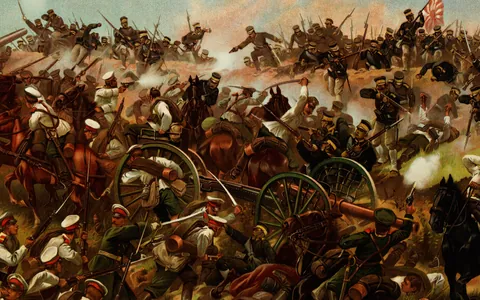
- 1905Battle of Mukden, 1905Empire of Japan vs Russian Empire
For three weeks in 1905 half a million men fought along a front of 150 kilometers in Manchuria. Oyama tried to encircle Kuropatkin's armies at Mukden; the Russians escaped the trap but lost the battle.
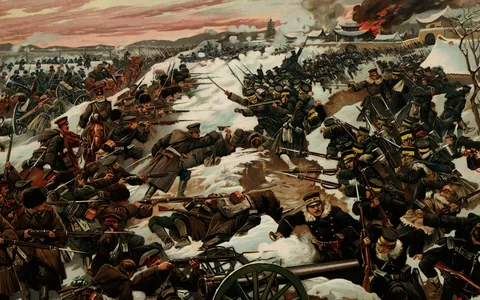
- 1905Battle of Tsushima, 1905Japan vs Russia
How Admiral Togo crossed the T and annihilated a Russian fleet that had sailed halfway around the world.
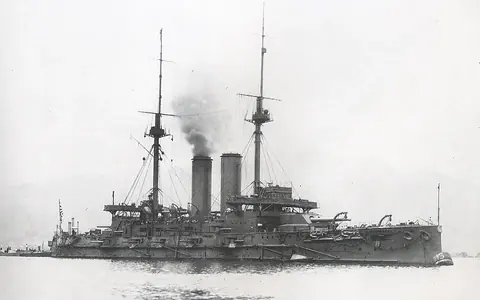
World War II 1939 to 1945 · 24
- 1941Second Battle of Changsha, 1941Empire of Japan (11th Army) vs Republic of China (9th War Area)
In September 1941 Anami's 11th Army broke the Chinese river lines and entered Changsha on the 27th, then fell back; both sides claimed the battle.
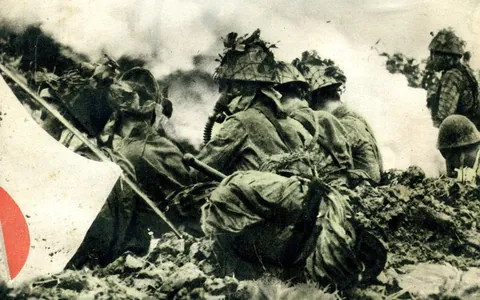
- 1941The Attack on Pearl Harbor, 1941Empire of Japan vs United States
How a surprise strike on 7 December 1941 pulled the United States into World War II.
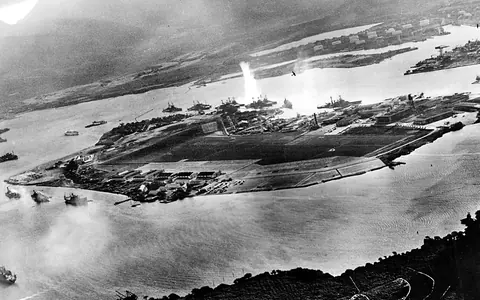
- 1941Battle of Wake Island, 1941United States vs Empire of Japan
In December 1941 Marines, sailors and civilians on Wake beat off a Japanese landing and sank two destroyers before a second assault took the atoll.
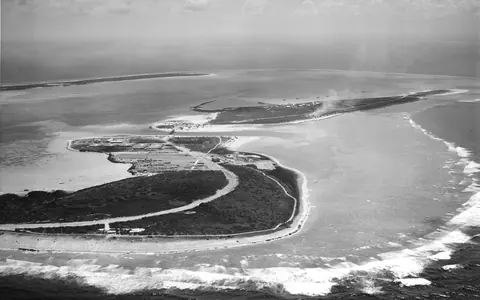
- 1941Battle of Hong Kong, 1941British Empire (British, Canadian, Indian and local Hong Kong forces) vs Empire of Japan
From 8 to 25 December 1941 British, Canadian, Indian and local troops held Hong Kong against Japan's 23rd Army, until the colony surrendered on Christmas Day.
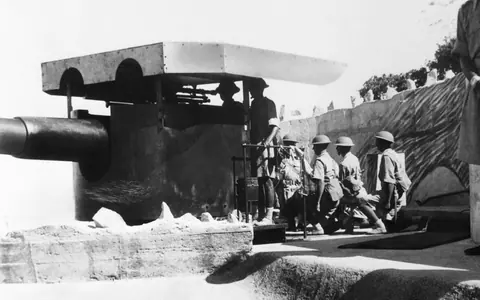
- 1942Battle of Bataan, 1942United States and Philippine Commonwealth vs Empire of Japan
From January to April 1942 Filipino and American troops held the Bataan peninsula against Japan's 14th Army, until hunger and disease forced their surrender.
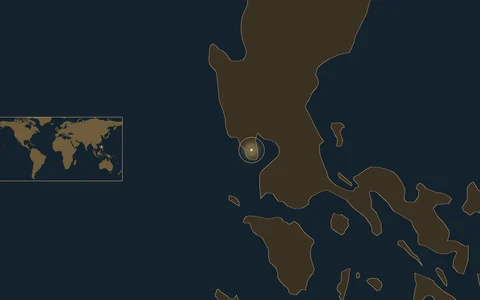
- 1942Battle of Makassar Strait, 1942ABDA naval force (Netherlands, United States) vs Empire of Japan
On 4 February 1942 Japanese bombers caught Doorman's Dutch and American cruisers on their way to the Makassar Strait. Marblehead was crippled, Houston lost a turret and the raid was called off.
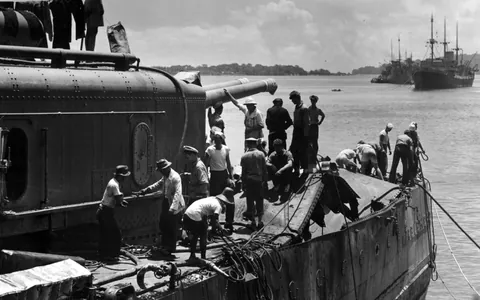
- 1942The Guadalcanal Campaign, 1942 to 1943Allies (United States, with Australia) vs Empire of Japan
Six months of land, sea and air battles for one jungle airfield turned the Pacific War.
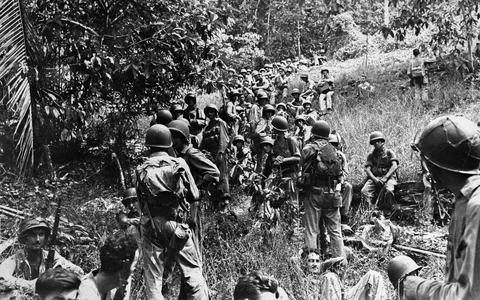
- 1942Battle of the Java Sea, 1942Empire of Japan vs ABDA Combined Striking Force
On 27 February 1942 Karel Doorman led a mixed Allied squadron out of Surabaya to stop the invasion of Java. By midnight he had lost two cruisers, three destroyers and his life, and the convoy sailed on.
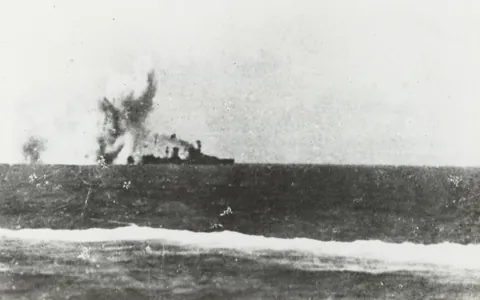
- 1942Second Battle of the Java Sea, 1942Empire of Japan vs United Kingdom and United States
On 1 March 1942 the crippled cruiser Exeter and two destroyers tried to escape from Java. Four Japanese heavy cruisers caught them north of the island, and by afternoon all three ships were gone.
- 1942Battle of Corregidor, 1942United States and Philippine Commonwealth vs Empire of Japan
In May 1942 Japanese troops stormed Corregidor, the fortress island at the mouth of Manila Bay, and Wainwright surrendered; Americans retook it in 1945.
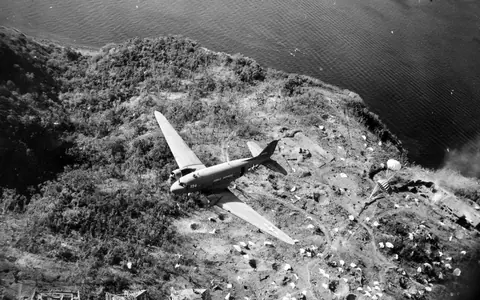
- 1942The Battle of the Coral Sea, 1942Allies (United States and Australia) vs Empire of Japan
The first carrier duel in history, fought entirely by aircraft over the horizon.
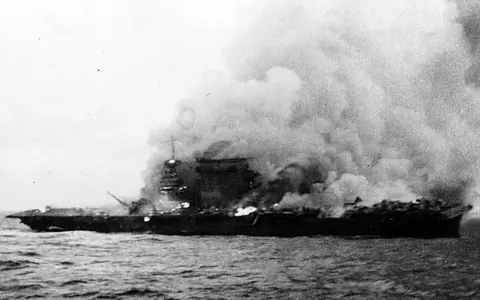
- 1942The Battle of Midway, 1942United States vs Empire of Japan
Broken codes, an ambush, and five minutes of dive bombers that sank four Japanese carriers and turned the Pacific.
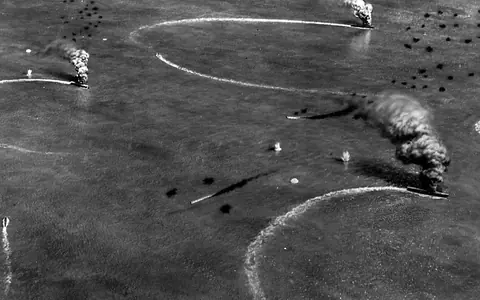
- 1942Battle of the Tenaru, 1942United States vs Empire of Japan
On 21 August 1942 Colonel Ichiki's detachment charged the Marine line at the mouth of the Ilu on Guadalcanal and was wiped out in a single day.
- 1942Carlson's Long Patrol, 1942United States Marine Corps vs Empire of Japan
From 6 November to 4 December 1942 Carlson's raiders hunted retreating Japanese through Guadalcanal's jungle: 150 miles, a dozen fights, and a heavy toll from disease.
- 1943Battle of the Komandorski Islands, 1943United States vs Empire of Japan
On 26 March 1943 a small US force fought Japan's Fifth Fleet for hours in the Bering Sea. Salt Lake City was stopped dead in the water, yet the Japanese turned away and took their convoy home.
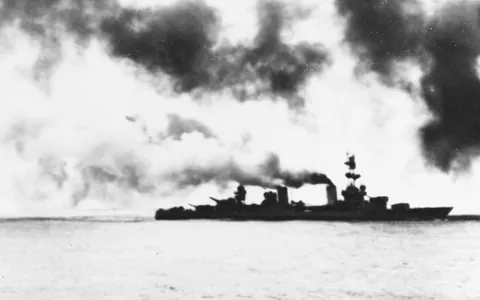
- 1943The Battle of Tarawa, 1943United States (Marines) vs Empire of Japan
Seventy-six hours on a tiny atoll, and the bloody schooling of amphibious war.
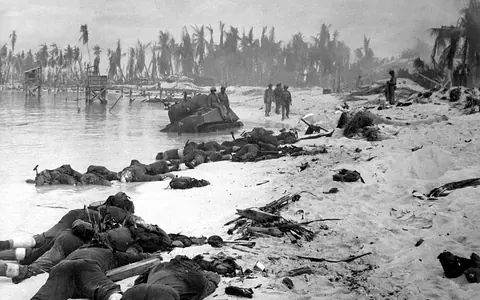
- 1944Battle of Imphal, 1944British Empire (British Indian Army) vs Empire of Japan (with the Indian National Army)
From March to July 1944 mostly Indian troops of IV Corps held the Imphal plain against Japan's U-Go offensive, until hunger and monsoon broke the attackers.
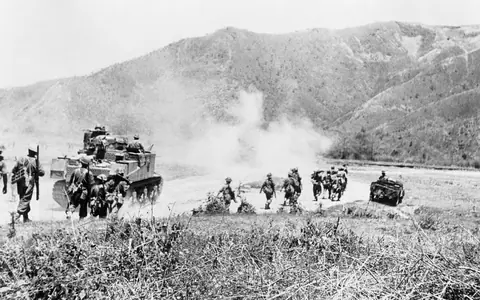
- 1944The Battle of Kohima, 1944British Empire (British and Indian forces) vs Empire of Japan
At Kohima the front line ran across a tennis court.
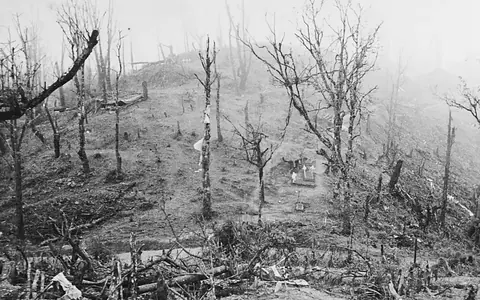
- 1944The Battle of Peleliu, 1944United States (Marines and Army) vs Empire of Japan
Promised as a three-day fight, Peleliu became two months of agony on Bloody Nose Ridge.
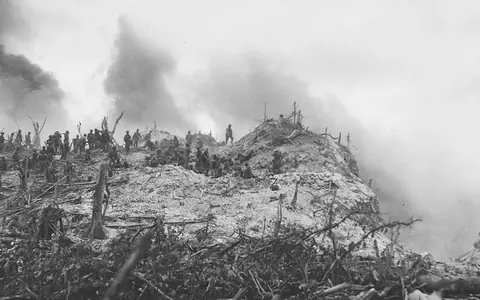
- 1944Battle of Leyte Gulf, 1944United States and Australia vs Empire of Japan
The largest naval battle in history, four huge actions off the Philippines that broke the Imperial Japanese Navy.
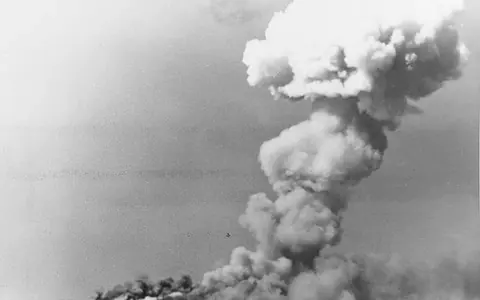
- 1945Battle of Manila, 1945United States and Philippine Commonwealth vs Empire of Japan
From 3 February to 3 March 1945 US and Filipino forces retook Manila from Iwabuchi's garrison. Intramuros was razed and about 100,000 civilians died.
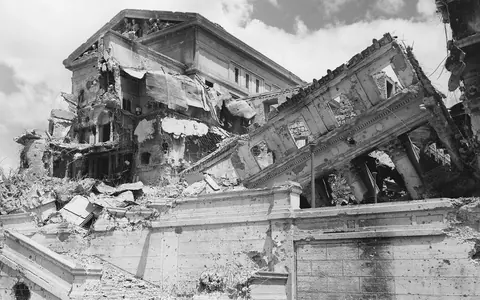
- 1945Battle of Iwo Jima, 1945United States vs Empire of Japan
How US Marines took Iwo Jima in 1945 in one of the Pacific war's bloodiest battles.
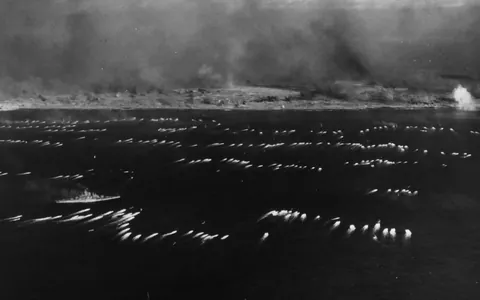
- 1945The Battle of Okinawa, 1945United States (with Allies) vs Empire of Japan
The bloodiest battle of the Pacific, and its cost shaped how the war with Japan ended.
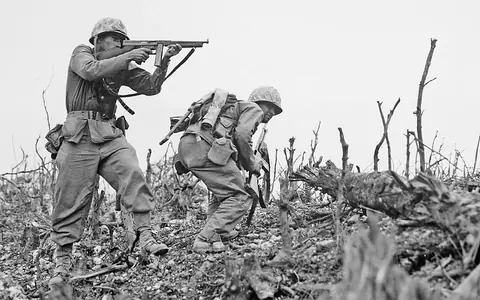
- 1945Battle of Tarakan, 1945Australia, with U.S. and Dutch forces vs Empire of Japan
On 1 May 1945 the 26th Australian Brigade landed on Tarakan to seize an airfield for the Borneo campaign. It took the island at a cost of 225 dead; the strip opened seven weeks late.
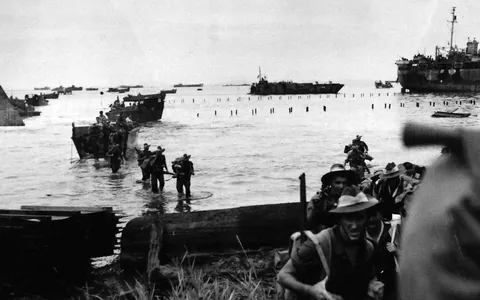
Timeline of Japanese military history
- 1180 to 1185Gempei War: the Minamoto defeat the Taira, finally at sea off Dannoura.38
- 1192Minamoto Yoritomo becomes shogun; the Kamakura shogunate begins.39
- 1274, 1281Two Mongol invasions are repelled; typhoons wreck both fleets.40
- 1575
- 1590Toyotomi Hideyoshi completes the unification of Japan.42
- 1592Hideyoshi invades Korea; Yi Sun-sin's fleet cuts the invaders' supply lines.43
- 1597 to 1598Second invasion; after Hideyoshi's death the Japanese withdraw.44
- 1600Tokugawa Ieyasu wins at Sekigahara on 21 October.45
- 1854Commodore Perry ends Japan's isolation.46
- 1868The Meiji Restoration overthrows the Tokugawa shogunate.47
- 1877The Satsuma Rebellion, the last samurai rising, is crushed.48
- 1894 to 1895Japan defeats Qing China and gains Taiwan.49
- 1904 to 1905
- 1910Japan annexes Korea.51
- 1914Japan joins World War I and takes Tsingtao.52
- 1931The army occupies Manchuria.53
- 1937Full-scale war with China; the Nanjing Massacre.54
- 1941Attack on Pearl Harbor on 7 December.55
- 1942
- 1944Defeat at Leyte Gulf.57
- 1945
- 1947The postwar constitution renounces war.59
- 1954The Self-Defense Forces are created.60
Memory and further reading
Japan remembers these wars in conflicting ways. Yoshida Yutaka sets the popular image of the war dead as noble heroes against the record of soldiers who died of hunger and disease far from any battlefield. Memories of the war and public opposition have helped keep Article 9 as it was written: as of September 2026 the constitution had never been amended since it took effect in 1947, although leaders of the governing Liberal Democratic Party have long sought to revise it.61
For the other side of many of these wars, see our guides to the Pacific War, the battles of Korea and the commanders of the Pacific War, our hubs on the United States and Britain, and the matchup samurai vs knight.
Notes
A number in the text points to a note; each note names the works that paragraph draws on, listed in full under Sources.
- Encyclopaedia Britannica, “Samurai”; Encyclopaedia Britannica, “Battle of Sekigahara”; Encyclopaedia Britannica, “Russo-Japanese War”; Konrad-Adenauer-Stiftung, “The Constitution and National Defense”. ↩
- Encyclopaedia Britannica, “Battle of Sekigahara”; Encyclopaedia Britannica, “Russo-Japanese War”; Naval History and Heritage Command, “Pearl Harbor Attack, 7 December 1941”; Encyclopaedia Britannica, “Pacific War”. ↩
- Encyclopaedia Britannica, “Gempei War”; EBSCO Research Starters, “Minamoto Yoritomo Becomes Shogun”; Encyclopaedia Britannica, “Sengoku period”; Encyclopaedia Britannica, “Battle of Sekigahara”. ↩
- Encyclopaedia Britannica, “Battle of Sekigahara”; EBSCO Research Starters, “Battle of Sekigahara”; Encyclopaedia Britannica, “Meiji Restoration summary”; Encyclopedia.com, “Meiji Restoration”; Konrad-Adenauer-Stiftung, “The Constitution and National Defense”; Council on Foreign Relations, “Japan’s Postwar Constitution”. ↩
- The Metropolitan Museum of Art, “Samurai”; Encyclopaedia Britannica, “Samurai”. ↩
- Encyclopaedia Britannica, “Gempei War”; EBSCO Research Starters, “Minamoto Yoritomo Becomes Shogun”; Encyclopaedia Britannica, “Samurai”. ↩
- The Metropolitan Museum of Art, “Samurai”; Encyclopaedia Britannica, “Samurai”. ↩
- Encyclopaedia Britannica, “Kamikaze of 1274 and 1281”; EBSCO Research Starters, “Minamoto Yoritomo Becomes Shogun”; University of Rhode Island, “1281”. ↩
- Encyclopaedia Britannica, “Kamikaze of 1274 and 1281”; University of Rhode Island, “1281”. ↩
- Encyclopaedia Britannica, “Sengoku period”; EBSCO Research Starters, “Japan Invades Korea”. ↩
- Encyclopaedia Britannica, “Battle of Nagashino”; EBSCO Research Starters, “Oda Nobunaga”. ↩
- EBSCO Research Starters, “Oda Nobunaga”; Encyclopaedia Britannica, “Sengoku period”; Encyclopaedia Britannica, “Toyotomi Hideyoshi”. ↩
- Encyclopaedia Britannica, “Toyotomi Hideyoshi”; EBSCO Research Starters, “Japan Invades Korea”. ↩
- Encyclopaedia Britannica, “Yi Sun-shin”; EBSCO Research Starters, “Japan Invades Korea”. ↩
- Encyclopaedia Britannica, “Toyotomi Hideyoshi”; Encyclopaedia Britannica, “Yi Sun-shin”; EBSCO Research Starters, “Japan Invades Korea”. ↩
- Encyclopaedia Britannica, “Battle of Sekigahara”; EBSCO Research Starters, “Battle of Sekigahara”; Nippon.com, “The Battle of Sekigahara”. ↩
- EBSCO Research Starters, “Battle of Sekigahara”; Nippon.com, “The Battle of Sekigahara”. ↩
- Encyclopaedia Britannica, “Battle of Sekigahara”; EBSCO Research Starters, “Battle of Sekigahara”. ↩
- Encyclopaedia Britannica, “Meiji Restoration summary”; Encyclopedia.com, “Meiji Restoration”. ↩
- Encyclopaedia Britannica, “Meiji Restoration summary”; Encyclopedia.com, “Meiji Restoration”; EBSCO Research Starters, “Satsuma Rebellion”. ↩
- EBSCO Research Starters, “Satsuma Rebellion”; Encyclopaedia Britannica, “Saigō Takamori”; Encyclopaedia Britannica, “Samurai”. ↩
- Encyclopaedia Britannica, “First Sino-Japanese War”; The Asia-Pacific Journal: Japan Focus, “Imperial Gateway”; US Department of State, “The Treaty of Portsmouth and the Russo-Japanese War, 1904 to 1905”. ↩
- Encyclopaedia Britannica, “Russo-Japanese War”; US Department of State, “The Treaty of Portsmouth and the Russo-Japanese War, 1904 to 1905”; Encyclopedia.com, “Portsmouth, Treaty of”. ↩
- Encyclopedia.com, “Portsmouth, Treaty of”; US Department of State, “The Treaty of Portsmouth and the Russo-Japanese War, 1904 to 1905”; Encyclopaedia Britannica, “Russo-Japanese War”; Chinese University of Hong Kong, “Chronology of Japanese Imperialism in Asia, 1894 to 1945”; University of Southern California, “Timeline of Japanese Colonialism in East Asia”. ↩
- National Army Museum, “Siege of Tsingtao”; University of Southern California, “Timeline of Japanese Colonialism in East Asia”. ↩
- Chinese University of Hong Kong, “Chronology of Japanese Imperialism in Asia, 1894 to 1945”; University of Southern California, “Timeline of Japanese Colonialism in East Asia”; Encyclopaedia Britannica, “Nanjing Massacre”. ↩
- Encyclopaedia Britannica, “Nanjing Massacre”; Association for Asian Studies, “In the Name of the Emperor”; Encyclopaedia Britannica, “Comfort women”. ↩
- US Department of State, “Japan, China, the United States and the Road to Pearl Harbor, 1937 to 1941”; The National WWII Museum, “Pearl Harbor”. ↩
- Naval History and Heritage Command, “Pearl Harbor Attack, 7 December 1941”; US Department of State, “Japan, China, the United States and the Road to Pearl Harbor, 1937 to 1941”; The National WWII Museum, “Pearl Harbor”. ↩
- Naval History and Heritage Command, “Battle of Midway, 3 to 7 June 1942”; The National WWII Museum, “Battle of Midway”; Naval History and Heritage Command, “The Solomons Campaign”; PBS, “Major Battles in the Pacific War”. ↩
- Naval History and Heritage Command, “The Battle of Leyte Gulf, 23 to 26 October 1944”; PBS, “Major Battles in the Pacific War”. ↩
- Naval History and Heritage Command, “Victory in the Pacific, 1945”; The National WWII Museum, “Iwo Jima and Okinawa”; PBS, “Major Battles in the Pacific War”; Atomic Heritage Foundation, “Japanese Mass Suicides”. ↩
- Naval History and Heritage Command, “Victory in the Pacific, 1945”; Air & Space Forces Magazine, “Japan’s Last-Ditch Force”; Encyclopaedia Britannica, “Pacific War”; Chinese University of Hong Kong, “Chronology of Japanese Imperialism in Asia, 1894 to 1945”. ↩
- The Asia-Pacific Journal: Japan Focus, “Soldiers’ Deaths in the Asia-Pacific War”; Encyclopaedia Britannica, “Pacific War”; Air & Space Forces Magazine, “Japan’s Last-Ditch Force”; The National WWII Museum, “The Asia-Pacific War in 1945”. ↩
- Konrad-Adenauer-Stiftung, “The Constitution and National Defense”; Council on Foreign Relations, “Japan’s Postwar Constitution”; Columbia University, “The U.S.-Japan Security Relationship”. ↩
- Columbia University, “The U.S.-Japan Security Relationship”; Konrad-Adenauer-Stiftung, “The Constitution and National Defense”; Council on Foreign Relations, “Japan’s Postwar Constitution”; Institute for Security and Development Policy, “Amending Japan’s Pacifist Constitution”. ↩
- Encyclopaedia Britannica, “Battle of Sekigahara”; EBSCO Research Starters, “Oda Nobunaga”; Encyclopaedia Britannica, “Toyotomi Hideyoshi”; Encyclopaedia Britannica, “Saigō Takamori”; Encyclopaedia Britannica, “Russo-Japanese War”; The National WWII Museum, “Pearl Harbor”; Naval History and Heritage Command, “Battle of Midway, 3 to 7 June 1942”; Encyclopaedia Britannica, “Yi Sun-shin”; PBS, “Major Battles in the Pacific War”. ↩
- Encyclopaedia Britannica, “Gempei War”; EBSCO Research Starters, “Minamoto Yoritomo Becomes Shogun”. ↩
- EBSCO Research Starters, “Minamoto Yoritomo Becomes Shogun”; Encyclopaedia Britannica, “Gempei War”. ↩
- Encyclopaedia Britannica, “Kamikaze of 1274 and 1281”; EBSCO Research Starters, “Minamoto Yoritomo Becomes Shogun”. ↩
- Encyclopaedia Britannica, “Battle of Nagashino”; EBSCO Research Starters, “Oda Nobunaga”. ↩
- Encyclopaedia Britannica, “Battle of Sekigahara”; Encyclopaedia Britannica, “Toyotomi Hideyoshi”. ↩
- Encyclopaedia Britannica, “Toyotomi Hideyoshi”; Encyclopaedia Britannica, “Yi Sun-shin”. ↩
- Encyclopaedia Britannica, “Toyotomi Hideyoshi”; EBSCO Research Starters, “Japan Invades Korea”. ↩
- Encyclopaedia Britannica, “Battle of Sekigahara”; EBSCO Research Starters, “Battle of Sekigahara”. ↩
- Encyclopedia.com, “Meiji Restoration”; Encyclopaedia Britannica, “Meiji Restoration summary”. ↩
- Encyclopaedia Britannica, “Meiji Restoration summary”; Encyclopedia.com, “Meiji Restoration”. ↩
- EBSCO Research Starters, “Satsuma Rebellion”; Encyclopaedia Britannica, “Saigō Takamori”. ↩
- Encyclopaedia Britannica, “First Sino-Japanese War”; The Asia-Pacific Journal: Japan Focus, “Imperial Gateway”. ↩
- Encyclopaedia Britannica, “Russo-Japanese War”; Encyclopedia.com, “Portsmouth, Treaty of”. ↩
- Chinese University of Hong Kong, “Chronology of Japanese Imperialism in Asia, 1894 to 1945”; University of Southern California, “Timeline of Japanese Colonialism in East Asia”. ↩
- National Army Museum, “Siege of Tsingtao”; University of Southern California, “Timeline of Japanese Colonialism in East Asia”. ↩
- Chinese University of Hong Kong, “Chronology of Japanese Imperialism in Asia, 1894 to 1945”; University of Southern California, “Timeline of Japanese Colonialism in East Asia”. ↩
- Encyclopaedia Britannica, “Nanjing Massacre”; Chinese University of Hong Kong, “Chronology of Japanese Imperialism in Asia, 1894 to 1945”. ↩
- Naval History and Heritage Command, “Pearl Harbor Attack, 7 December 1941”; US Department of State, “Japan, China, the United States and the Road to Pearl Harbor, 1937 to 1941”. ↩
- Naval History and Heritage Command, “Battle of Midway, 3 to 7 June 1942”; The National WWII Museum, “Battle of Midway”. ↩
- Naval History and Heritage Command, “The Battle of Leyte Gulf, 23 to 26 October 1944”; PBS, “Major Battles in the Pacific War”. ↩
- Naval History and Heritage Command, “Victory in the Pacific, 1945”; Encyclopaedia Britannica, “Pacific War”. ↩
- Konrad-Adenauer-Stiftung, “The Constitution and National Defense”; Council on Foreign Relations, “Japan’s Postwar Constitution”. ↩
- Konrad-Adenauer-Stiftung, “The Constitution and National Defense”; Columbia University, “The U.S.-Japan Security Relationship”. ↩
- The Asia-Pacific Journal: Japan Focus, “Soldiers’ Deaths in the Asia-Pacific War”; Columbia University, “The U.S.-Japan Security Relationship”; Institute for Security and Development Policy, “Amending Japan’s Pacifist Constitution”; East Asia Forum, “Deciding what Article 9 means through constitutional referendum”; The Christian Science Monitor, “As Japan shifts away from postwar pacifism, Takaichi eyes constitutional reform”. ↩
Sources
- Encyclopaedia Britannica, “Samurai”.
- Encyclopaedia Britannica, “Battle of Sekigahara”.
- Encyclopaedia Britannica, “Russo-Japanese War”.
- Konrad-Adenauer-Stiftung, “The Constitution and National Defense”.
- Naval History and Heritage Command, “Pearl Harbor Attack, 7 December 1941”.
- Encyclopaedia Britannica, “Pacific War: The Japanese surrender”.
- Encyclopaedia Britannica, “Gempei War”.
- EBSCO Research Starters, “Minamoto Yoritomo Becomes Shogun”.
- Encyclopaedia Britannica, “Sengoku period”.
- EBSCO Research Starters, “Battle of Sekigahara”.
- Encyclopaedia Britannica, “Meiji Restoration summary”.
- Encyclopedia.com, “Meiji Restoration”, from the International Encyclopedia of the Social Sciences.
- Council on Foreign Relations, “Japan’s Postwar Constitution”.
- The Metropolitan Museum of Art, “Samurai”, Heilbrunn Timeline of Art History, Department of Asian Art.
- Encyclopaedia Britannica, “Kamikaze of 1274 and 1281”.
- University of Rhode Island, Hurricanes: Science and Society, “1281: Hakata Bay Typhoon”.
- EBSCO Research Starters, “Japan Invades Korea”, by Sem Vermeersch.
- Encyclopaedia Britannica, “Battle of Nagashino”, by Stephen Turnbull.
- EBSCO Research Starters, “Oda Nobunaga”, by Randolf G. S. Cooper.
- Encyclopaedia Britannica, “Toyotomi Hideyoshi”, by Tadachika Kuwata.
- Encyclopaedia Britannica, “Yi Sun-shin”.
- Nippon.com, “The Battle of Sekigahara”.
- EBSCO Research Starters, “Satsuma Rebellion”.
- Encyclopaedia Britannica, “Saigō Takamori”.
- Encyclopaedia Britannica, “First Sino-Japanese War”.
- The Asia-Pacific Journal: Japan Focus, “Imperial Gateway: Colonial Taiwan and Japan’s Expansion in South China and Southeast Asia, 1895 to 1945”, by Seiji Shirane, 2022.
- US Department of State, Office of the Historian, “The Treaty of Portsmouth and the Russo-Japanese War, 1904 to 1905”.
- Encyclopedia.com, “Portsmouth, Treaty of”, from the Dictionary of American History.
- Chinese University of Hong Kong, “Chronology of Japanese Imperialism in Asia, 1894 to 1945”.
- University of Southern California, “Timeline of Japanese Colonialism in East Asia”.
- National Army Museum, “Siege of Tsingtao”.
- Encyclopaedia Britannica, “Nanjing Massacre”.
- Association for Asian Studies, “In the Name of the Emperor”, Education About Asia.
- Encyclopaedia Britannica, “Comfort women”.
- US Department of State, Office of the Historian, “Japan, China, the United States and the Road to Pearl Harbor, 1937 to 1941”.
- The National WWII Museum, “Pearl Harbor: December 7, 1941”.
- Naval History and Heritage Command, “Battle of Midway, 3 to 7 June 1942”.
- The National WWII Museum, “Battle of Midway”.
- Naval History and Heritage Command, “The Solomons Campaign: Guadalcanal, August 1942 to February 1943”.
- PBS, American Experience, “Major Battles in the Pacific War”.
- Naval History and Heritage Command, “The Battle of Leyte Gulf, 23 to 26 October 1944”.
- Naval History and Heritage Command, “Victory in the Pacific, 1945”.
- The National WWII Museum, “Iwo Jima and Okinawa: Death at Japan’s Doorstep”.
- Atomic Heritage Foundation, “Japanese Mass Suicides”.
- Air & Space Forces Magazine, “Japan’s Last-Ditch Force”.
- The Asia-Pacific Journal: Japan Focus, “Soldiers’ Deaths in the Asia-Pacific War”, by Yoshida Yutaka, 2020.
- The National WWII Museum, “The Asia-Pacific War in 1945”.
- Columbia University, Asia for Educators, “The U.S.-Japan Security Relationship”.
- Institute for Security and Development Policy, “Amending Japan’s Pacifist Constitution”.
- East Asia Forum, “Deciding what Article 9 means through constitutional referendum” (22 September 2026).
- The Christian Science Monitor, “As Japan shifts away from postwar pacifism, Takaichi eyes constitutional reform” (24 April 2026).






