

What is the military history of the Netherlands?
It is the story of the wars fought by the Dutch state: the Eighty Years’ War that won independence from Spain in 1648, three naval wars with England, William III’s wars against Louis XIV, Waterloo, the German invasion of May 1940, Market Garden in 1944 and the failed war to keep Indonesia, which ended in 1949.1
For a small country, the Netherlands has fought an unusual range of enemies: Habsburg Spain in an eighty-year revolt, England at sea, France on land, Germany in 1940 and Indonesian nationalists after 1945. This guide follows those wars era by era, names the state that fought each one, from the rebel provinces to the Kingdom of the Netherlands, and gives the defeats the same weight as the victories. Start with our battle guides to the Battle of Heiligerlee (1568), the Battle of Lowestoft (1665), the Battle of the Boyne (1690), Operation Market Garden (1944) and the Battle of the Java Sea (1942).2
Which states does the military history of the Netherlands cover?
The Dutch state was born in war. The Eighty Years’ War against Spanish rule separated the northern Netherlands from the southern provinces and created the United Provinces of the Netherlands, usually called the Dutch Republic. The southern provinces, roughly modern Belgium and Luxembourg, stayed under Spanish rule.3
The French Revolutionary Wars ended the Republic. In January 1795 it was overthrown and replaced by the Batavian Republic, an ally of France. In 1806 Napoleon turned it into the Kingdom of Holland under his brother Louis, and in 1810 the Dutch provinces were annexed to the French Empire. After the French withdrew in 1813, William of Orange became sovereign prince, and in 1815 he became king of a United Kingdom of the Netherlands that also included the Belgian provinces. Belgium broke away in 1830, which is why this guide follows the northern state.4

The Eighty Years’ War (1568 to 1648): how the Dutch won independence from Spain
The Low Countries belonged to the Spanish Habsburg king Philip II, who ruled them from far away in Spain. Calvinist unrest and resistance to royal absolutism met a hard answer: the Duke of Alba, governor from 1567, introduced stern measures at the king’s express command and set up the Council of Troubles, which sent many to their deaths, among them the counts of Egmond and Hoorne, beheaded in Brussels in June 1568. Seen from Madrid, this was the suppression of heresy and rebellion in the king’s own lands.5
William of Orange escaped to Nassau-Dillenburg and organized invasions from there. On 23 May 1568 a small force under his brother Louis of Nassau beat the king’s troops at Heiligerlee in Groningen, the battle usually taken as the start of the Eighty Years’ War. The historian Judith Pollmann calls the victory a stroke of luck, since the royal commander attacked without waiting for reinforcements, and Louis was soon defeated near Jengum in East Friesland.6
The revolt took hold from the sea. On 1 April 1572 the Sea Beggars, the rebels’ irregular fleet, seized Brielle, then Flushing, and by the end of 1573 they held Holland and Zeeland. The Spanish siege of Leiden failed in 1574 when the surrounding country was flooded. In November 1576 unpaid Spanish troops mutinied and sacked Antwerp, and in the same year the provinces joined in the Pacification of Ghent.7
The union did not last. In 1579 Catholic Artois and Hainaut formed the Union of Arras, loyal to the king, and the northern provinces answered with the Union of Utrecht. Alessandro Farnese, Duke of Parma, won back the south for Spain, taking Antwerp and Ghent, and by 1588 he threatened the young Republic itself. William of Orange had been shot dead in Delft in 1584 by a Catholic assassin.8
The Republic survived, and William’s son Maurice of Nassau gave it a modern army. Maurice made sure his soldiers were paid on time, better armed and regularly trained, and he applied careful method to siege warfare, taking Breda in 1590 and fortress after fortress after it. He also won a pitched battle at Nieuwpoort in Flanders in 1600, though he had to withdraw afterward. A truce paused the war from 1609 to 1621.9
Fighting resumed in 1621 as part of the Thirty Years’ War. In 1648 the Republic and Spain made a separate peace at Münster, part of the Peace of Westphalia, in which Spain at last recognized Dutch independence.10

The Anglo-Dutch Wars: from Lowestoft to the raid on the Medway
As a trading power, the Republic soon clashed with England. The three Anglo-Dutch Wars of the 17th century were fought over trade and mostly at sea. The first, from 1652 to 1654, followed England’s Navigation Act of 1651, which was meant to shut the Dutch out of English sea trade.11
The second war began in 1665, after the English had already taken the Dutch colony of New Amsterdam, today’s New York, in 1664. It opened badly for the Dutch: off Lowestoft in June 1665 the English won a decisive victory, and the Dutch flagship Eendracht blew up with Lieutenant-Admiral van Wassenaer van Obdam on board. In June 1666 the two fleets fought the Four Days’ Battle in the southern North Sea, Michiel de Ruyter’s larger fleet against the Duke of Albemarle’s. Royal Museums Greenwich says it is generally rated a double victory; Britannica counts it among De Ruyter’s greatest victories.12
The war ended with a Dutch stroke that still stings in Britain. England, short of money after the plague of 1665 and the Great Fire of 1666, had laid up its biggest ships at Chatham on the River Medway. In June 1667 De Ruyter carried out the bold plan of the Dutch leader Johan de Witt: his fleet entered the Thames estuary, broke into the Medway, burned several English warships at their moorings and towed away the flagship Royal Charles. The raid sped up the peace talks at Breda, where the war ended in July 1667.13
1672, the Year of Disaster, and William III’s landing in England (1688)
In 1672 England and France attacked the Republic together, and the year is remembered in the Netherlands as the Year of Disaster. Louis XIV invaded in the spring and his armies advanced quickly through the country. In panic, towns in Holland and Zeeland rioted against Johan de Witt’s government and demanded William III of Orange as stadholder; De Witt and his brother were murdered, and William took command. The Dutch opened the sluices and flooded the polders, and behind this Water Line the French advance stopped.14
At sea, De Ruyter fought off the combined English and French fleets, at Solebay in June 1672 and again in 1673, last off Texel (Kijkduin) on 21 August, preventing a landing on the Dutch coast. England made peace in February 1674. France fought on until the Treaties of Nijmegen in 1678, which left the Republic intact. Britannica considers this war De Ruyter’s greatest achievement.15
William III spent the rest of his life opposing Louis XIV. He was married to Mary, the Protestant daughter of the Catholic King James II of England, and in 1688 leading Englishmen invited him to bring an army over. On 5 November 1688 he landed at Brixham, near Torbay in Devon, with a substantial army. The National Archives notes that William, aware of the French threat to the Republic, wanted to bring England into an alliance against France. James fled to France in December, and William and Mary were crowned joint rulers.16

The Boyne, the Nine Years’ War and the War of the Spanish Succession
William now led the Grand Alliance, with England, the Dutch Republic and the Austrian Habsburgs at its head, against Louis XIV in the Nine Years’ War. In Ireland, James II fought on with French help. At the Boyne on 1 July 1690 William’s multinational army of about 37,000 men, built around Dutch and Danish professionals and including English, Irish and German troops, faced a smaller Jacobite army with large French contingents. William’s elite Dutch guards led the main crossing of the river at Oldbridge and pushed the Jacobite infantry back, and James soon left Ireland for France.17
In the Low Countries the war became a slow struggle of sieges, and William’s greatest success was the recapture of Namur in 1695. The Treaty of Rijswijk ended the war in 1697; the Dutch gained a system of fortresses in the Spanish Netherlands to secure their border.18
The same alliance of England, the Dutch Republic and the Habsburgs fought France and Spain again in the War of the Spanish Succession from 1701. The Duke of Marlborough commanded both the English and the Dutch armies, and allied victories under his command at Blenheim in 1704, Ramillies in 1706 and Oudenaarde in 1708 kept France out of the Dutch Republic. The Republic was a full partner in these wars, but its troops usually fought inside coalition armies under foreign command.19
From Republic to kingdom: Napoleon, Waterloo and Belgian independence (1795 to 1839)
The new kingdom fought its first campaign in 1815. Wellington’s allied army of 68,000 at Waterloo on 18 June included British, Dutch, Belgian and German soldiers, and the troops of the Netherlands served under William, Prince of Orange, the king’s son, who was wounded in the battle. Two days earlier, at Quatre Bras, Wellington’s army had held the crossroads against the French while the Prussians were beaten at Ligny.20
The union with Belgium did not survive. Many in the southern provinces resented sharing the north’s far larger debt and William I’s autocratic rule, and in August 1830 a revolt broke out in Brussels; Belgian nationality is generally dated from it. A Dutch military expedition fought the Belgian rebels in Brussels in September 1830. In August 1831 a Dutch army invaded Belgium in a ten-day campaign, but it withdrew, above all because a French army intervened.21
The European powers secured Belgian independence. William refused to accept it until 1839, when he signed the Treaty of London, and the last Dutch troops left Belgian soil.22
The Netherlands in World War II: May 1940 and the occupation
Germany invaded the Netherlands on 10 May 1940. Rotterdam put up a stubborn defense around the bridges over the Maas, and on 14 May the Germans gave an ultimatum: surrender or bombing. Although Dutch authorities had agreed to negotiate, poor communication meant the bombers were not stopped, and in less than fifteen minutes the raid destroyed much of the historic city center. Rotterdam surrendered that day and the Netherlands within a day.23
The country was then ruled by a German civil administration. When the Germans arrested several hundred young Jews in Amsterdam, Dutch workers struck on 25 February 1941, and the strike was crushed. Some 25,000 Jews went into hiding. Yet fewer than a quarter of the Jews of the Netherlands survived the Holocaust. The United States Holocaust Memorial Museum points to the ruthless efficiency of the German administration and the willing cooperation of Dutch administrators and policemen; Yad Vashem notes that the Dutch civil administration complied with the anti-Jewish measures.24
Operation Market Garden (1944): Arnhem, Nijmegen and the Polish brigade at Driel
In September 1944 the Allies tried to end the war quickly through the Netherlands. In Operation Market Garden, the US 101st and 82nd Airborne Divisions and the British 1st Airborne Division were to seize the bridges at Eindhoven, Nijmegen and Arnhem by parachute and glider, so that the British XXX Corps could drive north across the Rhine. The airborne landings began on 17 September.25
The American divisions secured most of their bridges, and at Nijmegen the US 82nd Airborne and units of XXX Corps captured the great bridge over the Waal. Around Arnhem the British 1st Airborne Division fought on in growing isolation, but XXX Corps never reached the last bridge, and the Allies had to abandon the advance.26
The 1st Polish Independent Parachute Brigade under Major General Stanisław Sosabowski was meant to help. Bad weather delayed it, and its drop zone was moved to Driel, on the south bank of the Rhine, where half of the brigade landed on 21 September. Without enough boats, only a small number of Poles managed to cross the river to reinforce the British perimeter. On the night of 24 to 25 September the British survivors were ferried back across the Rhine, and the operation was over.27

The Dutch East Indies: the Java Sea (1942) and the war in Indonesia (1945 to 1949)
On 11 January 1942 Japan attacked the Dutch East Indies. On 27 February an Allied squadron under the Dutch Rear Admiral Karel Doorman tried to stop the invasion fleet in the Battle of the Java Sea. It ended in a heavy Allied defeat, and Doorman was killed when a torpedo sank his flagship De Ruyter. The Royal Netherlands East Indies Army (KNIL) surrendered in early March 1942.28
On 17 August 1945, two days after Japan’s surrender, Sukarno proclaimed Indonesian independence. The Netherlands tried to restore its rule by negotiation and by force. Its two largest offensives, Operation Product in July 1947 and Operation Crow from December 1948, were officially called “police actions”, the Dutch term of the time for what was a colonial war. Under pressure from the United States and the wider world, the Netherlands transferred sovereignty on 27 December 1949.29
The human cost was very unequal. More than 100,000 people are believed to have died on the Indonesian side, against about 5,000 dead in the Dutch armed forces, according to the Canon van Nederland and Leiden University Libraries. In 2020 King Willem-Alexander apologized for “excessive violence” in the war, and a Dutch state-funded study published in 2022 concluded that Dutch forces had used extreme violence on a structural basis, concealed for many years afterward. A last conflict over Netherlands New Guinea ended in 1962, when the territory was ceded to Indonesia.30
Famous Dutch military commanders
William of Orange led the revolt against Spain until his murder in 1584, and his son Maurice of Nassau turned the rebel forces into a paid, drilled and well-armed army that took Breda and won at Nieuwpoort. At sea, Michiel de Ruyter commanded in the Four Days’ Battle, the raid on the Medway and the battles of 1672 and 1673, and was mortally wounded off Sicily fighting the French in 1676. William III held off Louis XIV in 1672, invaded England in 1688 and won the Boyne, though the National Army Museum and Military History Matters agree that he was not one of the great commanders of his age. In 1942 Karel Doorman died leading the Allied squadron in the Java Sea.31
Major battles in Dutch history, era by era
Every battle we have written up in which the rebel provinces, the Dutch Republic, the Kingdom of the Netherlands or Dutch contingents of coalition armies took part, grouped by era and in date order:
The early modern era 1492 to 1789 · 11
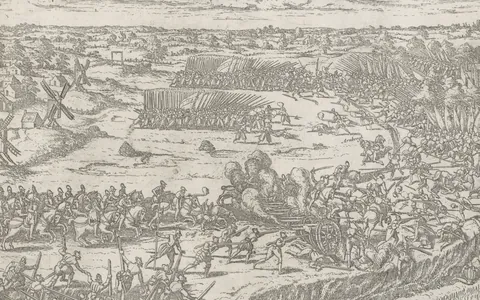
- 1568Battle of Heiligerlee, 1568Dutch rebels vs Spanish crown
On 23 May 1568 Louis of Nassau lured a royal army into the bogs by the monastery of Heiligerlee. Its commander and Louis's brother Adolf both died in the first rebel victory of the Dutch Revolt.
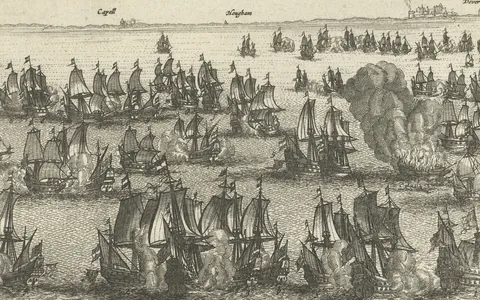
- 1652Battle of Dungeness, 1652Dutch Republic vs Commonwealth of England
On 30 November 1652 Maarten Tromp caught Robert Blake's outnumbered English fleet off Dungeness, took two of its ships and won the Dutch control of the Channel.
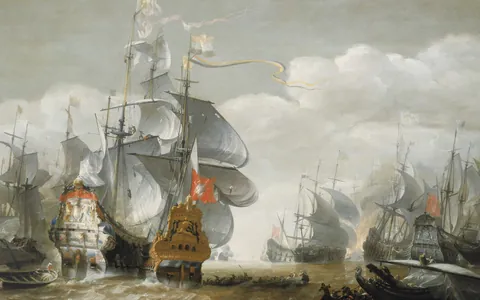
- 1665Battle of Lowestoft, 1665Kingdom of England vs Dutch Republic
On 13 June 1665 the Duke of York's fleet beat the Dutch off Lowestoft. Admiral Obdam's flagship Eendracht blew up, and the leaderless Dutch fleet broke and fled.
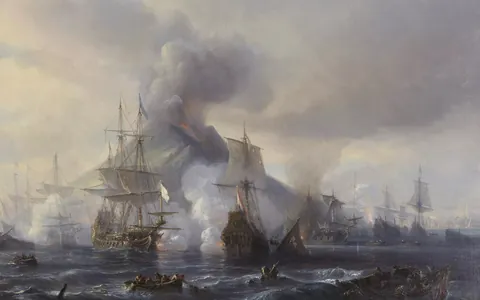
- 1676Battle of Stromboli, 1676Dutch Republic and Spain vs Kingdom of France
On 8 January 1676 Michiel de Ruyter's small Dutch fleet met Duquesne's stronger French squadron off Stromboli. The French had the wind and the fire ships, but not the victory.
- 1690Battle of Beachy Head, 1690Kingdom of France vs England and the Dutch Republic
On 10 July 1690 Tourville's French fleet beat the Anglo-Dutch fleet off Sussex; the Dutch van was surrounded while the English held back.
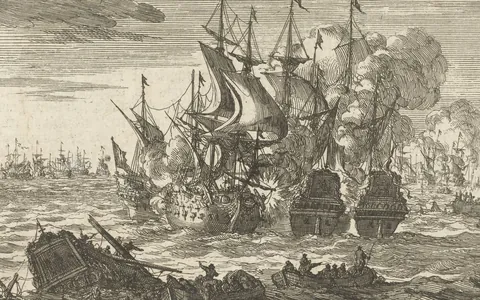
- 1690Battle of the Boyne, 1690Williamites (England, Dutch Republic and allies) vs Jacobites (Ireland, with France)
- 1704Battle of the Schellenberg, 1704Grand Alliance (England, the Dutch Republic, the Empire) vs France and the Electorate of Bavaria
On 2 July 1704 Marlborough and Louis of Baden stormed the Schellenberg above Donauwörth; an evening breakthrough near the town gave them the Danube crossing.
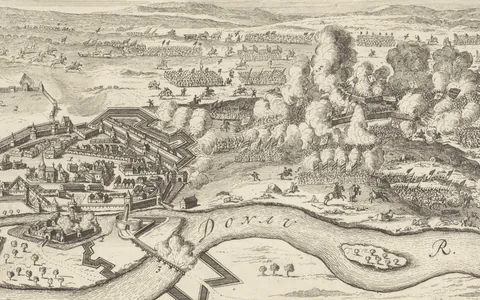
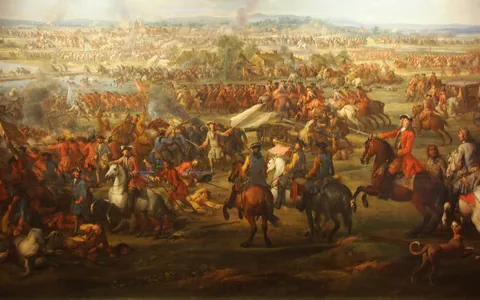
- 1704Battle of Blenheim, 1704Grand Alliance: England, the Dutch Republic, the Holy Roman Empire and German states vs France and the Electorate of Bavaria
On 13 August 1704 Marlborough and Prince Eugene destroyed a Franco-Bavarian army on the Danube, captured Marshal Tallard and saved Vienna.
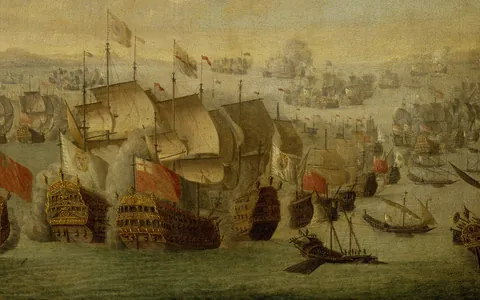
- 1704Battle of Málaga, 1704England and the Dutch Republic vs France and Spain
On 24 August 1704, weeks after Gibraltar fell, the Anglo-Dutch and French fleets fought a day-long line battle off Vélez-Málaga. No ship was lost, both sides drew apart, and Gibraltar stayed allied.
- 1707Battle of Almansa, 1707Bourbon Spain and France vs Grand Alliance (England, Portugal, the Dutch Republic)
On 25 April 1707 an English-born duke led the armies of France and Spain against a French-born earl leading the English. Almansa kept a Bourbon on the Spanish throne.
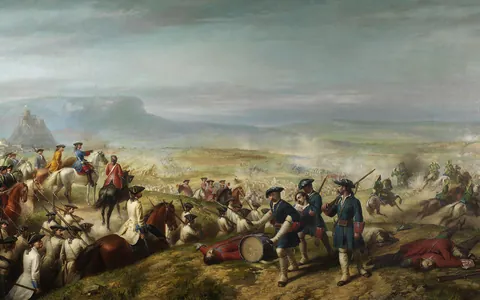
- 1746Battle of Rocoux, 1746France vs Pragmatic Army (Austria, Dutch Republic, Britain, Hanover, Hesse)
On 11 October 1746 Marshal Saxe stormed the villages outside Liège held by the Pragmatic Army; British dragoons covered the retreat as the allies crossed the Meuse at night.
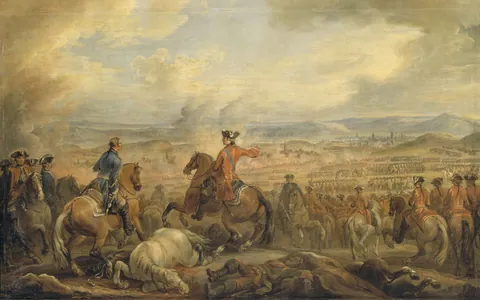
The Napoleonic era 1789 to 1815 · 1
- 1815Battle of Quatre Bras, 1815French Empire vs Britain, Netherlands, Brunswick, Nassau and Hanover
On 16 June 1815 Marshal Ney attacked Wellington's army at the crossroads of Quatre Bras. The Allies held, and the fight kept a French corps away from Ligny.
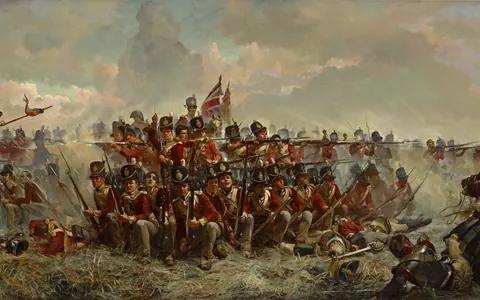
World War II 1939 to 1945 · 3
- 1941Battle of Cape Bon, 1941Britain and the Netherlands vs Italy
On 13 December 1941 four British and Dutch destroyers ambushed two Italian cruisers carrying fuel to Libya off Cape Bon and sank both in a few minutes.
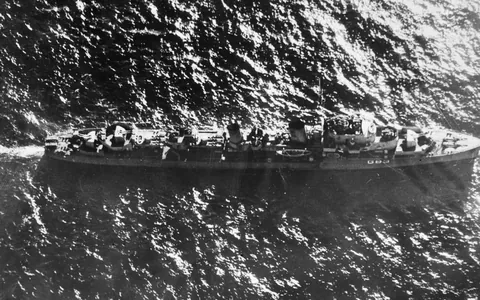
- 1942Battle of Makassar Strait, 1942ABDA naval force (Netherlands, United States) vs Empire of Japan
On 4 February 1942 Japanese bombers caught Doorman's Dutch and American cruisers on their way to the Makassar Strait. Marblehead was crippled, Houston lost a turret and the raid was called off.
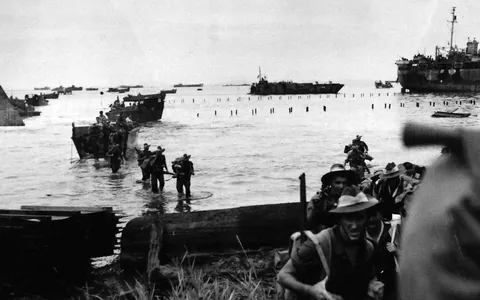
- 1945Battle of Tarakan, 1945Australia, with U.S. and Dutch forces vs Empire of Japan
On 1 May 1945 the 26th Australian Brigade landed on Tarakan to seize an airfield for the Borneo campaign. It took the island at a cost of 225 dead; the strip opened seven weeks late.
Timeline of Dutch military history
- 1568Louis of Nassau beats the royal army at Heiligerlee; the Eighty Years’ War begins.32
- 1572The Sea Beggars seize Brielle and Flushing.33
- 1574The siege of Leiden is broken by flooding.34
- 1579The Union of Utrecht unites the northern provinces.35
- 1584William of Orange is assassinated in Delft.36
- 1648Spain recognizes Dutch independence in the Peace of Münster.37
- 1652The First Anglo-Dutch War begins.38
- 1665
- 1667De Ruyter’s raid on the Medway; peace of Breda.40
- 1672The Year of Disaster: France invades, the Water Line holds.41
- 1673De Ruyter beats the Anglo-French fleet off Texel (Kijkduin).42
- 1688William III lands at Brixham, Torbay.43
- 1690
- 1704
- 1795The Republic falls; the Batavian Republic is founded.46
- 1815Netherlanders fight at Quatre Bras and Waterloo.47
- 1830The Belgian revolution.48
- 1940Germany invades; Rotterdam is bombed on 14 May.49
- 1942
- 1944Operation Market Garden fails at Arnhem.51
- 1949Sovereignty is transferred to Indonesia on 27 December.52
Memory and further reading
Some of these wars are still visible. The carved stern of the Royal Charles, taken in the Medway, has hung in the Rijksmuseum in Amsterdam since it opened in 1885. In Rotterdam, Ossip Zadkine’s bronze The Destroyed City (1951) stands by the Leuvehaven, a memorial to the war that the city reads as a symbol of the bombing of May 1940. Polish and Dutch delegations still gather at the memorial to Sosabowski’s brigade in Driel, unveiled in 2006.53
Other memories are contested. The Boyne is still marked by Northern Ireland’s Orange Order in the marching season that culminates on 12 July, and it remains a decisive moment in Irish history for both communities, seen very differently by each. Indonesia counts its independence from 1945, while the Netherlands long dated it from 1949; in 2005 the Dutch foreign minister attended Indonesia’s 60th anniversary celebrations, which the Canon van Nederland reads as admitting 1945.54
For the other sides of these wars, see our hubs on Spain, Britain, France and Germany, and our guides to the Nine Years’ War, the War of the Spanish Succession, the Western Front in World War II and the Pacific War.
Notes
A number in the text points to a note; each note names the works that paragraph draws on, listed in full under Sources.
- Encyclopaedia Britannica, “Eighty Years’ War”; Randall Fegley, “Dutch Wars of Independence”; Encyclopaedia Britannica, “Anglo-Dutch Wars”; Encyclopaedia Britannica, “William III, king of England, Scotland, and Ireland”; Encyclopaedia Britannica, “Battle of Waterloo”; United States Holocaust Memorial Museum, “The Netherlands”; National Army Museum, “Operation Market Garden”; Canon van Nederland, “Indonesia”. ↩
- Encyclopaedia Britannica, “Eighty Years’ War”; Encyclopaedia Britannica, “Anglo-Dutch Wars”; United States Holocaust Memorial Museum, “The Netherlands”; Canon van Nederland, “Indonesia”. ↩
- Encyclopaedia Britannica, “Eighty Years’ War”; Randall Fegley, “Dutch Wars of Independence”; Encyclopaedia Britannica, “Belgium”. ↩
- US Department of State, “A Guide to the United States’ History of Recognition, Diplomatic, and Consular Relations, by Country”; Encyclopaedia Britannica, “Batavian Republic”; Encyclopaedia Britannica, “William I, king of the Netherlands”; Encyclopaedia Britannica, “History of the Netherlands”; Encyclopaedia Britannica, “Belgium”; The Low Countries, “Belgium and the Netherlands officially divorced 180 years ago”. ↩
- Encyclopaedia Britannica, “History of the Low Countries”; Randall Fegley, “Dutch Wars of Independence”; Canon van Nederland, “William of Orange”. ↩
- Encyclopaedia Britannica, “History of the Low Countries”; Leiden University, “How the Battle of Heiligerlee became a legend”; Canon van Nederland, “William of Orange”. ↩
- Encyclopaedia Britannica, “History of the Low Countries”; Randall Fegley, “Dutch Wars of Independence”; Encyclopaedia Britannica, “Eighty Years’ War”. ↩
- Encyclopaedia Britannica, “History of the Low Countries”; Encyclopaedia Britannica, “Eighty Years’ War”; Randall Fegley, “Dutch Wars of Independence”; Canon van Nederland, “William of Orange”. ↩
- Encyclopaedia Britannica, “Eighty Years’ War”; Encyclopaedia Britannica, “Maurice, stadholder of the Netherlands”; Randall Fegley, “Maurice of Nassau”; Randall Fegley, “Dutch Wars of Independence”. ↩
- Encyclopaedia Britannica, “Eighty Years’ War”; Randall Fegley, “Dutch Wars of Independence”; Canon van Nederland, “Michiel de Ruyter”. ↩
- Encyclopaedia Britannica, “Anglo-Dutch Wars”; Royal Museums Greenwich, “Action Between Ships in the First Dutch War, 1652-54”; John V. Quarstein, “Hampton Roads Invaded”. ↩
- Encyclopaedia Britannica, “Anglo-Dutch Wars”; John V. Quarstein, “Hampton Roads Invaded”; Royal Museums Greenwich, “The Battle of Lowestoft, 3 June 1665”; Royal Museums Greenwich, “The Four Days Fight, 1-4 June 1666”; Encyclopaedia Britannica, “Michiel Adriaanszoon de Ruyter”. ↩
- Encyclopaedia Britannica, “Raid on the Medway”; Encyclopaedia Britannica, “Anglo-Dutch Wars”; Royal Museums Greenwich, “Dutch Attack on the Medway, June 1667”; John V. Quarstein, “Hampton Roads Invaded”; Canon van Nederland, “Michiel de Ruyter”; Encyclopaedia Britannica, “Michiel Adriaanszoon de Ruyter”. ↩
- Encyclopaedia Britannica, “Dutch War”; Joseph P. Byrne, “French-Dutch War”; Canon van Nederland, “Michiel de Ruyter”; Encyclopaedia Britannica, “William III, king of England, Scotland, and Ireland”. ↩
- Encyclopaedia Britannica, “Dutch War”; Joseph P. Byrne, “French-Dutch War”; Canon van Nederland, “Michiel de Ruyter”; Encyclopaedia Britannica, “Michiel Adriaanszoon de Ruyter”. ↩
- Encyclopaedia Britannica, “Glorious Revolution”; National Army Museum, “The Army and the Glorious Revolution”; The National Archives, “Glorious Revolution”; Encyclopaedia Britannica, “William III, king of England, Scotland, and Ireland”. ↩
- National Army Museum, “Battle of the Boyne”; Military History Matters, “The last warrior monarch”; National Army Museum, “Nine Years’ War”; Encyclopaedia Britannica, “War of the Grand Alliance”; The National Archives, “Glorious Revolution”. ↩
- National Army Museum, “Nine Years’ War”; Encyclopaedia Britannica, “War of the Grand Alliance”. ↩
- Encyclopaedia Britannica, “War of the Spanish Succession”; Mark C. Herman, “War of the Spanish Succession”; National Army Museum, “Nine Years’ War”; National Army Museum, “The Army and the Glorious Revolution”. ↩
- Encyclopaedia Britannica, “Battle of Waterloo”; National Army Museum, “Battle of Waterloo”. ↩
- Encyclopaedia Britannica, “William I, king of the Netherlands”; Encyclopaedia Britannica, “Belgium”; The Low Countries, “Belgium and the Netherlands officially divorced 180 years ago”; Encyclopaedia Britannica, “History of the Netherlands”. ↩
- Encyclopaedia Britannica, “History of the Netherlands”; The Low Countries, “Belgium and the Netherlands officially divorced 180 years ago”; Encyclopaedia Britannica, “William I, king of the Netherlands”. ↩
- United States Holocaust Memorial Museum, “The Netherlands”; Maritiem Museum Rotterdam, “The bombing of Rotterdam”; Encyclopaedia Britannica, “Rotterdam”. ↩
- United States Holocaust Memorial Museum, “The Netherlands”; Yad Vashem, “The Netherlands”. ↩
- National Army Museum, “Operation Market Garden”; Encyclopaedia Britannica, “Operation Market Garden”; Imperial War Museums, “What Went Wrong at the Battle of Arnhem?”. ↩
- Imperial War Museums, “What Went Wrong at the Battle of Arnhem?”; National Army Museum, “Operation Market Garden”; Encyclopaedia Britannica, “Operation Market Garden”. ↩
- Airborne Assault Museum, “1st Polish Independent Parachute Brigade”; Imperial War Museums, “What Went Wrong at the Battle of Arnhem?”; Encyclopaedia Britannica, “Operation Market Garden”; dzieje.pl, “Rocznica największej operacji powietrzno-desantowej Market Garden”; National Army Museum, “Operation Market Garden”. ↩
- Verzetsmuseum, “The Japanese conquest”; History.com, “Dutch surrender on Java”; Jim Baird, “Battle of the Java Sea”; Encyclopaedia Britannica, “Battle of the Java Sea”. ↩
- Canon van Nederland, “Indonesia”; Laura M. Calkins, “Indonesian War of Independence”; NIOD Institute for War, “Indonesian War of Independence (in numbers)”; Encyclopaedia Britannica, “Dutch East Indies”. ↩
- Leiden University Libraries, “Images of the Indonesian War of Independence, 1945-1949”; NIOD Institute for War, “Indonesian War of Independence (in numbers)”; NIOD Institute for War, “Beyond the Pale”; Canon van Nederland, “Indonesia”; Encyclopaedia Britannica, “Dutch East Indies”. ↩
- Canon van Nederland, “William of Orange”; Randall Fegley, “Maurice of Nassau”; Encyclopaedia Britannica, “Maurice, stadholder of the Netherlands”; Canon van Nederland, “Michiel de Ruyter”; Encyclopaedia Britannica, “Michiel Adriaanszoon de Ruyter”; Encyclopaedia Britannica, “William III, king of England, Scotland, and Ireland”; National Army Museum, “Battle of the Boyne”; Military History Matters, “The last warrior monarch”; Jim Baird, “Battle of the Java Sea”; Encyclopaedia Britannica, “Battle of the Java Sea”. ↩
- Encyclopaedia Britannica, “History of the Low Countries”; Leiden University, “How the Battle of Heiligerlee became a legend”. ↩
- Encyclopaedia Britannica, “History of the Low Countries”; Randall Fegley, “Dutch Wars of Independence”. ↩
- Encyclopaedia Britannica, “History of the Low Countries”; Randall Fegley, “Dutch Wars of Independence”. ↩
- Encyclopaedia Britannica, “History of the Low Countries”; Encyclopaedia Britannica, “Eighty Years’ War”. ↩
- Canon van Nederland, “William of Orange”; Randall Fegley, “Dutch Wars of Independence”. ↩
- Encyclopaedia Britannica, “Eighty Years’ War”; Randall Fegley, “Dutch Wars of Independence”. ↩
- Encyclopaedia Britannica, “Anglo-Dutch Wars”; Royal Museums Greenwich, “Action Between Ships in the First Dutch War, 1652-54”. ↩
- Encyclopaedia Britannica, “Anglo-Dutch Wars”; Royal Museums Greenwich, “The Battle of Lowestoft, 3 June 1665”. ↩
- Encyclopaedia Britannica, “Raid on the Medway”; Royal Museums Greenwich, “Dutch Attack on the Medway, June 1667”. ↩
- Encyclopaedia Britannica, “Dutch War”; Joseph P. Byrne, “French-Dutch War”. ↩
- Joseph P. Byrne, “French-Dutch War”; Canon van Nederland, “Michiel de Ruyter”. ↩
- National Army Museum, “The Army and the Glorious Revolution”; The National Archives, “Glorious Revolution”. ↩
- National Army Museum, “Battle of the Boyne”; The National Archives, “Glorious Revolution”. ↩
- Mark C. Herman, “War of the Spanish Succession”; National Army Museum, “Nine Years’ War”. ↩
- US Department of State, “A Guide to the United States’ History of Recognition, Diplomatic, and Consular Relations, by Country”; Encyclopaedia Britannica, “Batavian Republic”. ↩
- Encyclopaedia Britannica, “Battle of Waterloo”; National Army Museum, “Battle of Waterloo”. ↩
- Encyclopaedia Britannica, “Belgium”; The Low Countries, “Belgium and the Netherlands officially divorced 180 years ago”. ↩
- United States Holocaust Memorial Museum, “The Netherlands”; Maritiem Museum Rotterdam, “The bombing of Rotterdam”. ↩
- Jim Baird, “Battle of the Java Sea”; Verzetsmuseum, “The Japanese conquest”. ↩
- National Army Museum, “Operation Market Garden”; Imperial War Museums, “What Went Wrong at the Battle of Arnhem?”. ↩
- Canon van Nederland, “Indonesia”; Laura M. Calkins, “Indonesian War of Independence”. ↩
- Rijksmuseum, “The stern decoration of the Royal Charles”; Canon van Nederland, “Michiel de Ruyter”; Maritiem Museum Rotterdam, “The bombing of Rotterdam”; Sculpture International Rotterdam, “The Destroyed City (1951), Ossip Zadkine”; Instytut Pamięci Narodowej, “W Holandii upamiętniliśmy udział 1 Samodzielnej Brygady Spadochronowej w operacji „Market Garden””; Airborne Assault Museum, “1st Polish Independent Parachute Brigade”. ↩
- National Army Museum, “Battle of the Boyne”; The National Archives, “Glorious Revolution”; Canon van Nederland, “Indonesia”; Laura M. Calkins, “Indonesian War of Independence”. ↩
Sources
- Encyclopaedia Britannica, “Eighty Years’ War”.
- Randall Fegley, EBSCO Research Starters, “Dutch Wars of Independence”.
- Encyclopaedia Britannica, “Anglo-Dutch Wars”.
- Encyclopaedia Britannica, “William III, king of England, Scotland, and Ireland”.
- Encyclopaedia Britannica, “Battle of Waterloo”.
- United States Holocaust Memorial Museum, Holocaust Encyclopedia, “The Netherlands”.
- National Army Museum, “Operation Market Garden”.
- Canon van Nederland, “Indonesia: The struggle for independence”.
- Encyclopaedia Britannica, “Belgium: History”.
- US Department of State, Office of the Historian, “A Guide to the United States’ History of Recognition, Diplomatic, and Consular Relations, by Country: Netherlands”.
- Encyclopaedia Britannica, “Batavian Republic”.
- Encyclopaedia Britannica, “William I, king of the Netherlands”.
- Encyclopaedia Britannica, “History of the Netherlands: The Kingdom of the Netherlands, 1814 to 1918”.
- The Low Countries (Ons Erfdeel), “Belgium and the Netherlands officially divorced 180 years ago”.
- Encyclopaedia Britannica, “History of the Low Countries: The revolt and the formation of the Republic (1567 to 1579)”.
- Canon van Nederland, “William of Orange”.
- Leiden University, interview with Judith Pollmann, “How the Battle of Heiligerlee became a legend”.
- Encyclopaedia Britannica, “Maurice, stadholder of the Netherlands”.
- Randall Fegley, EBSCO Research Starters, “Maurice of Nassau”.
- Canon van Nederland, “Michiel de Ruyter”.
- Royal Museums Greenwich, “Action Between Ships in the First Dutch War, 1652-54”.
- John V. Quarstein, The Mariners’ Museum and Park, “Hampton Roads Invaded: The Anglo-Dutch Naval Wars”.
- Royal Museums Greenwich, “The Battle of Lowestoft, 3 June 1665”.
- Royal Museums Greenwich, “The Four Days Fight, 1-4 June 1666”.
- Encyclopaedia Britannica, “Michiel Adriaanszoon de Ruyter”.
- Encyclopaedia Britannica, “Raid on the Medway”.
- Royal Museums Greenwich, “Dutch Attack on the Medway, June 1667”.
- Encyclopaedia Britannica, “Dutch War”.
- Joseph P. Byrne, EBSCO Research Starters, “French-Dutch War”.
- Encyclopaedia Britannica, “Glorious Revolution”.
- National Army Museum, “The Army and the Glorious Revolution”.
- The National Archives (UK), education resource, “Glorious Revolution”.
- National Army Museum, “Battle of the Boyne”.
- Military History Matters, The Past (Current Publishing), “The last warrior monarch”.
- National Army Museum, “Nine Years’ War”.
- Encyclopaedia Britannica, “War of the Grand Alliance”.
- Encyclopaedia Britannica, “War of the Spanish Succession”.
- Mark C. Herman, EBSCO Research Starters, “War of the Spanish Succession”.
- National Army Museum, “Battle of Waterloo”.
- Maritiem Museum Rotterdam, “The bombing of Rotterdam”.
- Encyclopaedia Britannica, “Rotterdam”.
- Yad Vashem, “The Netherlands: Historical Background”.
- Encyclopaedia Britannica, “Operation Market Garden”.
- Imperial War Museums, “What Went Wrong at the Battle of Arnhem?”.
- Airborne Assault Museum (ParaData), “1st Polish Independent Parachute Brigade”.
- dzieje.pl (Muzeum Historii Polski), “Rocznica największej operacji powietrzno-desantowej Market Garden”.
- Verzetsmuseum (Dutch Resistance Museum), “The Japanese conquest”.
- History.com, “Dutch surrender on Java”.
- Jim Baird, EBSCO Research Starters, “Battle of the Java Sea”.
- Encyclopaedia Britannica, “Battle of the Java Sea”.
- Laura M. Calkins, EBSCO Research Starters, “Indonesian War of Independence”.
- NIOD Institute for War, Holocaust and Genocide Studies, “Indonesian War of Independence (in numbers)”.
- Encyclopaedia Britannica, “Dutch East Indies”.
- Leiden University Libraries, “Images of the Indonesian War of Independence, 1945-1949: online exhibition”.
- NIOD Institute for War, Holocaust and Genocide Studies, “Beyond the Pale: Dutch Extreme Violence in the Indonesian War of Independence, 1945-1949”.
- Rijksmuseum, “The stern decoration of the Royal Charles”.
- Sculpture International Rotterdam, “The Destroyed City (1951), Ossip Zadkine”.
- Instytut Pamięci Narodowej, “W Holandii upamiętniliśmy udział 1 Samodzielnej Brygady Spadochronowej w operacji „Market Garden””.






